
AI Music vs Human Composer: When to Use Each in 2026
When does AI music work and when do you need a real composer? Honest cost-quality-time math for film, games, podcasts, weddings, personal songs, and commercial releases.
The question I get asked most often by clients, indie filmmakers, podcasters, and game developers planning music budgets is some version of "can we just use AI now, or do we still need a composer?" The honest answer in 2026 is "it depends on the project, and the right answer is usually a mix." AI music has crossed quality thresholds in the last twelve months that make it the correct tool for a meaningful share of professional music work — and it has not crossed thresholds in others. Knowing which is which is the actual skill that matters now.
This is the case for the AI-versus-human decision that I have been making across about twenty commercial projects over the last six months. Some of those projects ended up using AI exclusively. Some ended up using a real composer. Most ended up using both in some combination — AI for sketching and certain cues, human composer for others. The cost-quality-time math now genuinely supports each in different lanes rather than supporting one universally.
This guide is the honest framework I have refined for deciding when to use AI music versus when to hire a human composer in 2026. The cost realities, the quality boundaries, the time math, the legal and rights edges, and the project-by-project breakdown of where each is the better tool.
The decision is no longer binary
A few specifics about the AI-versus-composer question that most clients only think about after they have made the wrong choice for their project.
Most professional music projects in 2026 use both AI and human work. The framing of "AI or composer" misses that the right answer for most projects is "AI for these cues, composer for these other cues." Indie film projects use AI for temp music and atmospheric cues, then bring in a composer for the main theme and key emotional scenes. Game studios use AI for ambient exploration loops and bring in composers for boss themes and signature cues. Podcasters use AI for intros and bring in a composer if they have a flagship show segment that needs distinct musical identity.
The cost gap is real and decisive at the low end. A composer commissioned for a wedding ceremony song costs $400-2,000. The same song generated on a paid AI music app costs the marginal $0.05 of an annual subscription divided across that one use. For budgets under $500 total, AI is the only realistic option for custom music in most categories. Above $5,000, composer work is reasonable. The middle range ($500-5,000) is where the real strategic decision happens.
Time pressure changes the math. A composer commission typically takes two to six weeks from brief to final delivery. AI generates in five minutes. For projects that need music tomorrow — game jams, last-minute weddings, urgent podcast launches, late-stage film post-production fixes — composer work is not available regardless of budget. AI fills the time-pressed gap.
Quality boundaries shift constantly. What AI could not do in 2024 it can do in 2026. What it cannot do in 2026 it may handle in 2028. The honest assessment has to be updated regularly. As of mid-2026: AI handles mainstream pop, country, hip-hop, R&B, lo-fi, EDM, modern neo-classical piano, ambient, and most short-form work at near-professional quality. It struggles with real counterpoint, virtuosic improvisation, full orchestral writing, and anything requiring proper musical form discipline.
The legal landscape favors AI for many commercial uses. AI music generated on paid commercial tiers comes with usage rights. Composer commissions require careful contract work over copyright, publishing, mechanical rights, and synchronization rights. For sync-licensing-heavy contexts (ad agencies, content production houses, branded content), AI music is often legally simpler than composer commissions.
For the can you sell AI-generated music legal guide, the foundational legal rights questions across both AI and traditional music are covered in depth.
What AI music does genuinely well in 2026

Honest accounting of where AI music is now at near-professional or professional quality and competitive against human composer work on price, time, or both.
Quality categories where AI matches or beats composer commissions at the price points indies pay:
- Modern pop and pop crossover tracks — songwriter demos, indie release tracks, sync licensing pop.
- Lo-fi and ambient music — the lo-fi study scene was already accustomed to recombinant production; AI sits at the existing aesthetic.
- Modern country and Americana — Nashville pop country demos, acoustic country backing tracks.
- EDM and electronic dance — festival-tier EDM is well within AI capability.
- R&B and modern soul-pop — most modern R&B production is achievable.
- Personal occasion songs — birthday, anniversary, wedding, memorial — at price points where a composer was never realistic.
- Podcast intros, outros, and stings — better and more customizable than stock library music.
- Lo-fi jazz and smooth jazz instrumentals — background music for restaurants, hotels, and content.
- Modern neo-classical solo piano — ambient meditation tracks, sleep music, sync licensing for contemplative content.
- Indie game music — exploration loops, ambient cues, secondary character themes.
Cost-time advantages decisive:
- Under $500 budget projects — AI is the only realistic option for custom music.
- Under 48-hour turnaround — composer commissions are not available regardless of budget.
- Iterating during creative development — generating multiple options to test against picture or against story is much faster with AI.
- Sketching and temp music — composer time is too expensive to use for first drafts.
- High-volume work — Etsy custom-song shops, podcast networks, social content creators producing daily music.
For specific genre-by-genre AI quality breakdowns, the AI lo-fi guide, AI rap generator guide, AI country guide, and other genre articles cover what AI is doing well per category.
What human composers do that AI still cannot
Honest accounting of where human composers remain decisively better than AI in 2026.
Compositional skill AI does not yet replicate:
- Real counterpoint and fugue. Independent melodic lines moving simultaneously with their own logic. AI tends to produce parallel motion rather than true counterpoint.
- Long-form developmental form. Sonata-allegro, fugue, theme-and-variations, symphonic development. AI produces sectional music that does not develop motivically.
- Virtuosic improvisation. A jazz solo that develops a motif over five minutes and resolves it. Bebop, fusion, modern jazz still need human soloists.
- Full orchestral writing. Real orchestration balancing strings, woodwinds, brass, percussion. AI approximates orchestra but the result reads as sample libraries rather than as a real ensemble.
- Living artist style imitation. AI music apps prohibit prompts that imitate specific living artists. Only human composers can write "in the style of" a current artist (with appropriate legal care).
- Adaptive music systems for games. Multi-layered dynamic music that responds to gameplay state changes. AI can generate layers; composing the system requires human direction.
- Tight scene-specific scoring for film. Hitting specific emotional beats at specific timecodes with melodic motifs that recur across the film. Composers internalize the film's emotional structure across multiple revisions.
Cultural and contextual skill:
- Authentic regional and cultural music. Traditional Indian classical, Persian classical, regional Mexican (Norteño, Banda), West African traditional, indigenous music traditions — AI homogenizes; native composers carry the tradition.
- Lyrics in non-English languages. AI lyric generation produces translated-feeling lyrics in languages other than English. Native composer or lyricist collaboration is necessary for serious work in other languages.
- Specific instrument idiom. Writing for what a violin or saxophone or pedal steel actually does well requires composer knowledge. AI sometimes writes passages that are awkward or impossible on the intended instrument.
Live performance work:
- Live recording sessions with real players. A composer who knows what specific session musicians do best can write parts that play to those strengths.
- Music for live performance. A piece intended to be performed live by classical or jazz musicians needs to be written by someone who understands the live context.
- Conducting and music direction. Orchestral and ensemble recording sessions need a music director or conductor on the day.
For the AI-music limits per genre, see the honest sections in the AI jazz guide, AI classical guide, and AI country guide.
Cost comparison: what each actually costs in 2026
Hard pricing for both AI music and human composer work, ranges as of mid-2026.
AI music platform costs:
| Tier | Cost | Output |
|---|---|---|
| Free tier (any major app) | $0 | Personal use only, no commercial rights |
| Muziko Pro | $34.99/year | Unlimited generations with commercial rights |
| Suno Pro | $96/year | Substantial monthly generation credits, commercial rights |
| Suno Premier | $288/year | Higher credit allowance, stem export, priority queue |
| Udio Pro | $120/year | Substantial credits, commercial rights |
Human composer commission costs:
| Project type | Composer cost range | Time |
|---|---|---|
| Wedding ceremony song (single piece) | $400-2,000 | 3-6 weeks |
| Indie film theme (2-3 minute main theme) | $1,500-8,000 | 4-12 weeks |
| Indie film full score (20-40 minutes) | $5,000-50,000 | 8-24 weeks |
| Major film score (60+ minutes) | $50,000-500,000+ | 6-12 months |
| Game soundtrack — small indie (10-20 cues) | $3,000-20,000 | 8-16 weeks |
| Game soundtrack — large indie (50+ cues) | $20,000-150,000 | 4-12 months |
| AAA game soundtrack | $100,000-1,000,000+ | 12-24 months |
| Podcast intro music (custom) | $300-1,500 | 2-4 weeks |
| Brand ad sync (custom commercial music) | $5,000-50,000+ | 4-12 weeks |
| Songwriter demo (single song) | $200-800 | 1-3 weeks |
| Custom song from singer-songwriter | $500-3,000 | 2-8 weeks |
Effective hourly rates for human composers:
- Indie composer: $40-100/hour effective
- Mid-career commercial composer: $100-300/hour effective
- Established film composer: $300-1,000+/hour effective
The cost-time analysis explains why most projects use both rather than one or the other — the budget per-cue math works out differently for the main theme versus the background loops, and a smart project assigns AI to the cues where it works and composer time to the cues where it matters most.
For more on the business side of custom AI music work, the selling AI songs on Etsy guide covers the small-business model that AI cost economics now enables.
Project type breakdown: which to use when
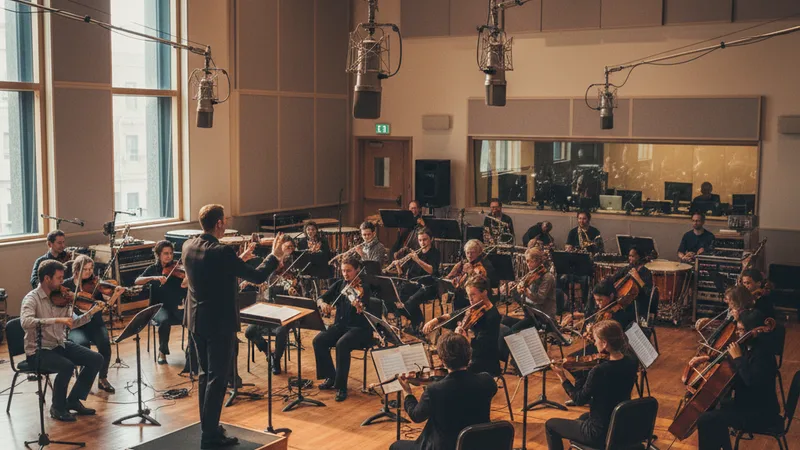
The actual decision framework, project category by project category. Patterns I have observed across the last six months of commercial work.
| Project | AI or Composer | Reasoning |
|---|---|---|
| Personal occasion songs (birthday, anniversary, wedding gift) | AI | Cost-time math is decisive; AI quality matches composer demos at this price point |
| Wedding ceremony music | AI primary, composer optional | Custom AI ceremony pieces are good enough; live musician at ceremony adds presence but recordings work |
| Wedding first dance song | AI primary | Custom AI first dance songs are now standard; see the AI wedding songs guide |
| Podcast intro and outro | AI | Better than stock library, far cheaper than composer commission |
| Podcast theme for flagship show | Composer | Brand identity worth the investment for serious networks |
| Indie game music — exploration loops | AI | Volume of loops needed makes composer cost prohibitive |
| Indie game music — main theme | Composer or AI mid-budget | The signature cue benefits from human work if budget allows |
| Indie game music — boss themes | Composer mid-budget, AI low-budget | Boss themes carry brand; budget-dependent |
| AAA game soundtracks | Composer | Quality and adaptive music systems require human direction |
| Indie film — temp music during edit | AI | Composer time is too expensive for temp; AI fills the gap |
| Indie film — main theme | Composer | The signature recurring motif justifies composer work |
| Indie film — atmospheric and underscore cues | Both — AI generates options, composer finalizes | The hybrid workflow is most common |
| Major film score | Composer | Cannot be done without a human composer in 2026 |
| YouTube content background music | AI | Volume and turnaround demands favor AI |
| TikTok and Reels background | AI | Short-form video matches AI strengths |
| Brand commercial sync (national TV ad) | Composer | Quality bar and licensing complexity favor human work |
| Brand commercial sync (digital and regional) | Both | AI for some categories, composer for premium brands |
| Songwriter demos for pitching | AI | Quality is now demo-grade for mainstream pop genres |
| Music for live performance | Composer | AI cannot write for the live context |
| Albums for serious artist release | Composer or artist | Reputational stakes favor human work |
| Music for the artist's own listening (personal album) | AI | If the artist enjoys generating their own work |
| Memorial and tribute music | AI primary | Cost-time math decisive; emotional impact strong with personalization |
| Sacred music for religious services | Both — context-dependent | Many traditions prefer human work; budget and context vary |
| Apps and meditation backgrounds | AI | Volume and ambient style favor AI |
| Restaurant and hotel background music | AI | Replaces stock library cost-effectively |
| Sync licensing libraries (for catalog sales) | AI | Volume requirements favor AI |
| Niche traditional music (cultural authenticity required) | Composer or native musician | AI homogenizes traditional music |
For specific use-case deep dives, see the AI wedding songs guide, AI memorial songs guide, AI game music guide, and AI podcast music guide for the project-specific workflows.
How professional music workflows combine AI and composers in 2026
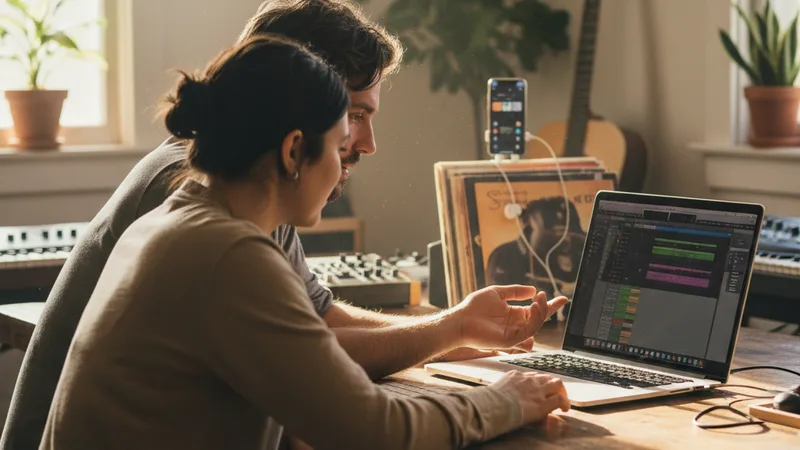
The dominant emerging workflow in commercial music production combines AI and human composers in specific ways.
Film scoring workflow:
- Director and editor use AI music for temp music during the picture edit (AI replaces commercial temp music libraries).
- Composer comes in for main themes and key emotional cues, working from the picture lock.
- Atmospheric and ambient underscore cues: composer reviews AI generations, picks the strongest, possibly augments with live instruments.
- Final mix integrates AI-generated atmospheric content with composer-written thematic content.
Indie game workflow:
- Composer writes the main theme, boss themes, and signature recurring motifs.
- AI generates exploration loops, ambient biome cues, and secondary character themes referencing the composer's tonal vocabulary.
- Adaptive music system designed by composer using both composer-written stems and AI-generated layers.
- Final integration in-engine with both AI and composer assets.
Podcast network workflow:
- Composer writes flagship-show intros and outros.
- AI generates B-tier show intros, ad-break beds, and segment stings.
- Cross-show identity maintained through composer-supplied tonal direction that AI generations reference.
Brand sync workflow:
- Composer writes premium-brand campaign music.
- AI generates regional, digital, and category-spread music using the composer-defined sonic identity as direction.
- Sync library built from AI generations to supply ongoing brand content without per-cue composer cost.
Singer-songwriter and personal artist workflow:
- Songwriter uses AI for demo production replacing $300-800 demo studio commissions.
- Songwriter writes lyrics by hand and uses AI for instrumental production.
- For finished release work, songwriter brings in live musicians for personality and authentic feel.
Etsy custom-song shop workflow:
- Seller uses AI exclusively for custom commissions because price point ($19-79) does not support composer work.
- Customer brief translated to AI prompt with name and specific memory in lyrics.
- Seller never claims human composition; AI disclosure included in listings per Etsy policy.
Wedding music workflow:
- AI used for first dance, parent dances, recessional, and pre-ceremony seating playlist.
- Live human musicians (string quartet, jazz trio, soloist) hired for ceremony only — the moment when the live presence matters.
- AI-generated audio sent to DJ at least two weeks before the wedding.
For the broader business and licensing context, the can you sell AI-generated music legal guide covers the rights questions that affect commercial workflows.
Try the decision for your specific project
The decision framework that works in practice is to score your project against five questions.
1. What is the music budget? Under $500 total: AI. $500-5,000: probably mix, depends on category. Over $5,000: composer worth considering for key cues. Over $20,000: composer for main work, AI for fill.
2. What is the deadline? Under 48 hours: AI is the only option. 1-3 weeks: AI for most work, possibly composer for one key cue. Over 4 weeks: composer becomes viable across more of the work.
3. What genres do you need? Mainstream pop, country, hip-hop, R&B, EDM, lo-fi, modern neo-classical: AI is competitive. Real jazz, classical with proper form, orchestral, virtuosic instrumental music: composer needed for serious work.
4. What is the reputational stake? Personal project, indie content, side income: AI is fine. Serious artist release, AAA game, major-network podcast, national TV ad, festival film submission: composer for the parts that carry brand reputation.
5. Who is the audience? General audience (TikTok, YouTube, podcast listeners): AI works. Specialist audience (classical concertgoers, jazz fans, traditional music communities): composer for the work intended for them; AI for adjacent content.
Score your project against the five questions. The pattern usually resolves into a clear AI-or-composer recommendation, or a mixed approach with specific cues for each. For most projects under $5,000 total music budget in 2026, the right answer involves significant AI use somewhere in the workflow — often combined with human work for the cues that carry the most weight.
For more on the per-genre quality and use-case fits, see the genre-specific guides linked throughout this article.
Frequently asked questions
Is AI music good enough to replace a human composer in 2026?
For some categories yes, for others no. AI music in 2026 is at near-professional or professional quality for mainstream pop, country, hip-hop, R&B, lo-fi, EDM, modern neo-classical solo piano, ambient music, podcast intros, and most short-form personal-occasion songs. It is not yet at professional quality for real baroque counterpoint, classical sonata form, virtuosic improvisation, full orchestral writing, traditional regional music requiring cultural authenticity, or music intended for live performance. The honest framing is that AI is now the right tool for a significant share of professional music work — and not the right tool for other significant shares. Most professional music projects in 2026 use both AI and human composers in different cues.
When should I hire a human composer instead of using AI?
Hire a composer for: (1) projects with budget over $5,000 where reputational stakes are high, (2) film and game main themes and signature recurring motifs, (3) AAA game soundtracks and major film scores, (4) music intended for live performance, (5) work that requires real counterpoint, fugue, or virtuosic improvisation, (6) genres that depend on cultural authenticity beyond what AI homogenizes (traditional Indian classical, regional Mexican, West African traditional, etc.), (7) lyrics in non-English languages where you do not have native fluency, (8) serious artist album releases where critics will scrutinize the work, and (9) adaptive music systems for games that need composer direction. For everything else, AI is at least worth testing first.
How much does a human composer cost in 2026?
Pricing varies widely by project type and composer experience. Wedding songs from indie composers run $400-2,000. Indie film themes run $1,500-8,000 per main theme. Full indie film scores run $5,000-50,000. Major film scores run $50,000-500,000 or more. Small indie game soundtracks run $3,000-20,000. AAA game soundtracks run $100,000-1,000,000+. Podcast intros from custom composers run $300-1,500. Brand commercial sync runs $5,000-50,000+. Effective hourly rates: indie composers $40-100/hour, mid-career commercial composers $100-300/hour, established film composers $300-1,000+/hour. Time to delivery for composer work runs 2-24 weeks depending on project complexity.
How much does AI music cost in 2026?
AI music platform subscriptions range from free (personal use only) to $288/year for the highest commercial tier. Muziko Pro at $34.99/year is the cheapest viable commercial-use option. Suno Pro at $96/year. Udio Pro at $120/year. Suno Premier at $288/year offers higher monthly credits and stem export. All paid tiers include commercial usage rights. Per-track cost amortizes to roughly $0.05-0.40 depending on usage volume. For projects where AI is the right tool, this is one to three orders of magnitude cheaper than composer commission work — which is why the cost-time math is decisive for many categories.
Can I combine AI music and human composer work in the same project?
Yes, and this is the dominant emerging workflow for professional music projects in 2026. Common patterns: film scores use AI for temp music during edits and atmospheric underscore cues, with a composer writing main themes and signature emotional cues; indie games use composers for main themes and boss tracks with AI generating exploration and ambient loops; podcast networks use composers for flagship show intros with AI for B-tier show music and ad beds. The key to combining them well is letting the composer define the sonic identity first, then having AI generations reference that identity. Reverse the order and the project usually feels disjointed.
Will AI music replace human composers entirely?
No, but the role is changing. AI has displaced human composer work in the lower-budget categories where composer commission cost was always borderline — wedding music, podcast intros, indie game ambient cues, personal occasion songs, demos and temp music. In higher-budget categories — AAA games, major film scores, brand sync for premium clients, serious artist releases, live performance work — human composers remain essential and likely will for the foreseeable future. The composer market is reshaping toward fewer, more specialized roles at higher price points, with the lower-end commission market mostly absorbed by AI. For composers entering the field in 2026, this means specializing in what AI cannot do (orchestration, counterpoint, cultural-specific traditions, live performance) rather than competing with AI on mainstream pop and ambient music.
Try everything you just read about. Muziko is free to download.
![AI Amapiano Generator: Log Drum Tracks [Tested 2026]](/_next/image?url=%2Fimages%2Fblog%2Fai-amapiano-generator-log-drum-tracks%2Fhero.webp&w=3840&q=75)
![AI Cinematic Music Generator: Trailer Scores [Tested]](/_next/image?url=%2Fimages%2Fblog%2Fai-cinematic-music-generator-trailer-scores%2Fhero.webp&w=3840&q=75)