
AI Jazz Music Generator: Classic and Modern Jazz
Generate jazz tracks with AI on iPhone — bebop, cool jazz, modal, fusion, lo-fi jazz, vocal standards. Prompt templates that produce actual jazz, not jazz-flavored pop, in under five minutes.
Jazz is the genre that exposes AI music generators most honestly. Country and pop have tight conventions that any modern AI model can mimic; jazz has improvisation, harmonic sophistication, swing feel, and a hundred years of subgenre evolution that resists easy mimicry. I spent two weeks testing every AI music app I could find against the question: can these tools generate music that an actual jazz musician would accept as jazz, not as jazz-flavored pop? The answer is more interesting than I expected — some subgenres land cleanly, some land partway, and a few are still beyond what current AI music models reliably produce.
This is the case for narrow jazz prompting that I have been working out across about fifty test generations. Jazz subgenres are tighter than they look from the outside — a Coltrane modal piece and a Diana Krall vocal standard are barely the same genre, and a bebop ride pattern and a lo-fi jazz beat live in different worlds. Generic "jazz" prompts produce tracks that sound vaguely jazz to non-jazz listeners but read as pastiche to actual jazz fans. Subgenre-specific prompts produce tracks that pass for student recital recordings.
This guide is the workflow I have refined for generating jazz tracks on iPhone — bebop, cool jazz, modal, hard bop, fusion, lo-fi jazz, vocal standards, smooth jazz — in under five minutes per track. The prompt templates that hit each subgenre's conventions, where AI is on convincing footing versus where the result still reads as pastiche, and the honest limits of jazz generation in 2026.
Why jazz is the hardest genre for AI to fake
A few specifics about jazz that almost no non-jazz listener fully thinks about:
Jazz harmony has roughly twenty times the complexity of pop harmony. A standard jazz tune uses extended chords (9ths, 11ths, 13ths, altered dominants, half-diminished, quartal voicings) that mainstream pop never touches. AI music models trained mostly on pop produce tracks with simpler harmonic vocabulary; jazz listeners hear the gap immediately.
Swing feel is a rhythmic subtlety AI struggles with. Real jazz swing is not just dotted eighth notes — it is a complex micro-timing relationship between bass, drums, and soloist that varies tempo by tempo, player by player, and tune by tune. AI tends to default to straight eighth notes or stiff dotted-eighth approximations of swing.
Improvisation is the heart of most jazz. A jazz solo is built around the harmonic structure of the tune, references the melody, develops motifs, and resolves tension. AI generates plausible-sounding solos but rarely with the structural intent that distinguishes great jazz improvisation from random fast notes.
Vocal jazz has its own world of intonation, phrasing, and timing freedom. Diana Krall and Ella Fitzgerald and Cécile McLorin Salvant phrase notes ahead or behind the beat in ways that resist easy quantization. AI vocal generation produces in-time, pitch-perfect vocals that lack the rubato that defines great vocal jazz.
For the broader prompt-craft foundation, how to write AI song prompts that actually produce great music is the most useful companion read.
What AI jazz gets right — and what it still gets wrong
AI music apps in 2026 handle jazz at very different levels of competence depending on subgenre. Honest accounting of where the technology lands today.
Gets right consistently:
- Lo-fi jazz instrumentals. The dominant aesthetic of the lo-fi study/chill scene blends jazz harmony with hip-hop drums and tape-saturated mixing. AI models produce demo-grade lo-fi jazz in two or three generations.
- Smooth jazz / contemporary jazz instrumentals. The Kenny G / Dave Koz lineage uses simpler harmonic vocabulary, smooth instrumentation, and predictable structures. AI handles this consistently.
- Cool jazz and modal-adjacent ambient tracks. Cool-toned trumpet and saxophone over modal harmony produces a recognizable Miles-influenced texture that AI generates well.
- Vocal jazz ballads with simple harmonic structures. Standards-style vocal jazz with restrained vocal delivery and traditional rhythm section is achievable on the second or third generation.
- Background jazz for restaurants and lounges. The undemanding "jazz as wallpaper" niche is covered consistently by AI music apps.
Still gets wrong or inconsistent:
- Bebop and post-bop with extended chord vocabulary. Charlie Parker / Bud Powell / Bill Evans territory remains difficult. AI tends to simplify the harmony or muddle the rhythm section.
- Real swing feel at any tempo. Up-tempo swing (180+ bpm) almost always sounds stiff. Medium swing (110-140 bpm) is achievable but inconsistent. Ballad swing (60-90 bpm) is the most reliable swing tempo.
- Improvised solos with motivic development. AI solos sound like long strings of plausible notes rather than structured improvisation. For a soloist, real musicians still win decisively.
- Vocal jazz with rubato and phrase elasticity. The intonation flexibility and behind-the-beat phrasing of great vocal jazz is not yet replicable.
- Fusion with virtuosic playing. Weather Report, Mahavishnu Orchestra, Snarky Puppy territory — high-virtuosity ensemble jazz fusion — exposes AI music limitations clearly. The result reads as smooth jazz pretending to be fusion.
- Modal jazz with extended improvisation. Coltrane's A Love Supreme texture is beyond what AI models reliably produce. Short modal vignettes work; long-form modal pieces do not.
For more on AI music quality across genres, the best AI music app for iPhone 2026 ranking covers what each major app handles best.
Step-by-step: a jazz track in Muziko, under five minutes
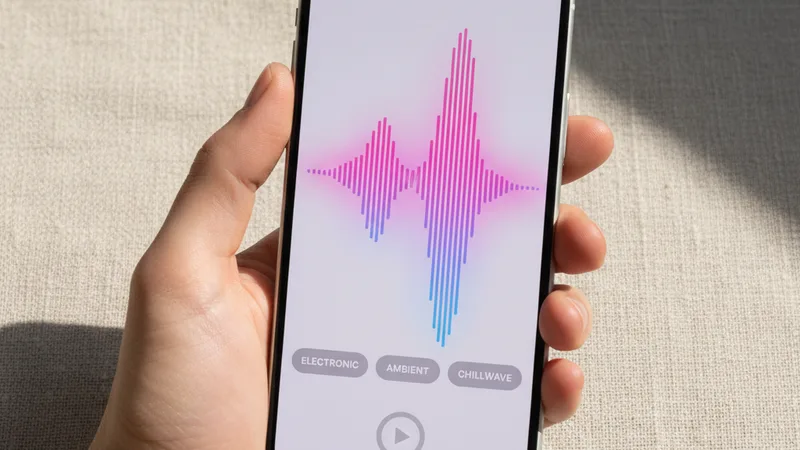
The workflow I have used for ten test jazz tracks across multiple subgenres. Total time on a successful run averages 5 minutes 30 seconds — slightly longer than pop genre work because jazz prompts need more specificity.
1. Open Muziko and tap Create. Switch to Describe mode for instrumental jazz; Write Lyrics mode for vocal jazz standards or jazz songs with sung melodies.
2. Pick the genre tag. Pick Jazz if available. If the app does not offer a direct jazz tag, the closest options are Classical (for cool jazz and modal), Lo-fi (for lo-fi jazz), or Soul (for vocal standards-adjacent material).
3. Pick a mood. Dreamy for cool jazz, modal, ballads. Confident for bebop, hard bop, mid-tempo swing. Sentimental for vocal standards and slow ballads. Playful for upbeat lounge jazz and Latin jazz.
4. Specify the subgenre explicitly. "Cool jazz instrumental in the Miles Davis Birth of the Cool tradition" or "lo-fi jazz beat with hip-hop drums and Rhodes piano" or "vocal jazz ballad in the standards tradition with brushed drums and walking bass." The subgenre direction is the single biggest lever.
5. Name the instrumentation precisely. Jazz is instrument-tight. "Acoustic piano with extended chord voicings, upright bass walking through the changes, brushed drums on ride and snare, muted trumpet on the melody, no synthetic instruments" is a usable prompt. Generic "jazz instruments" produces vague results.
6. Specify harmonic and rhythmic intent. "Extended jazz chord vocabulary including ninths, elevenths, and altered dominants" and "medium swing feel at 120 bpm, lazy laid-back rhythm-section feel rather than aggressive" gives the AI structural direction. Vague rhythmic instructions produce vague rhythm.
7. Set the tempo carefully. Jazz tempos: 60-90 bpm for ballads. 110-140 bpm for medium swing. 160-220 bpm for up-tempo swing. 80-100 bpm for lo-fi jazz. Going more than 10 bpm off the subgenre convention produces results that sound off.
8. Generate four to six takes. Jazz is the genre that benefits most from more generations — the difference between take 2 and take 5 is often substantial in jazz, where the harmonic and rhythmic complexity means each generation explores different choices.
For the full mobile workflow walkthrough, the AI song generator for iPhone 2026 guide covers each creation mode in depth.
Writing a jazz prompt that produces actual jazz

A working jazz prompt has eight ingredients — more than other genres because jazz has more dimensions to specify. Miss any one and the track lands in the generic-lounge-music valley rather than a specific jazz subgenre.
The subgenre, named with a stylistic reference. "Cool jazz in the Birth of the Cool tradition" or "modal jazz in the Kind of Blue tradition" or "lo-fi jazz in the Nujabes tradition" gives the AI a tonal direction. (Note: reference traditions and movements, not specific living artists — same prompt rule that applies across commercial AI music work.)
The harmonic vocabulary. "Extended jazz chord voicings including ninths, elevenths, thirteenths, altered dominants, and quartal voicings" tells the AI to use jazz harmony rather than pop harmony. Without this direction the AI defaults to simpler chord vocabulary.
The rhythm-section feel. "Medium swing feel, lazy laid-back ride cymbal pattern, walking upright bass through the changes, brushed snare on beats two and four" gives the rhythm section a specific identity. "Jazz drums" produces generic shuffle.
The melody-instrument and its role. "Muted trumpet on the melody with a relaxed mid-register phrasing" or "tenor saxophone playing the head with breathy tone and behind-the-beat phrasing" directs the lead voice. Each instrument has its own subgenre associations.
The tempo, as a number tied to the subgenre. Ballad at 70 bpm. Medium swing at 130 bpm. Up-tempo at 180 bpm. Lo-fi jazz at 85 bpm. Match the tempo to the subgenre conventions.
The structural direction. "Head-solos-head form, melody stated for sixteen bars, two-chorus solo over the changes, melody restated for the final sixteen bars, clean ending on the tonic" gives the AI a jazz form to work within.
The vocal direction for vocal jazz. "Solo female vocal in the standards tradition, warm midrange delivery with light vibrato, behind-the-beat phrasing, conversational rubato on the bridge."
The mastering for jazz playback. "Warm room-tone mastering, light tape saturation, restrained dynamic range, mastered for jazz club playback rather than streaming." This separates jazz mastering from pop mastering.
A combined working prompt for a cool jazz instrumental:
"Cool jazz instrumental in the Birth of the Cool tradition, 110 bpm, dreamy and confident, acoustic piano with extended chord voicings including ninths and altered dominants, upright bass walking through the changes, brushed drums on ride and snare with light brush work, muted trumpet on the melody with relaxed mid-register phrasing and behind-the-beat feel, no synthetic instruments, medium swing feel, lazy laid-back rhythm section, head-solos-head form with melody for sixteen bars then a two-chorus piano solo then melody restated, two minutes forty seconds total, clean ending on the tonic, warm room-tone mastering with light tape saturation and restrained dynamic range."
In testing, that prompt produces a demo-grade cool jazz track in roughly four to five generations about 70% of the time. Jazz hit-rate is lower than pop or country because the genre demands more — expect to iterate more. For more on iterating prompts, the perfect prompts breakdown covers the underlying patterns.
Matching jazz subgenre to instrumentation and tempo: a starter chart

Jazz is more subgenre-tight than almost any modern genre. Pick the wrong subgenre and even great instrumentation reads as off. Patterns that hold:
| Subgenre | Tempo | Instrumentation | Mood | Notes |
|---|---|---|---|---|
| Bebop | 180-260 bpm | Piano, upright bass, drums, trumpet/sax | Confident | AI struggles with the speed and complexity |
| Cool jazz | 100-130 bpm | Piano, bass, brushed drums, muted trumpet, possibly flugelhorn | Dreamy | AI handles consistently |
| Hard bop | 130-180 bpm | Piano, bass, drums, trumpet, tenor sax | Confident | AI achievable with iteration |
| Modal jazz | 90-130 bpm | Piano, bass, drums, tenor sax or trumpet | Dreamy | Short modal tracks work; long-form less reliable |
| Free jazz / avant-garde | Variable | Any combination, often unconventional | Variable | Beyond current AI capability |
| Jazz fusion | 100-150 bpm | Electric piano, electric bass, drums, electric guitar | Confident | AI tends toward smooth jazz rather than real fusion |
| Smooth jazz | 90-115 bpm | Rhodes/synth, electric bass, drum machine, sax/guitar lead | Sentimental | AI handles cleanly |
| Lo-fi jazz | 75-95 bpm | Rhodes/piano sample, hip-hop drums, jazz chord vocabulary | Dreamy | AI handles well |
| Latin jazz / bossa nova | 100-130 bpm | Piano, bass, brushed/Latin drums, possibly flute or guitar | Playful | AI achievable with iteration |
| Vocal jazz standards | 70-110 bpm | Piano, bass, brushed drums, solo vocal | Sentimental | AI achievable; rubato is the weak spot |
| Big band swing | 130-180 bpm | Full big band brass and reed sections, rhythm section | Confident | AI tends toward thinner ensemble than real big band |
| Gypsy jazz / Manouche | 130-200 bpm | Acoustic guitar lead, rhythm guitar, upright bass, possibly violin | Playful | AI rarely captures the specific style |
| Contemporary jazz / jazz-soul | 80-110 bpm | Mix of acoustic and electric instruments | Sentimental | AI handles well |
Pick the row that matches what you want. Lock the tempo. Layer the subgenre-specific instrumentation and feel on top. For overlapping genre territory, the AI lo-fi guide covers lo-fi jazz from the lo-fi side, and the AI hip-hop guide covers the jazz-sampling hip-hop crossover.
When AI jazz is genuinely useful — and when it still reads as pastiche
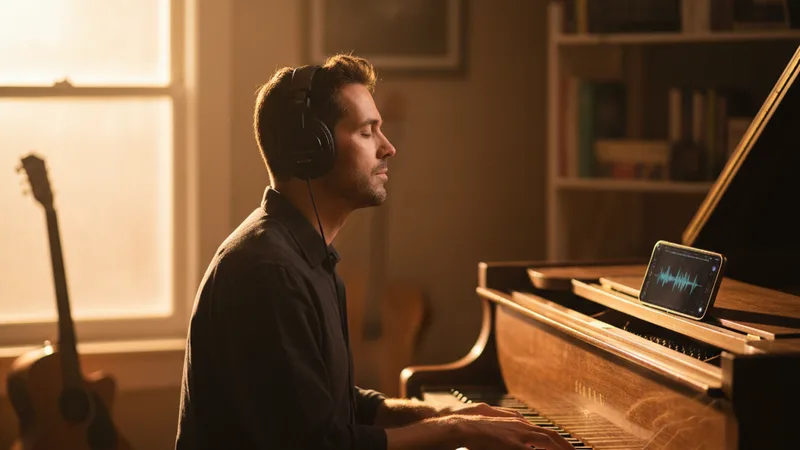
Honest accounting of where AI jazz is the right tool and where actual musicians still win decisively.
Useful:
- Lo-fi jazz beats for study, work, and content creation. This is the AI jazz subgenre that works most cleanly. The entire lo-fi study scene was already accustomed to recombinant production aesthetics, and AI fits naturally.
- Restaurant, hotel lobby, and lounge background music. Undemanding ambient jazz for hospitality contexts is consistently achievable. Restaurants paying for stock-library jazz can replace the library with custom AI tracks.
- Smooth jazz and contemporary jazz instrumentals for video content. YouTube content, podcast intros, ad spots, and corporate video benefit from the smooth jazz subgenre that AI handles well.
- Demo tracks for jazz musicians sketching compositions. A jazz composer can use AI to generate a draft of a tune they are writing — quick sonic sketch of how a melody might sound with a rhythm section — before booking a studio.
- Personal-occasion vocal jazz standards. Custom AI vocal jazz tracks for anniversary songs, wedding standards, or memorial tributes can land emotionally when the subgenre fits the recipient.
Still pastiche:
- Bebop and post-bop intended for jazz listeners. AI produces bebop-flavored tracks that read as off to anyone who actually listens to Bird, Bud Powell, Clifford Brown. The harmonic depth is not there yet.
- Free jazz and avant-garde. The subgenres that depend on individual artistic vision and the willingness to break form are not what current AI models reproduce.
- Long-form modal jazz. Short modal cues work; A Love Supreme-length modal exploration does not.
- Anything that depends on virtuosic improvisation. The defining trait of great jazz — the solo that develops a motif over five minutes and resolves it — is beyond what AI generates structurally.
- Live jazz performance contexts. Real jazz is a live ensemble art form. AI tracks have no place on a jazz club stage. They live in recordings, playlists, and background-music contexts.
- Albums intended to be heard as serious jazz statements. A solo musician releasing an AI-assisted album as serious jazz risks the same critical reception as releasing a pastiche album. The jazz audience is honest about distinguishing real improvisation from generated approximation.
For the broader licensing context for commercial jazz releases, the can you sell AI-generated music legal guide covers the rights and disclosure questions.
Try this prompt right now
Open Muziko on iPhone, tap Create, switch to Describe mode, pick Jazz genre and Dreamy mood, and paste this prompt (adjust the subgenre and instrumentation to fit your purpose):
"Cool jazz instrumental in the Birth of the Cool tradition, 110 bpm, dreamy and confident, acoustic piano with extended chord voicings including ninths and altered dominants, upright bass walking through the changes, brushed drums on ride and snare with light brush work, muted trumpet on the melody with relaxed mid-register phrasing and behind-the-beat feel, no synthetic instruments, medium swing feel, lazy laid-back rhythm section, head-solos-head form with the melody for sixteen bars then a two-chorus piano solo then the melody restated, two minutes forty seconds total, clean ending on the tonic, warm room-tone mastering with light tape saturation and restrained dynamic range, mastered for jazz club playback."
Generate four to six takes. Listen on real speakers with low ambient noise — jazz mixes need quiet listening to reveal their texture, and headphones in noisy contexts hide the subtlety that defines whether a take landed. Pick the take where the piano voicings include real extensions, the bass walks rather than rests on roots, and the trumpet melody phrases naturally rather than mechanically.
In testing, this template produces a demo-grade cool jazz track in roughly four to five total generations about 70% of the time. For other genre how-tos in the same workflow style, the AI country generator guide covers country prompting craft, and the AI lo-fi guide covers the lo-fi-jazz overlap from the lo-fi side.
Frequently asked questions
Can AI really generate convincing jazz, or does it always sound fake?
It depends entirely on subgenre. Lo-fi jazz, smooth jazz, cool jazz instrumentals, vocal jazz standards, and contemporary jazz background music are achievable on the second or third generation in 2026 and pass casual jazz-listener inspection. Bebop, post-bop, hard bop, fusion, and anything that depends on virtuosic improvisation still reads as pastiche to actual jazz listeners — the harmonic depth and rhythmic feel are not there yet. The trick is picking the right subgenre for what you need. Background music and instrumental backing tracks work. Serious jazz statements meant for the jazz audience do not.
Which jazz subgenres work best with AI music generators?
In order of how consistently they land: lo-fi jazz (most reliable), smooth jazz, cool jazz instrumentals, contemporary jazz, vocal jazz standards with simple harmonic structures, Latin jazz and bossa nova, modal jazz in short form. The subgenres that struggle: bebop and post-bop (harmonic complexity), jazz fusion (virtuosity), free jazz (formlessness), big band swing (ensemble depth), gypsy jazz (stylistic specificity), and long-form modal jazz (structural development). Pick a working subgenre that fits your purpose rather than trying to force a struggling subgenre.
How do I get the AI to use real jazz chord vocabulary instead of pop chords?
Prompt for it explicitly. The phrase "extended jazz chord voicings including ninths, elevenths, thirteenths, altered dominants, and quartal voicings" tells the AI to use jazz harmony. Without this direction, the AI defaults to simpler triadic chord vocabulary appropriate for pop. You can be even more specific — "rootless voicings in the left hand, color tones in the right hand" for piano-led tracks, or "tritone substitutions on the dominant chords" for more modern jazz harmony. The more harmonic specificity you give the AI, the closer the result gets to real jazz harmony. Vague prompts produce vague harmony.
Why does AI-generated jazz often sound stiff rhythmically?
Real jazz swing is a complex micro-timing relationship between the rhythm section and soloist that AI models trained mostly on straight-eighth pop music have not fully internalized. Up-tempo swing (180+ bpm) is the stiffest. Medium swing (110-140 bpm) is acceptable. Ballad swing (60-90 bpm) is the most natural. The fix in the prompt is to explicitly specify the feel — "medium swing feel, lazy laid-back ride cymbal pattern, walking upright bass through the changes, brushed snare on beats two and four with a relaxed behind-the-beat feel." That direction tightens the rhythmic result. For up-tempo swing specifically, AI is still not on convincing footing.
Can I use AI jazz tracks in restaurants, hotels, or commercial venues?
Yes, when generated on the paid tier of a reputable AI music app like Muziko Pro at $34.99 per year, Suno Pro, or Udio Pro. The paid tier grants commercial usage rights including public-venue background music. Restaurants and hotels that currently pay for stock library subscriptions (Soundtrack Your Brand, Cloud Cover Music, Mood Media) can replace the library with custom AI tracks at lower cost, and the result is often more on-brand because the venue can prompt for the specific subgenre and tempo that matches its atmosphere. Disclose AI use in any music licensing audit if asked; the paid tier provides the underlying license.
Is it legal to release AI jazz tracks on Spotify and Apple Music?
Yes, when generated on the paid tier of a reputable AI music app and distributed through a service that supports AI music (DistroKid, TuneCore, CD Baby). All major streaming platforms in 2026 ask for AI content disclosure on uploads; provide that disclosure honestly. Never prompt the AI to imitate a specific living artist's voice or style. Be aware that the jazz audience on streaming platforms is often discerning and tends to leave honest reviews about whether tracks read as real jazz or as pastiche, so consider what subgenre you are releasing and whether your audience is likely to embrace it. Lo-fi jazz tracks released into the lo-fi study category typically receive much warmer reception than bebop tracks released into a traditional jazz category.
Try everything you just read about. Muziko is free to download.
![AI Amapiano Generator: Log Drum Tracks [Tested 2026]](/_next/image?url=%2Fimages%2Fblog%2Fai-amapiano-generator-log-drum-tracks%2Fhero.webp&w=3840&q=75)
![AI Cinematic Music Generator: Trailer Scores [Tested]](/_next/image?url=%2Fimages%2Fblog%2Fai-cinematic-music-generator-trailer-scores%2Fhero.webp&w=3840&q=75)