
![AI Funk Generator: Heavy Grooves That Hit [Tested]](/_next/image?url=%2Fimages%2Fblog%2Fai-funk-generator-heavy-grooves-that-hit%2Fhero.webp&w=3840&q=75)
AI Funk Generator: Heavy Grooves That Hit [Tested]
AI funk generator tested across P-Funk, soul funk, and modern groove on iPhone. Heavy bass lines, tight horns, real pocket — Muziko in under 15 seconds.
There's a specific physical reaction that good funk produces. Your head nods before your brain processes anything. Your foot moves first. The groove enters through the body before it reaches the ears — which is exactly backwards from how most music works.
James Brown understood this. George Clinton understood it. Prince understood it so completely he made it look effortless, which fooled people into thinking it was simple. It isn't. Funk is the most rhythmically precise genre in popular music — every element in the pocket, every accent landing exactly where it needs to, nothing wasted.
Which is why I was genuinely uncertain whether an AI could generate real funk. Not "funky" music in the loosest sense — there are hundreds of stock tracks marketed as funk that are just pop music with a wah pedal on the guitar. Real funk. The kind where the bass is doing something interesting between the beats, the horns are hitting stabs that lock with the kick, and the guitar is chucking on the upbeats so hard it sounds like percussion.
The answer surprised me. With the right prompts, it's closer than I expected.
Why generic funk loops fall short
The stock funk problem is different from the stock blues problem. Blues fails by being too polished. Funk fails by being too timid.
Real funk requires rhythmic commitment. Funk is built on the "one" — the downbeat is everything, and every other element in the arrangement is either anticipating it, landing on it, or responding to it. Stock funk tracks treat the groove the way a corporate presentation treats bullet points: each element gets equal space, nothing gets emphasized, everything is safe. Real funk isn't safe. It commits.
The bass has to be doing something. In funk, the bass is not a supporting instrument — it's the melodic and rhythmic anchor simultaneously. Listen to Bootsy Collins on any Parliament-Funkadelic record. That bass line is more melodic than most pop songs' lead vocals, and it still locks the rhythm down. Stock funk bass loops typically play root notes with occasional passing tones. That's not funk bass.
Horn stabs need to hit like percussion. The brass in funk — the punchy two-note stab, the tight unison burst, the call-and-response with the rhythm section — has to lock with the kick drum so precisely that it feels physical. Stock horn libraries play melodic phrases. Funk horns play rhythmic punctuation.
Subgenres have real sonic signatures. 1970s James Brown soul funk sounds completely different from George Clinton P-Funk sounds completely different from Minneapolis sound (Prince) sounds completely different from modern neo-soul funk (D'Angelo, Vulfpeck). "Funk" as a category covers forty years of evolution and multiple distinct production traditions. Stock libraries flatten all of it.
What custom AI funk adds
When you generate funk with specific prompts on Muziko, you get access to things stock libraries can't provide:
- Era and subgenre specificity. "1970s James Brown soul funk," "Parliament P-Funk with psychedelic layers," "1980s Minneapolis sound," "modern neo-soul funk" — each produces a genuinely different sonic result.
- Bass character control. Specify "melodic Bootsy Collins-style slap bass" vs. "tight root-note pocket bass" vs. "fretless bass with slides" and the model adjusts. The bass line behavior changes the entire personality of the track.
- Horn stab patterns. "Tight two-note brass stab on the downbeat," "call-and-response horn section," "funk flute counter-melody" — these prompt elements translate into the arrangement.
- Guitar voicings. "Wah-pedal rhythm guitar on upbeats," "clean single-note funk guitar lick," "muted chucking pattern" — the guitar's role in funk is rhythmic, not melodic, and specifying that changes everything.
- Drum pocket feel. "Tight and clipped, no sustain on the snare," "loose and behind the beat," "ghost notes on the snare between kick hits" — drum feel is the backbone of groove.
- Vocal options. Scream-and-grunt James Brown style, smooth soul vocal, spoken-word party call, or instrumental — all accessible through the prompt.
If you're already working in soul and R&B, the AI R&B generator guide covers the adjacent territory. Funk sits between R&B and hip-hop rhythmically — the trap article covers how trap's heavy 808 borrowed from funk's bass philosophy.
Step-by-step in Muziko
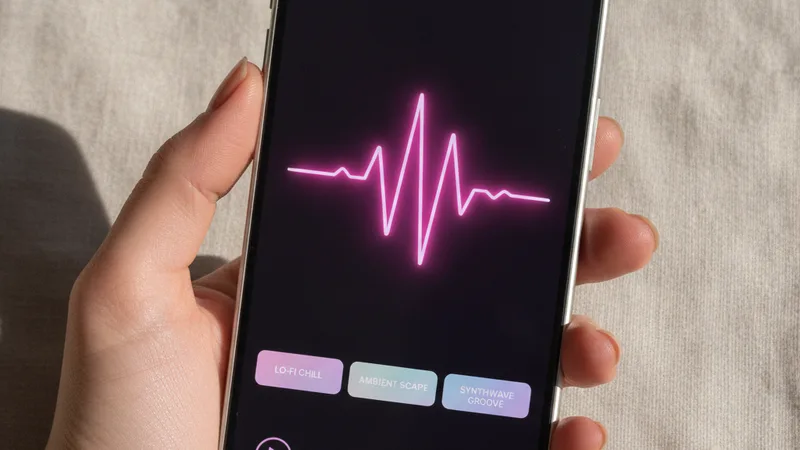
Here's exactly how I generated a soul funk track I ended up using as a demo bed:
- Open Muziko, tap Describe. For instrumental funk — groove tracks, background music, beat demos — Describe mode gives you precise control over texture. For funk songs with lyrics, Write Lyrics mode works too.
- Select Soul / Funk genre tag. Muziko has a dedicated Funk/Soul sub-engine with separate behavior from R&B. Use it.
- Set mood to Energetic or Groovy. Funk lives in those two. "Groovy" pulls the model toward tighter, more pocket-focused arrangements. "Energetic" pulls it toward louder, more aggressive P-Funk energy.
- Write a detailed prompt. Subgenre, era, bass character, horn treatment, guitar role, drum pocket feel. All of it matters.
- Generate. 8-15 seconds.
- Listen to the bass first. The bass line is the first diagnostic. Is it doing anything interesting rhythmically? Is it sitting in the pocket or floating on top of it? If the bass is just playing roots, the prompt needs more specificity.
- Then check the drum pocket. Does the kick and snare feel tight? Are there ghost notes? Is the hat pattern creating forward momentum?
- Regenerate up to four times. Funk groove varies significantly run-to-run — the model sometimes produces a particularly locked-in bass line on the third take that makes the whole track click.
- Refine with targeted prompt edits. "More slap bass," "add horn stabs on the two and four," "tighter snare," "wah guitar more prominent," "bring in the horns earlier." Small edits, real differences.
- Export for your DAW if you want to layer real instruments on top. The AI funk track makes a solid skeleton for adding live guitar or bass later.
Writing the prompt that gets in the pocket
This is where most people's funk prompts go wrong — they describe the vibe instead of the groove mechanics.
Layer 1: Subgenre + era. This is the most important single choice. "1970s soul funk, James Brown influence" sets the drum machine, the bass behavior, the horn arrangement style, the vocal treatment. "1970s Parliament P-Funk, psychedelic and cosmic" sets completely different expectations. "1980s Minneapolis funk, Prince influence" gets you drum machines, synth bass, and tighter production. "Modern neo-soul funk, Vulfpeck influence" gets you locked-groove minimalism with clean production. Pick one.
Layer 2: Bass character. This is the soul of the track. "Melodic slap bass, Bootsy Collins style" (P-Funk). "Tight root-note pocket bass with chromatic passing tones" (soul funk). "Synth bass with filter sweep" (Minneapolis). "Fretless bass with slides and vibrato" (jazz-funk). "Four-on-the-floor bass line with octave jumps" (disco-funk). One choice, and commit to it.
Layer 3: Drum feel. "Tight clipped snare with heavy ghost notes, no sustain" (classic soul funk). "Loose swinging feel, slightly behind the beat" (James Brown era). "Machine-tight, quantized" (Minneapolis/Prince). "Live-feeling, slightly rushing, urgent" (P-Funk). The drum feel changes the listener's physical experience of the groove.
Layer 4: Horn treatment. "Short punchy two-note brass stabs on the downbeat" (classic soul funk). "Full horn section with call-and-response phrases" (big band funk). "No horns, synth stabs only" (Minneapolis). "Funk flute with horn section" (early 1970s). "No horns, just guitar and rhythm section" (stripped).
Layer 5: Guitar role. In funk, guitar is percussion. "Muted upbeat chucking pattern, wah pedal" is the classic funk guitar role. "Clean single-note lick counter-melody" for something more melodic. "No guitar, keyboard-only funk" for a different texture.
Here's a working prompt for classic soul funk:
"1970s soul funk, 105 BPM, tight pocket, melodic slap bass with chromatic runs, punchy two-note horn stabs on the two and four, muted wah-guitar chucking on upbeats, clipped snare with heavy ghost notes, James Brown-era brass section arrangement, party energy, no psychedelic elements"
And for P-Funk:
"1970s Parliament P-Funk, 95 BPM, cosmic and layered, Bootsy Collins slap bass with melodic riffs, full horn section with call-and-response, funky synthesizer layers, rhythm guitar chucking, shout vocal with crowd response, psychedelic and high-energy, George Clinton influence"
Both produce convincingly subgenre-accurate results. The era and reference points are doing the heavy lifting.
For broader prompt strategy, see the full AI prompt guide.
Funk subgenre chart
Two months of testing across the funk tradition. Here's what consistently produces the most convincing results:
| Subgenre | BPM | Bass Style | Horns | Guitar | Drum Feel | Era Anchor |
|---|---|---|---|---|---|---|
| James Brown soul funk | 95-115 | Tight pocket, root-based | Short stabs, punchy | Wah chucking | Ghost notes, clipped snare | "1960s-70s soul funk, JB influence" |
| Parliament P-Funk | 85-105 | Melodic slap, Bootsy-style | Full call-and-response | Rhythm chucking | Loose, swinging | "1970s P-Funk, George Clinton" |
| Minneapolis / Prince | 100-130 | Synth bass, tight | Minimal or none | Clean licks | Machine-tight | "1980s Minneapolis sound" |
| Disco-funk | 115-130 | Four-on-the-floor, octave jumps | Strings + brass | Rhythm guitar | Steady four-on-floor | "1970s disco-funk, Earth Wind & Fire" |
| Jazz-funk | 90-115 | Fretless, melodic | Improvised solos | Clean comping | Loose jazz swing | "1970s jazz-funk, Herbie Hancock" |
| Neo-soul funk | 85-105 | Deep pocket, minimal | Sparse or none | Clean melodic | Tight, live-feeling | "Modern neo-soul, D'Angelo/Vulfpeck" |
| Afrobeat funk | 95-115 | Deep repetitive | Full horn section | Repetitive rhythm | Interlocking polyrhythm | "Fela Kuti, West African funk" |
| Electro-funk | 100-120 | Synth bass, 808 | Synth stabs | Synth guitar | Electronic drum machine | "1980s electro-funk, Zapp" |
| G-funk | 85-100 | Slow melodic synth bass | Whistling synth lead | Minimal | Slow, loose | "1990s West Coast G-funk, Dr. Dre" |
| Modern funk | 95-115 | Modern pocket bass | Optional horns | Clean or wah | Tight modern | "2020s funk revival, Cory Wong" |
The quickest experiment: use one prompt and just swap the era anchor. "James Brown soul funk" vs. "Parliament P-Funk" with everything else identical. The model produces completely different bass behavior, horn arrangements, and drum feels. That's the era anchor doing its job.
When AI funk works, when it doesn't
It works when:
- You're making content — YouTube intros, podcast bumpers, Instagram Reels — and need original funky music without paying for a sync license
- You're a producer using it as a demo skeleton to show a client or collaborator before committing to a studio session
- You're testing how a lyric or vocal idea sits against different groove feels before recording
- You want background music for a party, event, or retail space with a specific funk atmosphere
- You're exploring the difference between subgenres — P-Funk vs. Minneapolis sound — to find what fits a project
It falls short when:
- The bass line isn't doing enough. The model sometimes defaults to a simpler bass pattern than you want. Prompt specifically: "melodic, active bass line with passing tones and chromatic runs" rather than just "funk bass."
- You need the groove to feel truly improvised. Funk's best performances have a spontaneous, in-the-moment feel that AI doesn't fully replicate — it sounds composed rather than discovered.
- You need stems for serious production mixing. Muziko outputs a stereo master. See the stem extraction guide if you need separate tracks.
- The subgenre is very niche. "Zydeco funk" or "Afrobeat-jazz fusion" produces mixed results. The major traditions above work consistently.
- You want a specific tempo that's very slow or very fast for funk. Below 80 BPM and above 140 BPM starts to pull outside funk's natural pocket.
Try this prompt right now
Open Muziko, tap Describe, and paste this in:
"1970s soul funk, 108 BPM, tight pocket groove, melodic slap bass with passing tones, short punchy brass stabs on the two and four, muted wah-guitar chucking on the upbeats, clipped snare with ghost notes, party energy, James Brown-era arrangement, no psychedelic elements"
Generate four takes. Listen to the bass line on each — find the take where it's doing something interesting between the beats. That's the one worth keeping.
Open Muziko in the App Store →
Frequently asked questions
Can AI generate real funk music with groove?
Yes, with specific prompts. The key is specifying bass character, horn treatment, guitar role, and drum pocket feel — not just the subgenre label. Generic "funk" prompts produce generic results. Prompts that specify "melodic slap bass," "punchy horn stabs on the two and four," and "ghost notes on the snare" produce grooves that actually hit.
What is the difference between soul funk and P-Funk?
Soul funk, associated with James Brown, is tighter and more percussion-forward — short horn stabs, clipped drums, the groove locked down precisely. P-Funk, associated with Parliament-Funkadelic, is looser, more psychedelic, with longer melodic bass lines and fuller horn arrangements. Both are distinct prompts and produce noticeably different AI results.
What BPM is funk music typically?
Most classic funk sits between 90 and 115 BPM. James Brown era tends toward 100-115. Parliament P-Funk often runs slower at 85-100. Minneapolis sound (Prince) goes faster, 110-130. G-funk sits around 85-100. Specify the BPM in your prompt — it affects the pocket feel significantly.
Can I use AI funk music for YouTube videos?
Yes. With Muziko Pro you own commercial rights to the music you generate. YouTube's Content ID won't flag original AI-generated music. Funk works particularly well for YouTube intros, podcast bumpers, and content with energetic transitions. See the licensing guide for details.
How does AI funk differ from AI R&B?
Funk is primarily rhythmic and groove-focused — the pocket is the point. R&B is more melodic and emotionally driven. In practice, funk prompts should emphasize bass character, drum pocket, and horn stabs. R&B prompts emphasize melody, chord progressions, and vocal warmth. The AI models handle them as distinct genres.
Can AI generate G-funk like 1990s West Coast hip-hop?
Yes. Specify "1990s West Coast G-funk, slow melodic synth bass, whistling synth lead, loose laid-back drums, Dr. Dre influence" and the model produces a recognizable G-funk texture. The slow tempo and melodic synth bass are the key prompt elements that define it.
Try everything you just read about. Muziko is free to download.
![AI Soul Music Generator: Motown Warmth [Tested 2026]](/_next/image?url=%2Fimages%2Fblog%2Fai-soul-music-generator-motown-warmth%2Fhero.webp&w=3840&q=75)
![AI Blues Generator: Delta, Chicago & Soul Blues [Tested]](/_next/image?url=%2Fimages%2Fblog%2Fai-blues-generator-delta-chicago-soul-blues%2Fhero.webp&w=3840&q=75)
![AI Amapiano Generator: Log Drum Tracks [Tested 2026]](/_next/image?url=%2Fimages%2Fblog%2Fai-amapiano-generator-log-drum-tracks%2Fhero.webp&w=3840&q=75)