
AI R&B Generator: Modern Soulful Tracks in 5 Minutes
Generate modern R&B tracks with AI on iPhone — neo-soul, alt-R&B, contemporary love songs, R&B-trap crossover. Prompt templates that produce real R&B, not soul-flavored pop, in 5 minutes.
R&B is the genre where the AI music generation gap between competent and actually convincing shows up most starkly. The production conventions are tight, the vocal expectations are high, and the genre has accumulated nearly seventy years of evolution from doo-wop through Motown through quiet storm through neo-soul through alt-R&B into the modern alt-pop crossover. Generic "R&B" prompts in 2026 produce soul-flavored pop most of the time — the rhythm section approximates R&B, the vocal goes in a generic pop direction, the harmonic vocabulary stays in pop territory rather than crossing into the extended-chord vocabulary that defines actual R&B. The fix is narrow subgenre prompting, explicit harmonic vocabulary direction, and the right vocal style for the specific era you're targeting.
This is the case for narrow R&B prompting that I've tested across about forty generations. R&B subgenres are tighter than they look from the outside — a 90s neo-soul track and a contemporary alt-R&B track and a modern R&B-trap crossover are barely the same genre to actual R&B fans. Generic prompts split the difference and land in the soul-flavored-pop valley nobody specifically wants. Subgenre-specific prompts produce tracks that actually sit in the R&B tradition.
This guide is the workflow I've refined for generating modern R&B on iPhone — contemporary R&B, neo-soul, alt-R&B, quiet storm, R&B-trap crossover, R&B ballads — in under five minutes per track. The prompt templates that hit each subgenre's conventions, the lyric and vocal patterns that read as R&B rather than as pop, and the honest limits of R&B generation in 2026. For the broader Muziko genre support, see the R&B genre page.
Why generic R&B prompts produce soul-flavored pop
A few specifics about modern R&B that almost no non-R&B listener fully thinks about.
R&B harmony has roughly five times the complexity of pop harmony. Real R&B uses extended chords (9ths, 11ths, 13ths), altered dominants, modal interchange, gospel-rooted voice leading. Pop tends toward simple triadic harmony. AI music models trained mostly on pop produce tracks with simpler harmonic vocabulary; R&B listeners hear the gap immediately. The fix is prompting explicitly for "extended R&B chord voicings including 9ths, 11ths, and major 7ths" and "gospel-rooted voice leading."
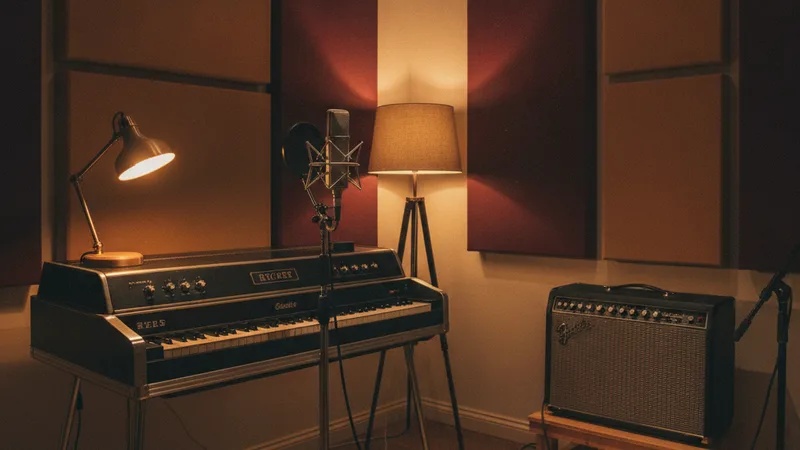
The Rhodes electric piano (or its samples) is R&B's signature melodic instrument. From the 70s soul era through neo-soul through contemporary R&B, the Rhodes carries the harmonic and melodic content in most R&B subgenres. Naming the Rhodes explicitly in the prompt is the single biggest production direction that pushes the AI toward actual R&B sound rather than pop with R&B drums.
Vocal delivery is its own discipline. R&B vocals use melisma, runs, vibrato control, and emotional dynamics in ways pop vocals don't. AI vocal generation in 2026 handles modern R&B vocal style competently when prompted explicitly but defaults to pop vocal style when prompted generically. The fix is "soulful R&B vocal with melisma and vocal runs in the chorus, restrained delivery on the verses, full ad libs on the bridge."
Tempo conventions are slower than pop. Most modern R&B sits at 75-95 BPM. Pop sits at 100-128 BPM. Generic "R&B" prompts often produce tracks closer to pop tempos that read as off to R&B listeners.
Drum programming has its own conventions. Modern R&B uses a combination of half-time feel, swung 16th hi-hats, soft snare, and 808 bass — sometimes called "trap-soul" or "R&B-trap" — that differs from pop drums in specific ways. Naming the drum conventions explicitly produces better R&B output.
For the foundational prompt-craft, how to write AI song prompts that actually produce great music is the most useful companion read.
What AI R&B gets right — and what it still misses
Honest accounting of where AI R&B lands in 2026.
Gets right consistently:
- Contemporary R&B ballads (2018-2026 era). Slow tempo, lush instrumentation, soft vocal — AI handles this cleanly on the second or third generation.
- R&B-trap crossover tracks. The modern trap-soul aesthetic with R&B vocals over trap-derived drums is well-mapped in AI training data and produces convincing results.
- Neo-soul instrumentals. Rhodes-driven, jazz-influenced harmonic vocabulary, mid-tempo grooves — achievable with narrow prompting.
- Quiet storm slow jams. Soft sustained pads, slow tempo, restrained vocal — straightforward for AI to produce.
- Alt-R&B with electronic textures. Frank Ocean / The Weeknd-adjacent atmospheric R&B with synth pads and processed vocals — AI handles the texture well.
- Modern R&B-pop crossovers. Where R&B meets contemporary pop, AI produces convincing demo-grade tracks.
Still misses or inconsistent:
- Authentic gospel-rooted vocal runs. The specific style of melisma and vocal runs that defines great R&B vocals from the gospel tradition is approximated by AI but tends to land in generic-pop-melisma territory rather than gospel-rooted R&B melisma.
- Real 90s R&B production. The specific drum machine sounds (Roland TR-808 / TR-909 / SP-1200), the specific synth pads, and the specific vocal stacking from 90s R&B are at the edge of AI capability.
- Classic Motown and soul. Genuine Motown-era and Stax-era soul depends on live ensemble playing and analog production. AI produces approximations that read as soul-flavored pop rather than as classic soul.
- The specific micro-timing of R&B grooves. Real R&B drummers play behind or ahead of the beat in specific ways that define the groove. AI tends toward straight quantized timing that reads as off to R&B listeners.
- Region-specific R&B styles. Atlanta R&B, Detroit R&B, Memphis R&B, LA R&B each have specific production conventions that AI homogenizes.
- Authentic ad libs in the gospel-soul tradition. The vocal ad libs of great gospel-rooted R&B singers carry specific musical and emotional content that AI ad libs approximate but don't fully replicate.
For more on AI music quality across genres, the best AI music app for iPhone 2026 ranking covers what each major app handles best.
Step-by-step: a modern R&B track in Muziko
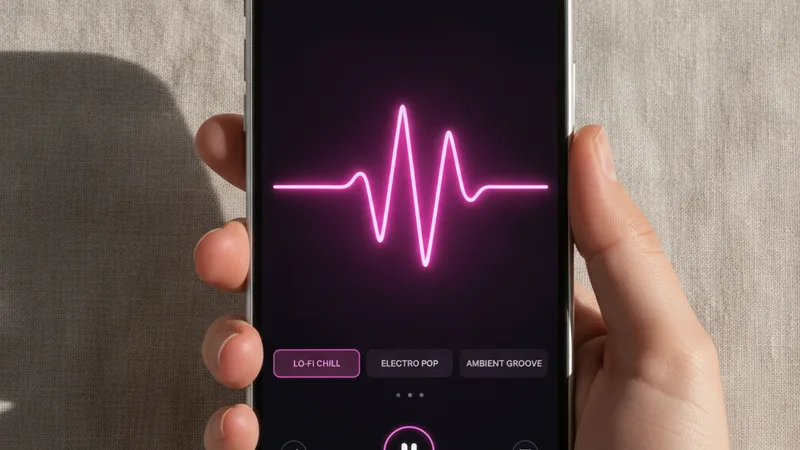
The workflow. Total time on a successful run averages 4-5 minutes.
1. Open Muziko on iPhone or iPad. Switch to Write Lyrics mode for vocal tracks or Describe mode for instrumental R&B beats.
2. Pick the genre. Pick R&B if available. If not, the closest tags are Soul or Pop with explicit R&B redirection in the prompt.
3. Pick a mood. Sentimental for ballads and slow jams. Sentimental + dreamy for alt-R&B and atmospheric tracks. Confident + sentimental for contemporary R&B. Confident for R&B-trap crossover.
4. Specify the subgenre explicitly. "Contemporary R&B in the 2024-2026 era" or "neo-soul in the late-90s D'Angelo and Erykah Badu tradition" or "alt-R&B in the Frank Ocean atmospheric tradition" or "R&B-trap crossover in the modern trap-soul tradition" or "quiet storm slow jam in the 80s tradition." The subgenre direction is the single biggest lever.
5. Name the Rhodes and instrumentation. "Rhodes electric piano with extended chord voicings, warm fingered bass, brushed soft drums with swung 16th hi-hats, soft string pad on the bridge" for neo-soul. "Synthesized Rhodes-style electric piano with atmospheric reverb, programmed half-time drums, 808 bass with movement" for modern R&B.
6. Specify the harmonic vocabulary. "Extended R&B chord voicings including 9ths, 11ths, 13ths, and major 7ths, gospel-rooted voice leading on the bridge." This is the single biggest distinction between R&B and pop.
7. Set the tempo. 70-85 BPM for slow jams and ballads. 80-95 BPM for mid-tempo contemporary R&B. 85-100 BPM for upbeat R&B. R&B tempos are slower than pop tempos by 15-25 BPM on average.
8. Vocal direction. "Solo female vocal soulful with melisma and vocal runs in the chorus, restrained delivery on the verses, full ad libs on the bridge" for soulful contemporary R&B. "Solo male vocal smooth contemporary R&B delivery with light melisma" for alternative.
9. Generate four to six takes. Listen for: Rhodes presence, harmonic depth, vocal soulfulness without overplaying, drum groove feel. Pick the take where all four land.
For the full mobile workflow, the AI song generator for iPhone 2026 guide covers each creation mode in depth.
Writing R&B lyrics and prompts that hit the genre
A working R&B prompt has seven ingredients. Miss any one and the result tends toward soul-flavored pop.
The subgenre, named explicitly. "Contemporary R&B" or "neo-soul" or "alt-R&B" or "R&B-trap crossover" or "quiet storm" — each routes the AI toward different production defaults.
The Rhodes electric piano as the lead instrument. Naming the Rhodes is the most efficient single direction that pushes the AI from pop into R&B. "Rhodes electric piano with light vibrato" in the prompt produces a meaningfully different sonic foundation than a generic "piano" direction.
Extended chord vocabulary. "Extended R&B chord voicings including 9ths, 11ths, 13ths, and major 7ths, gospel-rooted voice leading, occasional altered dominants on the turnarounds."
The tempo as a specific number tied to the subgenre. 78 BPM for a slow jam. 82 BPM for a contemporary R&B ballad. 88 BPM for an upbeat modern R&B. 75 BPM for an atmospheric alt-R&B track.
The vocal direction in the soulful tradition. "Solo female vocal soulful with restrained verses and full melisma in the chorus, vocal runs on the bridge, ad libs throughout the second half."
Drum programming for the subgenre. "Brushed soft drums with swung 16th hi-hats and soft snare" for neo-soul. "Programmed half-time drums with 808 bass movement" for modern R&B-trap. "Live-feel drums with light cymbal washes" for retro soul.
R&B-mastering for streaming. "Mastered with warm midrange, prominent vocal, controlled low end, modern R&B production aesthetic."
A combined working prompt for a contemporary R&B ballad:
"Contemporary R&B ballad in the 2024-2026 era, 78 BPM, sentimental and dreamy, Rhodes electric piano with extended chord voicings including 9ths, 11ths, and major 7ths, gospel-rooted voice leading on the bridge, warm fingered bass with melodic movement, programmed half-time drums with swung 16th hi-hats and soft snare, soft string pad entering on the second verse, solo female vocal soulful with restrained verses and full melisma in the chorus, vocal runs and ad libs on the bridge, light autotune for color, two minutes forty seconds, mastered with warm midrange and prominent vocal."
In testing, that prompt produces a contemporary R&B-grade track on roughly three to four generations about 80% of the time. For more on iterating prompts, the perfect prompts breakdown covers the underlying patterns.
Matching R&B subgenre to production conventions: a starter chart
R&B subgenres differ on tempo, instrumentation, harmonic vocabulary, and vocal style.
| Subgenre | Tempo | Signature instrumentation | Vocal style | Mood |
|---|---|---|---|---|
| Contemporary R&B (2020-2026) | 75-90 BPM | Rhodes + 808 + half-time drums | Smooth soulful with melisma | Sentimental |
| Alt-R&B | 70-85 BPM | Atmospheric synth + Rhodes + light drums | Restrained dreamy with vocal processing | Dreamy + sentimental |
| Neo-soul (90s-00s tradition) | 78-90 BPM | Rhodes + warm bass + brushed drums + light strings | Soulful with prominent melisma and runs | Sentimental |
| R&B-trap crossover | 75-90 BPM | Synth Rhodes + 808 + trap drums | Sung-rap hybrid with autotune | Confident + sentimental |
| Quiet storm / slow jam | 65-80 BPM | Soft pads + Rhodes + bass + restrained drums | Smooth restrained delivery | Sentimental + dreamy |
| Classic 90s R&B | 85-100 BPM | Roland synths + drum machine + sax/piano | Soulful with vocal stacking | Sentimental |
| Retro soul / 60s-70s revival | 85-105 BPM | Live band, Motown-style horns, organ | Powerful gospel-rooted | Confident + sentimental |
| R&B-pop crossover | 95-115 BPM | Pop instrumentation + soulful vocal | Smooth contemporary pop-soul | Playful + sentimental |
| Gospel-R&B | 75-95 BPM | Organ + Rhodes + choir + drums | Powerful gospel-rooted vocal | Sentimental + hopeful |
| Latin R&B | 85-100 BPM | Rhodes + Latin percussion + bilingual vocal | Smooth soulful with Latin phrasing | Sentimental |
| K-R&B | 80-100 BPM | Rhodes + modern pop production + Korean vocals | Smooth contemporary K-pop-soul | Sentimental |
| UK R&B (FKA twigs / Sault era) | 70-90 BPM | Atmospheric synth + spare drums | Restrained dreamy with processing | Dreamy |
| Afro-R&B (Tems / Tyla era) | 80-100 BPM | Rhodes + log drum + afrobeats percussion | Soulful with afro phrasing | Sentimental + confident |
| Trap-soul (PartyNextDoor / Bryson Tiller era) | 75-90 BPM | Synth Rhodes + 808 + half-time drums | Sung-rap with autotune | Sentimental + confident |
Pick the row matching what you want. For overlapping genre territory, see the AI hip-hop generator guide for R&B-trap crossover, the AI K-pop generator guide for K-R&B, the AI afrobeats generator guide for Afro-R&B, and the R&B genre page for Muziko's specific R&B support.
When AI R&B is the right tool — and when it falls short
Honest accounting of where AI R&B is useful and where actual musicians and producers still win.
Useful:
- Songwriter demos for R&B writers pitching to publishers. Contemporary R&B and alt-R&B AI tracks are at demo quality in 2026. Songwriters pitching R&B material can use AI for the production layer.
- Custom personal-occasion R&B songs. Anniversary songs, Valentine's songs, memorial tracks for R&B-loving recipients. The genre's emotional intimacy fits personal-occasion use cases well.
- TikTok and Instagram background music in R&B style. Short-form video uses R&B aesthetic frequently; AI fills the niche.
- Podcast intros and content background music for R&B-adjacent content. Smooth R&B as background for spoken-word content works cleanly.
- Indie artist instrumental backing tracks. Singers who can perform their own vocals over AI-generated instrumentals get a much cheaper alternative to studio production.
Falls short or carries risk:
- Serious R&B artist releases for the R&B audience. The R&B listening audience is sophisticated. AI-generated R&B released as a serious artist single will receive critical scrutiny, especially on the vocal performance side.
- Authentic vocal performance. Real R&B vocals from skilled singers carry emotional nuance AI doesn't yet replicate fully. For artist releases, bring in a real vocalist.
- Prompts that imitate specific living R&B artists. "In the style of SZA" or "in the style of Bryson Tiller" prompts are prohibited in commercial AI music apps. Stay generic with subgenre and instrument directions.
- Classic soul and Motown. Genuine 60s-70s soul depends on live ensemble playing. AI approximations read as soul-flavored pop to the audience that listens to classic soul seriously.
For the broader licensing context for commercial R&B releases, the can you sell AI-generated music legal guide covers the rights and disclosure questions.
Try the prompt now
Open Muziko on iPhone, tap Create, switch to Describe mode, pick R&B genre and Sentimental mood, and paste this prompt:
"Contemporary R&B ballad in the 2024-2026 era, 78 BPM, sentimental and dreamy, Rhodes electric piano with extended chord voicings including 9ths, 11ths, and major 7ths, gospel-rooted voice leading on the bridge, warm fingered bass with melodic movement, programmed half-time drums with swung 16th hi-hats and soft snare, soft string pad entering on the second verse, solo female vocal soulful with restrained verses and full melisma in the chorus, vocal runs and ad libs on the bridge, light autotune for color, two minutes forty seconds, mastered with warm midrange and prominent vocal."
Generate four to six takes. Listen on quality earbuds — R&B mixes need the warmth and detail laptop speakers hide. Pick the take where the Rhodes sits forward in the mix, the vocal carries melisma without overplaying, and the harmonic vocabulary feels R&B rather than pop.
For other genre how-tos in the same workflow style, see the AI K-pop generator guide, AI afrobeats generator guide, AI reggaeton generator guide, AI jazz generator guide, and AI hip-hop generator guide.
Frequently asked questions
Can AI generate convincing R&B, or does it always sound like soul-flavored pop?
It depends on subgenre and prompt specificity. Contemporary R&B (2018-2026 era), alt-R&B, neo-soul instrumentals, R&B-trap crossover, quiet storm, and modern R&B-pop crossovers are all achievable on the second or third generation in 2026 when you prompt explicitly for the Rhodes electric piano, extended chord voicings (9ths, 11ths, major 7ths), gospel-rooted voice leading, and soulful vocal delivery with melisma. Generic "R&B" prompts produce soul-flavored pop because they leave the AI to default toward simpler pop harmony and pop vocal style. The single biggest fix is naming the Rhodes electric piano and the extended chord vocabulary explicitly in every R&B prompt. Without those two directions, AI tracks slide into pop territory; with them, the tracks sit in real R&B.
What tempo should R&B be?
R&B tempos are slower than pop tempos by 15-25 BPM on average. Slow jams and ballads run 65-80 BPM. Contemporary R&B ballads run 75-85 BPM. Mid-tempo contemporary R&B runs 80-95 BPM. Upbeat R&B runs 85-100 BPM. Classic 90s R&B runs 85-100 BPM. Neo-soul runs 78-90 BPM. R&B-trap crossover runs 75-90 BPM. Quiet storm runs 65-80 BPM. Going more than 10 BPM above the genre convention tends to push the track toward R&B-pop or pop with R&B flavoring. Match the BPM to the subgenre and prompt the exact number rather than vague tempo directions.
How do I get the AI to use real R&B chord vocabulary instead of pop chords?
Prompt for it explicitly. The phrase "extended R&B chord voicings including 9ths, 11ths, 13ths, and major 7ths, gospel-rooted voice leading, occasional altered dominants on the turnarounds" tells the AI to use R&B harmony rather than pop harmony. You can also be more specific — "rootless voicings in the left hand of the Rhodes, color tones in the right hand" or "jazz-influenced harmonic substitutions on the bridge." The more harmonic specificity you provide, the closer the result gets to real R&B harmony. Vague prompts produce vague harmony, which in AI music almost always lands in pop territory because pop is the default training-data weight.
Can AI generate convincing R&B vocals with melisma and runs?
Partly. AI vocal generation in 2026 handles modern R&B vocal style competently for contemporary R&B and alt-R&B subgenres — soulful delivery, restrained verses, melisma in the chorus, ad libs on the bridge. What AI still struggles with is the specific gospel-rooted style of melisma and vocal runs that defines great R&B vocals from the gospel tradition. AI melisma tends toward generic-pop melisma rather than the specific musical content of gospel-rooted runs. For demo work and most personal-occasion songs, the AI vocal is acceptable. For serious artist releases where vocal performance is the centerpiece, bring in a real R&B vocalist.
Is it legal to release AI R&B tracks on Spotify and Apple Music?
Yes, when generated on the paid tier of a reputable AI music app like Muziko Pro at $34.99 per year, Suno Pro, or Udio Pro. The paid tier grants commercial usage rights including release on Spotify, Apple Music, YouTube Music, and Amazon Music through distribution services like DistroKid or TuneCore. Disclose AI use where required — all major streaming platforms in 2026 ask for AI content disclosure on uploads. Free-tier generations are not licensed for commercial release. Never prompt the AI to imitate a specific living R&B artist's voice or style. The R&B audience on streaming platforms is sophisticated and tends to leave honest reviews about whether tracks read as real R&B or as soul-flavored pop; position your releases honestly.
Should I use AI R&B for songwriter demos pitched to R&B publishers?
Yes for contemporary R&B, alt-R&B, neo-soul-adjacent, and R&B-trap demos. AI tracks are at demo quality and the cost-time math is decisive ($400-800 saved per demo, 5 minutes versus 2 weeks). For songwriters pitching modern R&B material to publishers, AI handles the demo production layer well enough to communicate the song idea. Many R&B songwriters use AI for the first 10-15 demo tracks of a new catalog, then bring in real session vocalists and players for the songs that gain traction with publishers. Always disclose AI use when submitting demos — most R&B publishers ask, and hiding AI use can damage relationships in a relatively close-knit industry.
Try everything you just read about. Muziko is free to download.

![AI Lyrics Generator: Write Song Lyrics Free [Tested 2026]](/_next/image?url=%2Fimages%2Fblog%2Fai-lyrics-generator%2Fhero.webp&w=3840&q=75)
![AI Amapiano Generator: Log Drum Tracks [Tested 2026]](/_next/image?url=%2Fimages%2Fblog%2Fai-amapiano-generator-log-drum-tracks%2Fhero.webp&w=3840&q=75)