
![AI Amapiano Generator: Log Drum Tracks [Tested 2026]](/_next/image?url=%2Fimages%2Fblog%2Fai-amapiano-generator-log-drum-tracks%2Fhero.webp&w=3840&q=75)
AI Amapiano Generator: Log Drum Tracks [Tested 2026]
Amapiano lives or dies on the log drum. I tested 40+ AI takes: private school, soulful, sgija and bacardi, plus the prompt that gets the bounce right.
Most genres are defined by a combination of things. Amapiano is defined by one sound, and if you don't get it, you don't have the genre at all.
The log drum is a deep, pitched, percussive bass hit that rolls in a melodic pattern underneath everything else. It's not a bassline in the way a house track has a bassline, and it's not a kick. It sits somewhere between the two, and it carries both the low end and the hook. Take it out of an amapiano track and what's left is a pleasant jazzy house record. Put it back and the whole thing bounces.
So when I started testing amapiano generation, my first twenty takes were a slow lesson in exactly that. I kept getting something adjacent. Warm keys, nice shakers, correct tempo, and a low end that was just a bass sound rather than the sound. The music was fine. It wasn't amapiano.
The fix turned out to be almost embarrassingly simple, and it's the same lesson as techno: you have to name the thing directly rather than describe the vibe around it.
Why amapiano prompts keep drifting into afrobeats
Afrobeats dominates the training data. It's the better-known export by a wide margin, so a prompt that gestures at "South African dance music" or "African house" tends to land on afrobeats instead. The two share warmth and percussion but almost nothing rhythmically. Our afrobeats guide covers that genre on its own terms.
"Log drum" is a term you have to actually use. This is the single highest-leverage word in the genre, and leaving it out is the most common failure. Describing "deep rolling bass" gets you a synth bass. Saying log drum gets you considerably closer to the real articulation.
The tempo band is narrow and specific. Amapiano mostly lives between 110 and 115 BPM. That's slower than house, slower than gqom, and slower than most afrobeats. Leave tempo out and you'll drift up to 120 and lose the characteristic unhurried bounce immediately.
The space in the arrangement is the point. Amapiano is patient. Elements enter slowly, there's a lot of air, and a track can sit on one idea for a long time before anything changes. Models fill space, so you get something busier and more urgent than the genre actually is.
The percussion is a layer, not a garnish. Shakers, rim clicks, and hand percussion run continuously and carry as much of the groove as the drums do. Asking for "percussion" gets you a token shaker. You have to ask for it to be prominent.
What AI amapiano generation gets right
Once the log drum lands, there's real value here:
- The keys are genuinely good. Wide, jazzy, slightly unresolved piano and Rhodes voicings are exactly what the genre wants, and this is the strongest part of the output by some distance.
- Percussion layers come out convincing. Shakers and rim clicks with a loose, human feel. Ask for them prominently and you get something usable straight away.
- Private school amapiano suits generation well. The jazzier, more sophisticated end of the genre leans on chord voicings and restraint, both of which the models handle.
- Loop and layer material for producers. Generate a keys-and-percussion bed, then program your own log drum over it. This hybrid workflow gave me the best results of anything I tried.
- Copyright-clear tracks for content. Amapiano is heavily used in dance videos and reels, which is a fast route to a claim. Generated tracks avoid that.
- Fast subgenre exploration. Soulful, private school, sgija and bacardi in under a minute, which is a useful way to find the register you actually want.
Step-by-step: making an amapiano track in Muziko
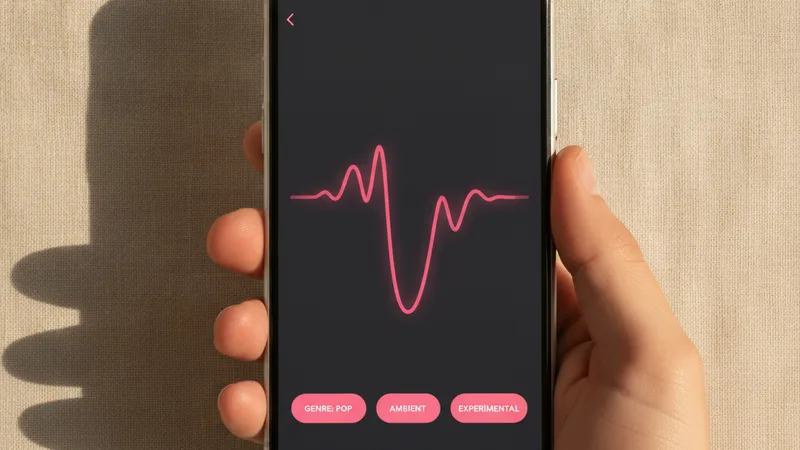
- Pick your subgenre before you open the app. Private school, soulful, sgija, or bacardi. They want genuinely different prompts and "amapiano" alone is too broad.
- Open Muziko and choose Describe mode. Most amapiano is instrumental or built on vocal chops rather than full topline vocals.
- Say "amapiano" and "log drum" in the same sentence. Do not rely on the genre name alone to summon the instrument. Name both.
- Set the tempo explicitly to 112 BPM unless you have a reason not to. The 110 to 115 band is where the genre sits and the model will drift without a number.
- Describe the log drum's behaviour. Deep pitched log drum rolling in a melodic pattern gives you far more than log drum on its own.
- Ask for the keys by character. Wide jazzy piano chords with unresolved voicings or warm Rhodes stabs. This is where the genre's mood lives.
- Make the percussion prominent in the prompt. Continuous shakers, rim clicks and hand percussion high in the mix. Do not let it be an afterthought.
- Ask for space and patience. Sparse arrangement, slow build, elements entering gradually, lots of air. This actively fights the model's instinct to fill.
- Choose the Chill mood tag for soulful and private school, Energetic for sgija.
- Generate four to six takes. The log drum is the thing that varies most between takes, and it's the thing you're judging.
- Judge the low end on headphones. The log drum's pitch and decay are the whole test, and a phone speaker will not reproduce either.
Writing the prompt that bounces
Amapiano prompting is unusually mechanical. You're naming four specific elements and one feel, and the hit rate goes up sharply once you do.
Name the log drum and describe what it does. Deep pitched log drum playing a rolling melodic pattern in the low end. This one phrase is worth more than every adjective in the rest of the prompt combined.
Anchor the tempo at 112. Say the number. The band is narrow and the drift is real.
Give the keys a jazz vocabulary. Wide voicings, ninth and eleventh chords, unresolved, slightly melancholy. Amapiano's harmonic character is closer to jazz than to house, and prompting it that way works.
Ask for percussion by name and by prominence. Continuous shakers, rim clicks, hand percussion, high in the mix, loose and human.
Ask for restraint explicitly. Sparse, patient, lots of space, slow gradual build, no drop. Amapiano does not have a drop and prompting without saying so invites one.
Use vocal chops rather than vocals. Processed vocal chops used as a percussive texture is the genre-accurate request. A full topline usually pulls you toward afro-pop.
A combined prompt that worked consistently:
Amapiano at 112 BPM, deep pitched log drum playing a rolling melodic pattern in the low end, wide jazzy piano chords with unresolved ninth voicings, continuous shakers and rim clicks high in the mix, sparse and patient arrangement with lots of space, processed vocal chops as percussive texture, warm and hypnotic, no drop
And a private school counterpart:
Private school amapiano at 110 BPM, restrained log drum, sophisticated jazz piano with extended chords and a soft Rhodes layer, brushed percussion and subtle shakers, very sparse arrangement with long patient sections, smooth and understated, instrumental
Amapiano subgenre chart: matching style to use
| Use case | Subgenre | Tempo | Key prompt words | Notes |
|---|---|---|---|---|
| Classic amapiano sound | Standard amapiano | 110-115 | Log drum, shakers, jazzy keys | The default. Start here. |
| Jazzy and sophisticated | Private school | 108-113 | Extended chords, restrained, sparse | Best output in the genre. |
| Emotional and vocal-led | Soulful amapiano | 110-114 | Warm pads, vocal chops, melodic | Ask for chops, not a topline. |
| Harder and percussive | Sgija | 112-118 | Aggressive log drum, driving | More energy, less space. |
| Faster, older-school | Bacardi | 118-125 | Raw, stripped, percussive | The Pretoria precursor sound. |
| Dance reel or TikTok | Standard amapiano | 112 | Punchy log drum, immediate | Front-load the hook. See TikTok guide. |
| Club or DJ set opener | Private school | 110 | Patient, long intro, subtle | Built for slow builds. |
| Workout or hype | Sgija | 115-118 | Driving, relentless, hard | See workout music. |
| Chill listening | Soulful amapiano | 108-112 | Warm, melodic, spacious | Lowest energy register. |
| Producer starting loop | Keys and percussion only | 112 | No log drum, sparse | Program the log drum yourself. |
| Crossover with house | Afro house leaning | 118-122 | Four-on-floor, log drum | Bridges to house. |
| Podcast or video bed | Instrumental amapiano | 110 | Soft, no vocal chops, gentle | Keep the log drum restrained. |
| Summer party playlist | Soulful or standard | 112-115 | Bright, warm, uplifting | Major-leaning keys work here. |
| Late-night set | Dark amapiano | 110-114 | Minor keys, sparse, moody | Ask for unresolved harmony. |
| Vocal song foundation | Soulful amapiano | 112 | Space left for a topline | Use Write Lyrics for the vocal. |
When AI amapiano works, and when it doesn't
Works well:
- Keys and harmony. Wide jazzy voicings are the strongest part of the output and genuinely usable as-is.
- Percussion layers. Shakers and rim clicks with a loose feel come out convincingly when you ask for them prominently.
- Private school and soulful. The more restrained, harmonically driven subgenres suit generation better than the aggressive ones.
- Hybrid producer workflow. Generate keys and percussion, program your own log drum on top. This is the highest-quality route by a clear margin.
- Content and social use. Claim-free tracks for dance videos and reels, which is most of what people want amapiano for online.
Falls short:
- The log drum itself. This is the honest headline. You can get close, but the pitch articulation and the specific decay of a well-programmed log drum are inconsistent, and it's the element the genre is judged on.
- The pocket. Amapiano's groove has a distinctive lazy behind-the-beat feel. Generation lands closer to the grid than the genre wants.
- Sub-bass weight. Same limitation as the electronic genres. The low end is present but rarely has the physical heft a club system needs.
- Long patient arrangement. A real amapiano track can run seven minutes and take three of them to arrive. You'll get a two-minute idea.
- Authentic vocal chops. Chops from South African vocal performances carry a specific character that generic processed vocals don't reproduce.
- Anything needing genuine scene fluency. The genre moves fast and its current sound is set by producers in Johannesburg and Pretoria, not by a model trained on last year's uploads.
Try this prompt right now
Open Muziko on the App Store, pick Describe mode, and run this:
Amapiano at 112 BPM, deep pitched log drum playing a rolling melodic pattern in the low end, wide jazzy piano chords with unresolved ninth voicings, continuous shakers and rim clicks high in the mix, sparse and patient arrangement with lots of space, processed vocal chops as percussive texture, warm and hypnotic, no drop
Generate four takes and listen on headphones. You're judging one element: does the low end play a melodic pattern with pitch movement, or does it just sit on a note? That distinction is the difference between amapiano and jazzy house with a bass, and roughly half the takes will fail it no matter how the prompt is worded.
Then remove the words "log drum" specifically, leaving everything else intact, and run it again. The track will still sound pleasant and it will stop sounding like the genre entirely. That single substitution is the clearest demonstration I found of why naming the instrument beats describing the vibe. Our prompt-craft guide goes further on single-variable testing.
Frequently asked questions
Can AI make convincing amapiano?
It handles the keys and percussion very well, with wide jazzy piano voicings and loose shaker patterns that are usable straight away. The weak point is the log drum itself, where pitch articulation and decay are inconsistent, and that's the element the genre is judged on. The best results come from a hybrid approach: generate the keys and percussion bed, then program your own log drum over the top.
What's the most important word in an amapiano prompt?
"Log drum." It's the deep pitched percussive bass that rolls in a melodic pattern underneath everything else, and it defines the genre. Describing it indirectly as "deep rolling bass" produces a generic synth bass instead. Name it explicitly and describe its behaviour, for example a deep pitched log drum playing a rolling melodic pattern in the low end, and the output changes character completely.
What BPM is amapiano?
Most amapiano sits between 110 and 115 BPM, with 112 a reliable default. Private school often runs slightly slower at 108 to 113, sgija pushes harder at 112 to 118, and bacardi, the older Pretoria precursor style, is faster at 118 to 125. Always specify a number, because leaving tempo out tends to drift the output upward toward house tempo and lose the unhurried bounce.
Why does my amapiano prompt sound like afrobeats instead?
Afrobeats dominates the training data as the better-known export, so vague prompts about African dance music land there by default. The two share warmth and percussion but are rhythmically very different. Fix it by naming amapiano and log drum together, setting the tempo to 112, asking for continuous shakers high in the mix, and requesting a sparse patient arrangement with no drop.
What's the difference between private school amapiano and sgija?
Private school is the jazzier, more sophisticated end of the genre, built on extended chord voicings, restraint and a lot of space, usually around 108 to 113 BPM. Sgija is harder and more percussive, with a more aggressive log drum and driving energy, typically 112 to 118 BPM. Private school tends to produce better AI output because it depends on harmony rather than rhythmic aggression.
Can I use AI amapiano tracks in TikTok or Instagram videos?
Yes. Tracks generated under a Muziko Pro subscription can be used commercially, including in social video content. That's a practical advantage in amapiano specifically, because the genre is heavily used in dance videos and reels, which makes it one of the faster routes to a copyright claim when using commercial releases. If you're new to generating on iPhone, the workflow guide is the place to start.
Try everything you just read about. Muziko is free to download.

![AI Cinematic Music Generator: Trailer Scores [Tested]](/_next/image?url=%2Fimages%2Fblog%2Fai-cinematic-music-generator-trailer-scores%2Fhero.webp&w=3840&q=75)