AI Music for TikTok: How to Generate Viral-Ready Tracks
What makes a TikTok track go viral, the AI prompt formulas that produce hook-first songs, and the export workflow to ship a viral-ready clip in under 10 minutes.
A TikTok track does not need to be a great song. It needs to be a great seven seconds. Most viral tracks I have studied have one specific hook — a phrase, a beat drop, a vocal moment — that hits within the first few seconds and is repeatable enough that creators want to use it as a soundtrack for their own videos.
AI music generators are unusually well-suited to this. The format favors short, hook-first tracks with a clear personality, which is exactly what a 90-second AI generation produces by default. You do not need an album-quality song — you need a moment.
This guide is about how I make AI tracks that work on TikTok specifically: the structural rules of viral-ready audio, the prompt formulas that produce hook-heavy generations, and the export workflow that gets a track into your TikTok upload feed in under 10 minutes.
The structural rules of viral TikTok audio
After watching hundreds of trending audios, the same patterns show up. A TikTok-ready track follows four rules:
- The hook hits in the first 7 seconds. Most TikTok videos are 15–30 seconds, and the audio they sample usually starts on a hook, not a build-up. If your generation has a slow intro, the first 8 bars will not get used.
- The chorus is short and repeatable. A four-bar chorus that loops well is more useful than an eight-bar chorus with a complex progression. Creators want to clip a section that loops cleanly.
- The instrumentation has one signature element. A specific synth lead, a recognizable vocal phrase, a unique drum hit. This is what people remember and search for. "That song with the…" — fill in the blank.
- The energy lives in a 90–140 bpm range. Slower than 90 feels too laid-back to dance to. Faster than 140 feels exhausting on repeat. The sweet spot for most viral tracks is 100–130.
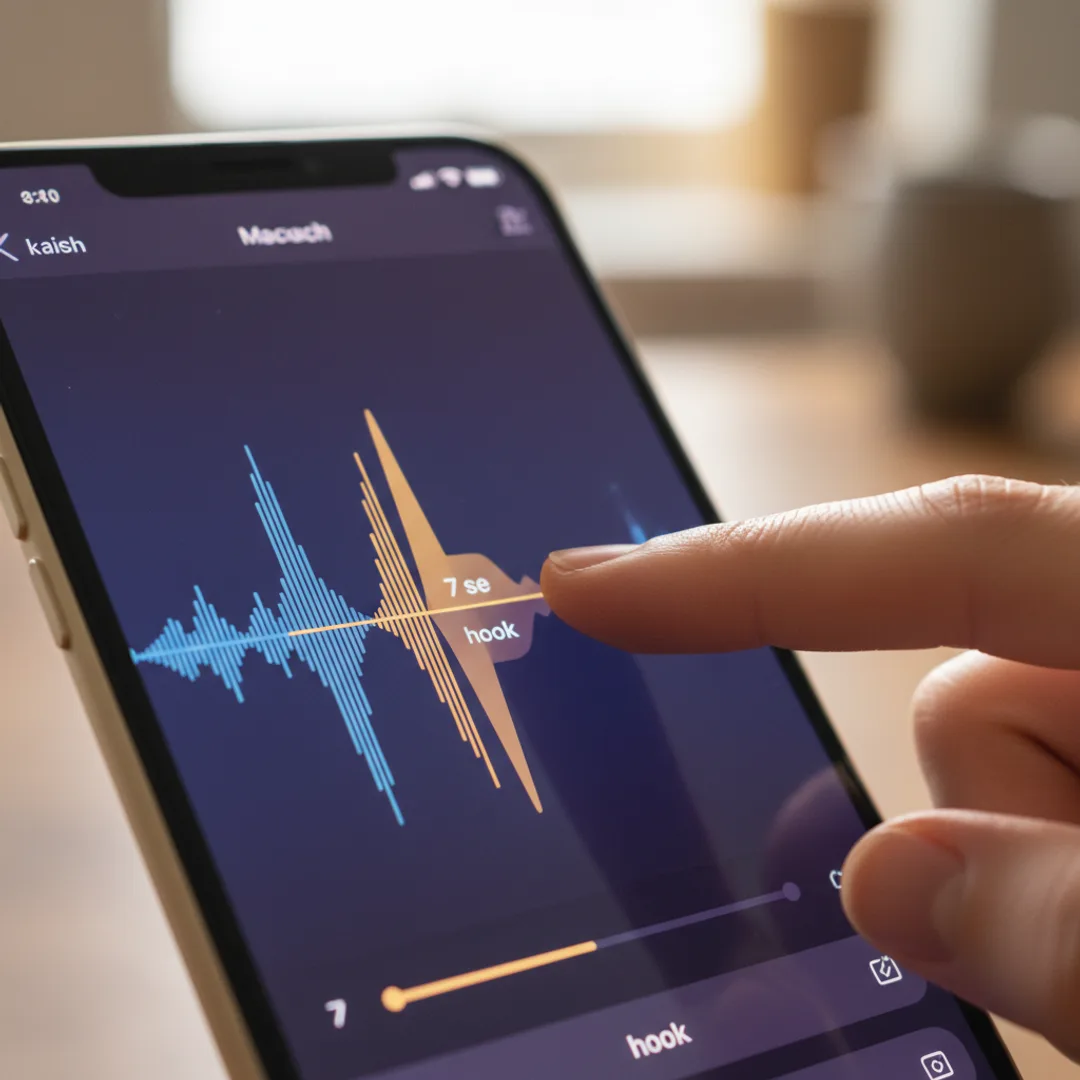
If your AI prompt does not specifically ask for these — hook in the first bars, repeatable chorus, signature element, mid-tempo — the model will produce a generic song with a long intro and no clear hook moment. The fix is to bake them into the prompt.
The TikTok prompt formula
Adapting the four-part prompt formula for TikTok specifically:
"[Genre], [vocals or instrumental], [signature element], [scene or mood], with a strong hook in the first 8 seconds, around [100–130] bpm, TikTok-friendly mix."
The two phrases that make the difference: "strong hook in the first 8 seconds" and "TikTok-friendly mix." The first tells the model to front-load the energy. The second pulls the production toward a brighter, mid-forward mix that translates well through phone speakers.
Working examples by trending TikTok genre:
Hyperpop / glitch pop
"Hyperpop, glitched female vocals, distorted synth lead, neon nightclub energy, with a strong hook in the first 8 seconds, around 130 bpm, TikTok-friendly mix."
Hyperpop is one of the most TikTok-native genres — short, intense, attention-grabbing. The "strong hook" instruction is critical here because hyperpop tracks naturally have busy intros that can dilute the punch.
Modern pop with vocal hook
"Modern pop, female vocals with a memorable repeating phrase, bright synth pads with handclaps, summer beach scene, with a strong hook in the first 8 seconds, around 118 bpm, TikTok-friendly mix."
Pop is the broadest TikTok category. The "memorable repeating phrase" cue tells the model to write a chorus that loops, which is exactly what creators sample.
Trap with sample-able beat drop
"Modern trap instrumental, dark atmospheric pads, hard 808 sub bass with rolling hi-hats, beat drop on the first chorus, with a strong hook in the first 8 seconds, around 145 bpm, TikTok-friendly mix."
Beat drops are TikTok candy. The "beat drop on the first chorus" cue gets the model to put the high-energy moment within the first 30 seconds of the track, where TikTok creators will actually use it.
Acoustic with emotional vocal
"Acoustic singer-songwriter, female vocals with a vulnerable delivery, fingerpicked guitar with light strings, late-night text message scene, with a strong hook in the first 8 seconds, intimate mix."
Slower tracks can still go viral on TikTok if the vocal hook is emotionally specific. The "scene" cue is what makes this work — a song "about a late-night text" gives creators a clear narrative to attach a video to.
Lo-fi for chill content
"Lo-fi hip hop instrumental, mellow Rhodes piano with a memorable melodic line, warm tape hiss, late-night studying, with a strong hook in the first 8 seconds, around 85 bpm."
Even lo-fi follows the same hook rule on TikTok. A lo-fi track without a memorable melodic phrase becomes background — fine for study videos, but not the kind of audio that gets sampled across thousands of clips.
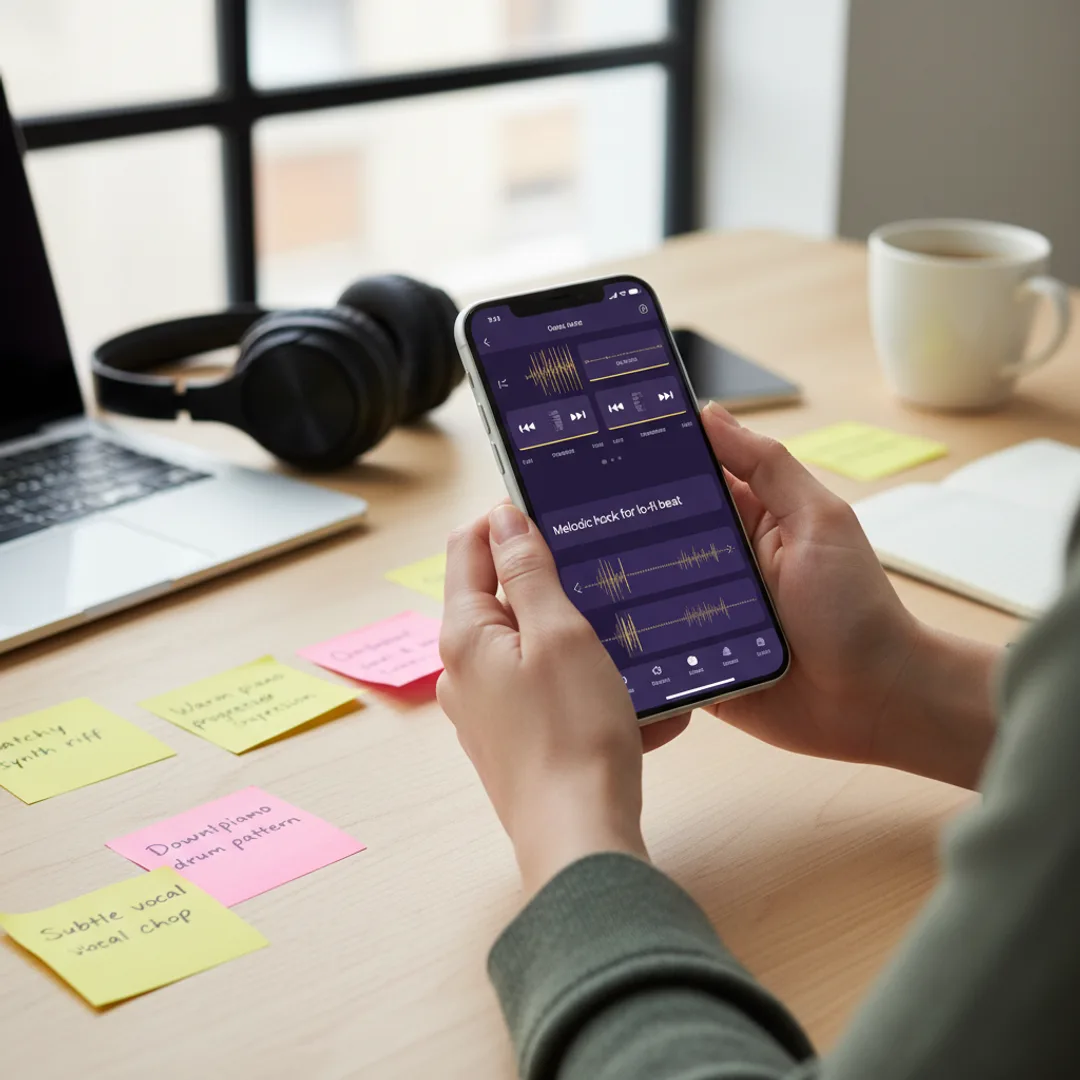
For more on what makes a prompt land in any genre, the prompts that work guide covers the full formula.
The 10-minute TikTok track workflow
Here is the process I use end-to-end on iPhone:
1. Generate two variations (3 minutes)
Open Muziko, pick a TikTok-friendly genre tile (Pop, Hip Hop, Lo-fi, or whatever fits your video), and generate two takes of the same prompt. Two variations is enough to compare hooks and pick the stronger one.
2. Listen for the hook moment (1 minute)
Play each generation. Find the strongest 7–15 second window. This is what the TikTok will be built on. If the hook in either take is weak, regenerate with a stronger emphasis: "with a very strong hook starting at the first beat."
3. Trim mentally to a hook-first clip (no editing required)
You do not need to actually edit the audio in most cases. TikTok lets you trim audio inside the upload flow — pick the start point that lands on your hook moment.
If the song's intro is too long and the hook starts at 0:18, you can trim the start of the audio so it begins at 0:18 when uploaded. TikTok will play from your chosen start point.
4. Export the audio (1 minute)
In Muziko, save the song to your library and export as MP4 to a TikTok-friendly format. The MP4 includes a waveform animation that you can use as the actual video, or you can extract the audio and use your own visuals.
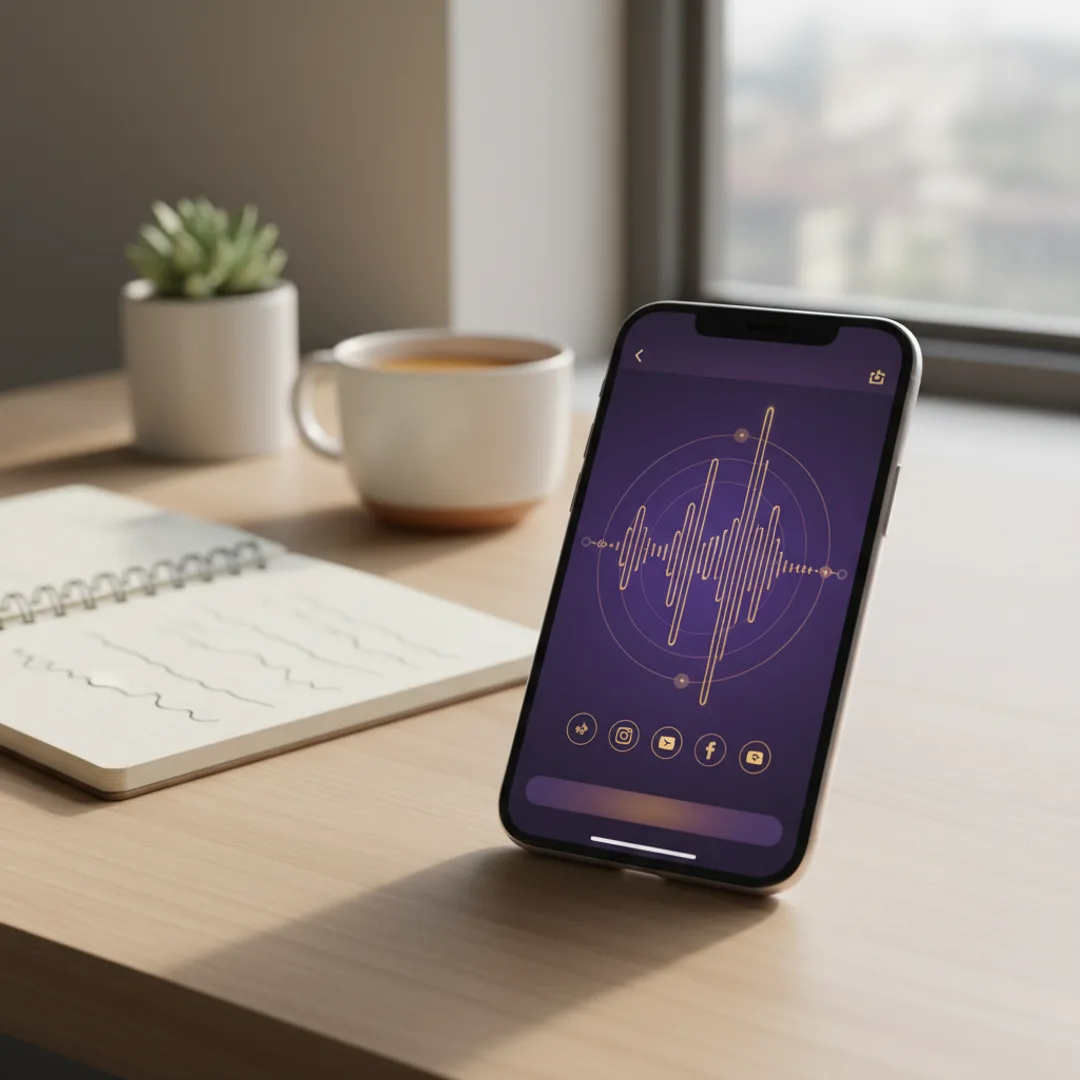
5. Upload to TikTok with the audio attached (3 minutes)
Open TikTok, hit Upload, attach your video, then add the AI-generated track from your iPhone's music library or import from Files. TikTok's audio trim slider lets you set the start point, and the upload completes in under a minute.
6. Iterate on what works
If the first version does not land, the fix is usually one specific thing. Same audio, different visual. Different audio start point. Different first frame. The audio is not the only variable.
What makes AI TikTok music actually go viral
The honest version: most AI tracks do not go viral, and that is fine. The ones that do share three traits:
- A specific hook moment that is easy to mimic. Either a vocal line creators can lip-sync, or a beat drop that lines up with a visual reveal.
- Clear emotional context. Songs about heartbreak, success, late nights, summer, parties — specific scenarios creators have video for. Generic songs about "feeling good" rarely get used.
- Sounds different enough to be distinctive but familiar enough to be safe. The two extremes — too generic, too weird — both fail. Aim for "this sounds like something I would hear, but I have not heard it."
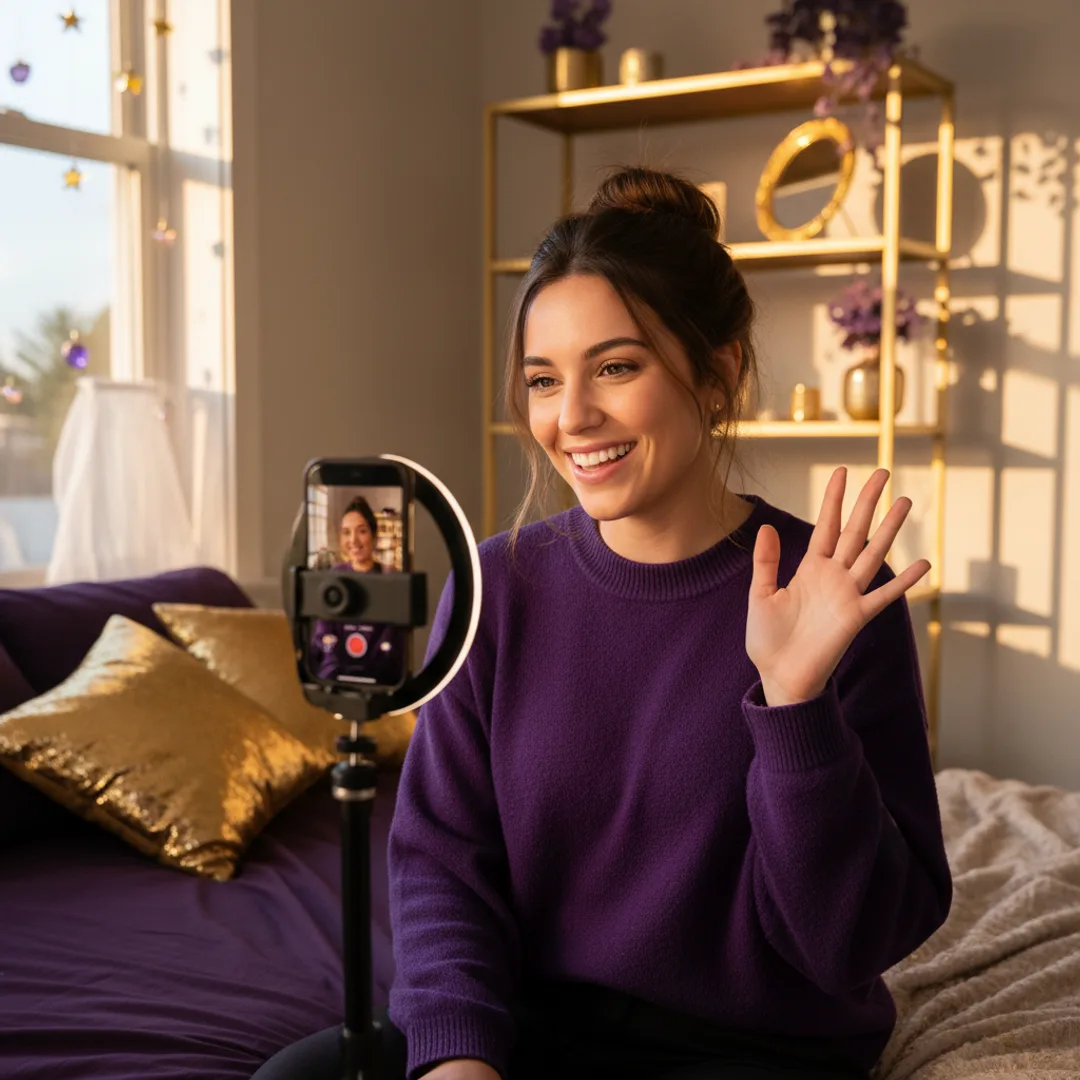
If you have not yet made your first AI song, the 3-minute walkthrough is the fastest way to start. For the strongest mobile experience, Muziko is built for iPhone-first workflows, and Muziko Pro at $34.99/year includes commercial use rights — important if your TikTok account is monetized through Creator Fund or partnerships.
For more on the broader landscape of AI music apps, the Top 10 ranking covers paid alternatives. For info on how AI music models actually generate hooks, Wikipedia's AI music generation entry is a useful primer.
Try this exact prompt for a viral-ready track
Open Muziko, tap Pop as the genre and Confident as the mood, and paste this:
"Modern pop, female vocals with a repeating memorable phrase, bright synth pads with handclaps and a clear vocal hook, summer night confidence energy, with a strong hook in the first 8 seconds, around 120 bpm, TikTok-friendly mix."
In testing, this prompt produces a TikTok-ready hook-first pop track on the first generation about 70% of the time. Generate twice, pick the version with the stronger hook, and you are usually at one ready clip in under 5 minutes from prompt to export.
Frequently asked questions
What is the best AI music generator for TikTok?
Muziko is the best for TikTok creators on iPhone — native app, fast generation, MP4 export. Suno is a strong second on web. Udio is the highest audio quality if you are desktop-primary.
How long should a TikTok song be?
Most viral clips are 7 to 30 seconds. The full AI-generated song can be 90 seconds or longer — TikTok lets you trim. The hook needs to land in the first 7 seconds of your clip.
Can I use AI music on TikTok without copyright issues?
Yes, AI music is generally safe on TikTok. For monetized content or commercial sound library uploads, you need a paid plan with commercial rights — Muziko Pro at $34.99/year is the cheapest.
What makes a TikTok track go viral?
A hook in the first 7 seconds, a clear emotional scenario, and a sound that is distinctive but familiar. The video paired with it matters as much as the audio.
How do I make my AI TikTok track stand out?
Add one signature element to your prompt — a specific synth, vocal phrasing, or drum hit. Prompts that name a clear sonic identity produce more memorable tracks.
The honest summary: AI music for TikTok works because the format and the technology happen to fit each other. Short, hook-first, mid-tempo, instantly shareable — that is what AI generators produce by default, and that is exactly what a viral track needs to be. The trick is asking for it explicitly. Five prompts and ten minutes are usually enough to land one TikTok-ready track. After that, the visual is the harder part.
Try everything you just read about. Muziko is free to download.