
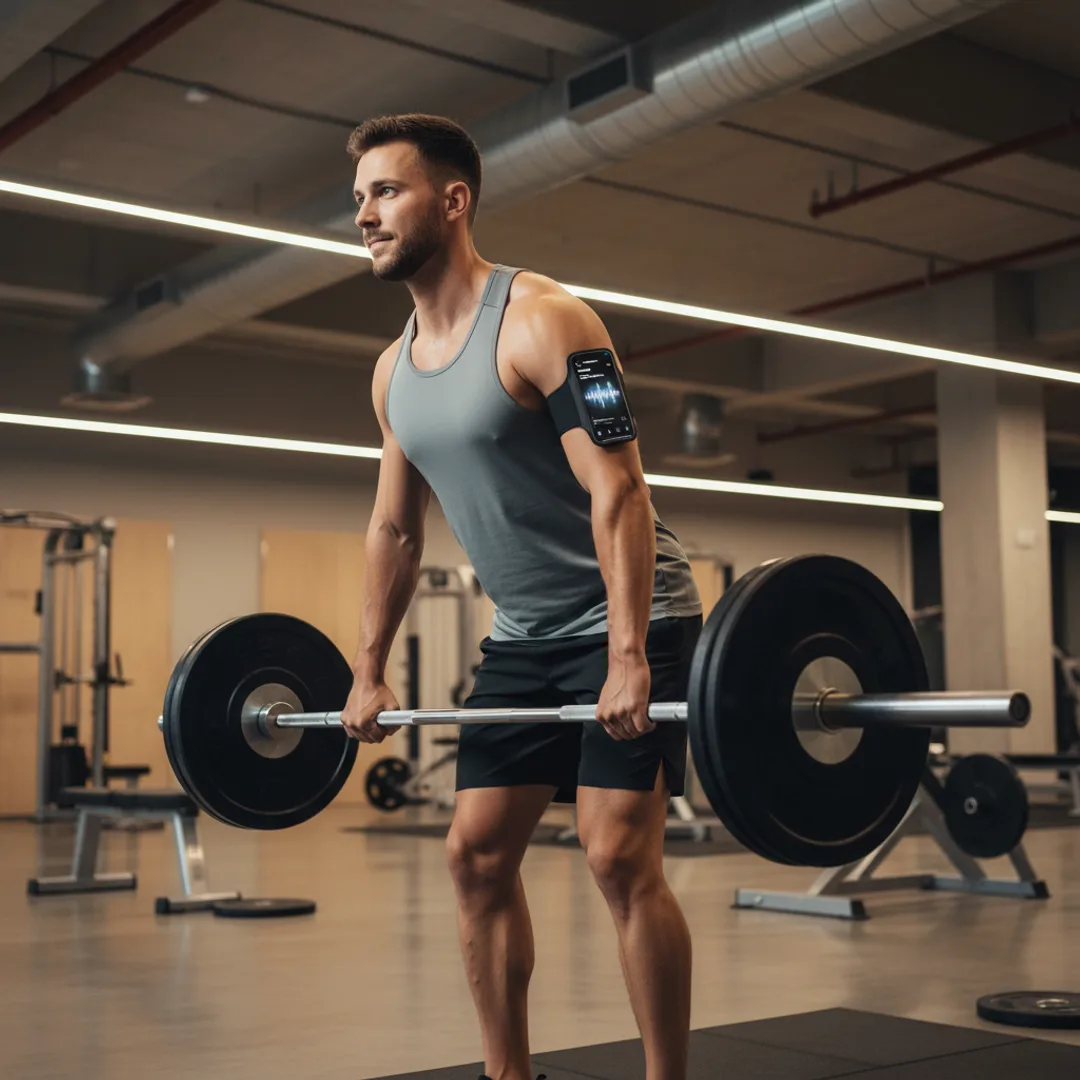
AI Workout Music Generator: Custom Gym Playlist 2026
Stop fighting the Spotify algorithm. Generate a custom AI workout playlist on iPhone tuned to your exact BPM, your exact lift, your name in the chorus — in under five minutes.
I lift four mornings a week. For most of the last decade my workout playlist was a curated Spotify mix of about sixty tracks — eight songs I would skip past every single session, six songs that were too slow for my actual lift tempo, and one song that played during every personal record I had ever set so I could not bring myself to remove it. Last spring I tested generating a fully custom workout playlist on iPhone instead. Six tracks at the exact BPM I lift to, written for the lifts I actually do, with my name in two of the choruses because at this point why not. Three months later I have not opened Spotify at the gym once.
This is the case for AI workout music that nobody seems to be making. The standard workout playlist is built on commercial tracks selected from someone else's library, mastered for streaming, and only loosely matched to the tempo your body is actually moving at. A custom AI workout playlist is tuned to your exact lift cadence, your exact run pace, and your exact taste — and it costs less than a single month of a fitness app subscription to generate dozens of tracks.
This guide is the workflow I have refined for generating AI workout playlists on iPhone — strength training, running, cycling, HIIT, yoga, cool-down — in under five minutes per track. The BPM math that actually matches the lifts, the prompt structure that produces gym-ready energy, and where AI is genuinely better than a curated Spotify playlist versus where it is not.
Why standard workout playlists are quietly fighting you
A few specifics about workout music that most lifters and runners never quite work out:
Most "best gym playlist" Spotify mixes are not matched to your actual tempo. A standard deadlift moves at roughly 60 to 75 reps per minute on a heavy set. A loaded bench press moves at 75 to 100 rpm. Most pop tracks live at 100 to 130 bpm. The mismatch is small enough that you do not notice it consciously, but your nervous system is constantly trying to sync to a beat that does not match what you are doing.
Workout tracks are mastered for headphones in a quiet apartment. Most commercial pop music is mastered for streaming on AirPods in a coffee shop. In a noisy gym with thumping ambient sound, that mastering loses the low end and the punch. Custom AI tracks can be prompted for "heavy compression and prominent low end for gym playback" and the result holds up through earbuds in a loud room.
Algorithmic workout playlists run out fast. Spotify's "Beast Mode" playlist has about 60 tracks. Apple Music's "Pure Workout" has similar. Six months of using either and you have heard every song twenty times — and the algorithm cannot generate new tracks on demand, only re-shuffle the old ones.
The "right" song for a 1RM attempt is unique to the lifter. Some people PR to Slipknot. Some to Drake. Some to lo-fi. Generic workout playlists cannot serve all three. A custom AI playlist built around your actual taste and the specific lift you are attempting works in a way no curated playlist can.
For the personalization pattern broadly, the story to song AI guide covers turning any description into a track — the underlying skill workout playlists need at scale.
What a custom AI workout playlist can do that Spotify cannot
The point of a custom workout playlist is not better music — it is matched to your body. Five things AI workout tracks do that streaming playlists cannot:
- Exact BPM matched to your lift or run pace. Prompt the AI for "168 bpm running track" and you get a track that locks to your stride. Prompt "80 bpm heavy bench press" and you get a track that lands beat one on your rep.
- A vocal hype line at the exact moment you need it. Prompt "chorus enters at 0:45" and the AI builds the energy to land at your fourth rep. The structure can be tuned to your set length.
- Mastering optimized for gym playback. Heavy compression, prominent low end, vocals slightly forward — the production choices that survive earbuds in a loud room — can be prompted directly.
- A library that never runs out. Once you have a prompt template that produces tracks you like, you can generate a new track every workout for the rest of the year. No algorithm rerun, no recycled "you might also like."
- Your name in the chorus for the PR set. Sometimes you just want a song where the chorus screams your name during the heaviest set of your training cycle. AI does this. Spotify does not.
For the prompt-craft side, how to write AI song prompts that actually produce great music is the most useful companion read.
Step-by-step: a custom workout track in Muziko, under five minutes
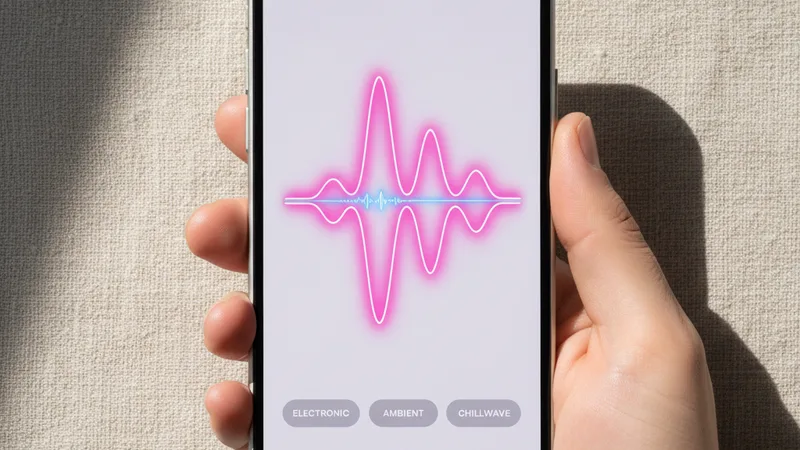
The workflow I use four mornings a week. Total time on the most recent run was 4 minutes 5 seconds from opening the app to having a track on my phone and the lift queued up.
1. Open Muziko and tap Create. Switch to Describe mode for instrumentals, or Write Lyrics mode if you want vocal hype lines.
2. Pick the genre. Hip-hop, trap, EDM, house, drum and bass, and hard rock are the six that consistently land at gym tempos. R&B and soulful pop work for slower lifts. Match the genre to your actual lifting music taste.
3. Pick a mood. Confident and euphoric for high-energy lifts. Confident and focused for max-effort sets. Playful for warm-up cardio. Sentimental for cool-down and yoga.
4. Set the BPM exactly. Find your actual lift tempo first — count reps for thirty seconds during a working set and multiply by two. A typical 5x5 working set on bench runs at 80-95 bpm. A 5k running pace runs at 160-180 bpm. A HIIT round of burpees runs at 120-140 bpm. Prompt the BPM as a number.
5. Prompt mastering for the gym. Add "heavy compression, prominent low end, vocals slightly forward, mastered for loud earbud playback" to the prompt. Most AI music apps in 2026 handle these production directions well.
6. Generate three to five takes. Each generation runs 8 to 15 seconds in Muziko. Listen on the actual earbuds you wear to the gym, not on studio headphones. Pick the take that sounds biggest in the noise.
7. Save and queue. Save in the highest-quality format the app offers. Build a personal "gym" playlist on your iPhone of generated tracks. Most lifters I know end up with 30-50 AI-generated tracks in their gym playlist within the first three months.
For the full mobile workflow walkthrough, the AI song generator for iPhone 2026 guide covers each creation mode in depth.
Writing a workout prompt that actually moves the bar
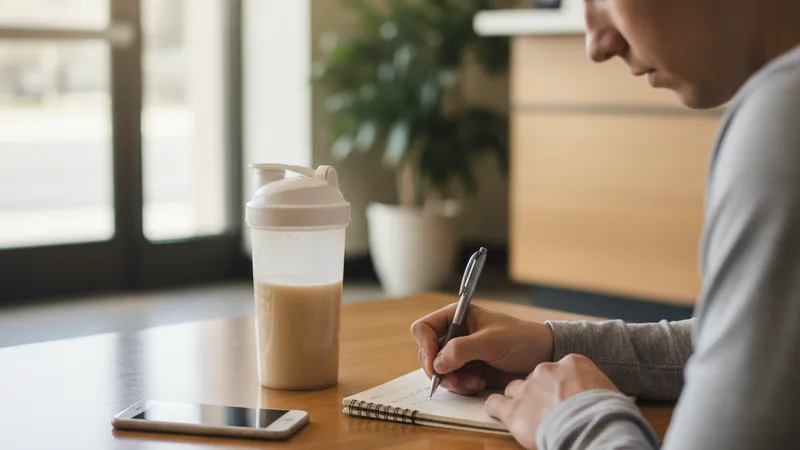
A working workout prompt has six small ingredients. Miss any one and the track lands at a tempo your body cannot lock into.
The BPM, as a specific number matched to the lift. Not "fast" or "high-energy" — a number. 88 bpm for heavy bench. 96 bpm for moderate deadlift. 128 bpm for cycling. 168 bpm for 5k running. 132 bpm for HIIT. The number is the single most important variable.
The genre, narrow and matched to your taste. "Trap with 808 bass, hard hi-hat rolls on the chorus, dark mood" is a usable prompt. "Gym music" produces generic stock-music tracks every time.
The drop or peak moment, if you want one. "Drop at 0:35, sustained energy through 1:30, brief breakdown at 2:00, second drop at 2:15" gives the AI a structural map. The drop can be timed to your hardest rep.
Mastering for gym playback. "Heavy compression, prominent low end, mastered for earbud playback in a loud room." Without this, the track gets mastered for streaming, which loses the punch you need.
Vocal direction if you want vocals. "Solo male vocal, confident hype delivery, vocal chops in the chorus", or "no vocals, instrumental only." Workout tracks often work better instrumental than vocal — fewer distractions during max-effort lifts.
Length, as a specific number. Most workout tracks should be 2:30 to 3:30 — long enough to cover a full set, short enough not to outlast your rest period. Prompt the AI for a specific length and a clean ending rather than a fade.
A combined working prompt for heavy bench:
"Hard trap instrumental for heavy bench press, 88 bpm, confident and focused mood, deep 808 bass, hard hi-hat rolls on the chorus, no vocals, drop at 0:35 sustained through 2:00, brief breakdown at 2:15, second drop at 2:30, three minutes total, heavy compression and prominent low end mastered for loud earbud playback."
In testing, that prompt produces a gym-grade track in roughly three to four generations about 80% of the time. For more on iterating prompts toward specific outputs, the perfect prompts breakdown covers the underlying patterns.
Matching workout type to BPM and genre: a starter chart

Workout music is BPM-sensitive in a way most other use cases are not. The right tempo for the right lift makes the difference between music supporting your effort and music quietly fighting it. Patterns that consistently hold:
| Workout type | Genre | Mood | BPM | Length |
|---|---|---|---|---|
| Warm-up cardio (treadmill walk) | Indie pop or chill house | Playful | 110-120 bpm | 3:00-4:00 |
| Heavy bench press / squat (3-5 reps) | Trap or hard rock | Confident | 80-95 bpm | 2:30-3:00 |
| Heavy deadlift (1-3 reps) | Hard rock or aggressive trap | Confident | 70-85 bpm | 2:30-3:00 |
| Volume hypertrophy (8-15 reps) | Hip-hop or R&B | Confident | 90-110 bpm | 3:00-4:00 |
| Olympic lifts (snatch, clean & jerk) | Hard rock or aggressive EDM | Confident | 95-115 bpm | 2:30-3:00 |
| HIIT (burpees, intervals) | Drum and bass or hard EDM | Euphoric | 128-145 bpm | 3:00-4:00 |
| Indoor cycling / spin | House or commercial EDM | Euphoric | 125-135 bpm | 4:00-5:00 |
| 5k / 10k running pace | Indie pop, anthemic rock, or EDM | Confident | 160-180 bpm | 4:00-5:00 |
| Long slow distance running | Folk rock or singer-songwriter | Confident | 140-160 bpm | 4:00-5:00 |
| Yoga or pilates | Ambient or classical | Dreamy | 60-75 bpm | 4:00-5:00 |
| Cool-down stretching | Lo-fi or soft soul | Sentimental | 70-85 bpm | 3:00-4:00 |
Pick the row that matches your workout. Lock the BPM. Layer the genre and mood on top. For the broader genre-by-genre quality breakdown across AI music apps, the best AI music app for iPhone 2026 ranking covers what each handles best.
When AI workout music lands — and when streaming still wins
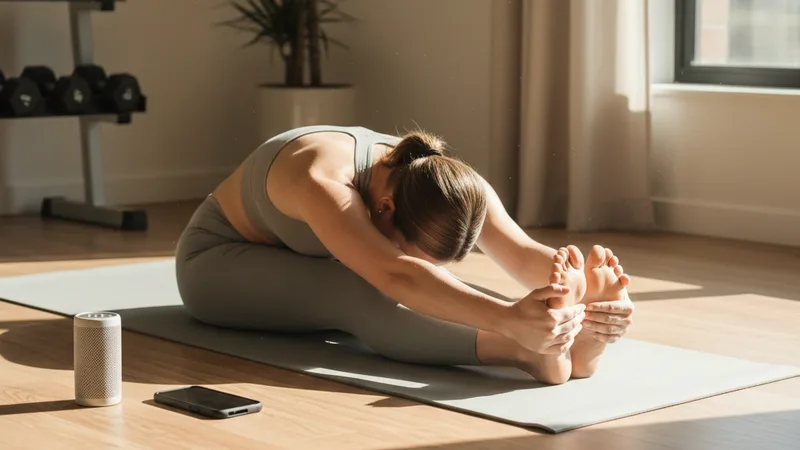
Honest accounting of where AI workout tracks beat a Spotify playlist and where the streaming algorithm is still the right call.
AI wins:
- BPM-precise lifts. Heavy bench, deadlift, squat, and Olympic lifts benefit massively from tracks at the exact tempo. Spotify cannot deliver this — AI can.
- Programs with structured set times. Crossfit-style workouts where each "song" needs to be a specific length to match a round. Custom-length AI tracks fit the program.
- Personal record attempts. A track with your name in the chorus, built specifically for the lift you are about to attempt, lands harder than any commercial pop song. I have seen this work on friends' 1RMs three times now.
- Late-night solo gym sessions. When the energy in the room is low because the room is empty, a custom track scaled to your specific energy needs picks you up in a way the curated playlist does not.
- Long-running training cycles. Six months into a hypertrophy block, the standard playlist is exhausted. A constantly-refreshing AI playlist sustains the cycle longer.
Spotify still wins:
- Group fitness classes. The instructor needs to time the playlist to a planned class, and pre-existing commercial tracks have the predictable structure the class is built around. AI tracks vary too much per generation to be reliable here.
- Pre-workout commute or warm-up rituals. If listening to a specific commercial song is part of your pre-workout routine — the song that signals "we are doing this now" — the ritual matters more than the BPM precision.
- Social workouts. Working out with friends usually means agreeing on a playlist, and the lowest-common-denominator agreement is almost always commercial pop. Your friend does not want to listen to your AI-generated trap.
- When you have a powerful "PR song" history. If you have always PR'd to one specific Drake track since 2017, do not replace it with AI. The song-as-talisman effect is real, and that song is part of your training.
For broader context on AI music for personal use, the non-technical guide to AI music generators is the gentlest introduction. For the rights and licensing edges of AI music posted to TikTok or fitness content, the can you sell AI-generated music legal guide covers the commercial-use side.
Try this prompt right now
Open Muziko on iPhone, tap Create, switch to Describe mode, pick Trap genre and Confident mood, and paste this prompt (replace the BPM with your actual lift tempo and adjust the drop timing to match your set):
"Hard trap instrumental for heavy bench press, 88 bpm, confident and focused, deep 808 bass, hard hi-hat rolls and snare on the chorus, no vocals, energetic intro from 0:00 to 0:35, full drop sustained from 0:35 to 2:00, brief breakdown at 2:00, second drop with maximum energy from 2:15 to the end, three minutes total, heavy compression and prominent low end mastered for loud earbud playback in a noisy gym."
Generate three to five takes. Listen on the actual earbuds you wear to the gym. Pick the take with the punchiest low end and the cleanest drop transitions. Save in the highest-quality format your app offers.
In testing, this template produces a gym-ready track in roughly four total generations about 80% of the time. Build a "gym" playlist on your iPhone, regenerate weekly with small tweaks, and within three months your workout playlist is entirely custom. For more on long-form personalization patterns, the text to song AI guide walks through turning any description into a track. For related EDM-specific production craft, the AI EDM generator guide covers the festival-tier workflow.
Frequently asked questions
What BPM should a workout song be for different lifts and cardio?
Match the BPM to the actual cadence of the movement. Heavy bench press and squat at 3-5 reps run at 80-95 bpm. Heavy deadlift at 1-3 reps runs at 70-85 bpm. Volume hypertrophy work at 8-15 reps runs at 90-110 bpm. HIIT and burpees run at 128-145 bpm. Indoor cycling at 125-135 bpm. 5k running pace at 160-180 bpm. Long slow distance running at 140-160 bpm. Yoga and cool-down at 60-85 bpm. Find your actual tempo first by counting reps for thirty seconds during a working set and multiplying by two, then prompt the AI for that exact number.
How long does it take to make a custom AI workout song?
Realistically, three to seven minutes per track from opening the app to having the file on your phone. The workflow is: pick the genre that matches your taste (trap, hard rock, EDM, hip-hop), pick a confident or euphoric mood, set the BPM to match your actual lift or run pace, add a mastering direction for gym playback (heavy compression, prominent low end), generate three to five takes, and save the strongest one. Once you have a prompt template that produces tracks you like, you can crank out a new track in under two minutes by tweaking small details — different BPM, different drop timing, different genre subtype.
Are AI workout tracks better than Spotify's workout playlists?
For BPM-precise lifting and running, yes. Spotify and Apple Music workout playlists are built from commercial tracks selected from someone else's library and only loosely matched to lift tempo. A custom AI playlist locked to your exact lift BPM, mastered for loud earbud playback, and refreshed weekly outperforms the algorithmic playlist for serious lifters and runners. For group fitness classes, pre-workout ritual songs, or social workouts where you and a friend agree on shared music, Spotify still wins because the structure and familiarity matter more than the precision.
Can I make instrumental workout tracks or do I need vocals?
Both work. Instrumental workout tracks are often the better choice for max-effort lifts — fewer distractions, more focus, the BPM locks cleanly to the rep cadence. Prompt "no vocals, instrumental only" in Describe mode and the AI generates pure backing tracks. Vocal hype tracks work better for cardio, HIIT, and hypertrophy work where the verbal energy carries you through volume. For 1RM attempts, many lifters prefer instrumental — the chorus distracts at the moment of peak effort. Build your playlist with a mix of both and queue the right type for the right lift.
Will AI workout tracks sound good through gym earbuds in a noisy room?
Yes, when you specifically prompt for gym mastering. The phrase "heavy compression, prominent low end, vocals slightly forward, mastered for loud earbud playback in a noisy room" added to the prompt produces tracks that survive gym noise floors. Without that direction, the AI defaults to streaming-optimized mastering, which loses the low-end punch in a loud environment. Test the first track through your actual gym earbuds in your actual gym before generating a full playlist — you want to verify the mastering approach works in your specific noise environment.
Is it legal to post AI workout tracks to fitness content on TikTok or Instagram?
Yes, when generated on the paid tier of a reputable AI music app like Muziko Pro at $34.99 per year, Suno Pro, or Udio Pro. The paid tier grants commercial and personal usage rights including posting the track to TikTok, Instagram Reels, YouTube Shorts, and fitness content channels. Free-tier generations are usually restricted to personal non-commercial use, which is fine for your own gym sessions but can be restricted for monetized fitness content. For fitness creators posting workout videos publicly, generate on the paid tier to keep all rights clean for both the workout and the social content that follows.
Try everything you just read about. Muziko is free to download.
![AI Amapiano Generator: Log Drum Tracks [Tested 2026]](/_next/image?url=%2Fimages%2Fblog%2Fai-amapiano-generator-log-drum-tracks%2Fhero.webp&w=3840&q=75)
![AI Cinematic Music Generator: Trailer Scores [Tested]](/_next/image?url=%2Fimages%2Fblog%2Fai-cinematic-music-generator-trailer-scores%2Fhero.webp&w=3840&q=75)