
![AI Disco Generator: Glitter-Ball Tracks That Hit [Tested]](/_next/image?url=%2Fimages%2Fblog%2Fai-disco-generator-glitter-ball-tracks-that-hit%2Fhero.webp&w=3840&q=75)
AI Disco Generator: Glitter-Ball Tracks That Hit [Tested]
AI disco generator tested across 70s classic, nu-disco, and disco-funk on iPhone. Four-on-the-floor, lush strings, real groove — Muziko in under 15 seconds.
My friend threw a 1970s disco night last spring. Not ironically — genuinely, with the mirror ball she bought on eBay, and a playlist she'd spent two weeks on. People danced harder than at any party I'd been to in years. A sixty-two-year-old uncle and a twenty-three-year-old in platform shoes were doing the same move at the same time and neither of them thought it was weird.
Disco does that. It's the most physically direct of all pop genres — the four-on-the-floor kick drum is basically a command, the string arrangement is permission, and the bass line is the invitation you can't refuse.
The revival is real. Dua Lipa's Future Nostalgia. Doja Cat's Planet Her. Beyoncé's Renaissance. The hyperpop producers sampling Cerrone. Every rooftop bar in 2026 with a DJ is playing something that owes its kick pattern to Nile Rodgers. Which means there's a strong argument for having your own disco track — one that sounds the way you want it to rather than the way someone else's era filter decided it should.
Why generic disco loops fall short
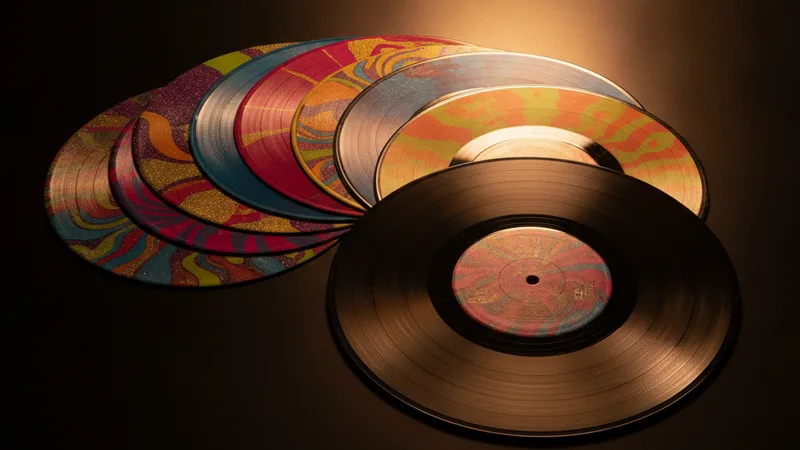
The disco stock loop problem is one I've heard from people making content, DJs looking for originals, and nostalgic party planners alike. It comes down to the same few things.
Stock disco sounds like a costume, not a genre. Most royalty-free disco tracks check the surface elements — the kick on every beat, the hi-hat on the offbeat, the pizzicato strings, the wah guitar. But they're missing the production philosophy that made disco actually work: the meticulous arrangement where every instrument has exactly the space it needs and not one note more. Real disco is dense but never cluttered. Stock disco is dense and cluttered.
The string arrangement is always wrong. Disco strings are not a pad. They're an active melodic voice, often the primary hook. Listen to "I Feel Love," "Le Freak," "Good Times" — the strings are doing something specific and structural. Stock strings sit in the background and wash over everything.
Subgenres get erased. Classic Philadelphia soul disco sounds nothing like the electronic Eurodisco of Giorgio Moroder sounds nothing like the New York underground sound of Larry Levan sounds nothing like 2000s French house (Daft Punk, Cassius) sounds nothing like 2020s nu-disco. "Disco" as a stock category collapses forty years of distinct traditions.
The tempo is always the same. Real disco spans from slow romantic ballad-disco at 100 BPM to hard floor-filling tracks at 130 BPM. Stock disco defaults to 120 and stays there, which is why every stock disco track sounds interchangeable.
What custom AI disco adds

When you generate disco with specific prompts on Muziko, you get access to tools that stock libraries don't offer:
- Era and subgenre precision. "1975 Philadelphia soul disco," "1977 Giorgio Moroder electronic Eurodisco," "1979 New York underground," "2000s French house," "2020s nu-disco" — each produces genuinely different sonic architecture.
- String arrangement control. Specify "active melodic strings as the main hook" vs. "string pads in the background" vs. "pizzicato strings on the offbeat" — the model responds to these distinctions.
- Bass line behavior. The classic disco octave-jump bass, the smoother melodic bass, the repetitive synth bass of Eurodisco, the locked-in James Brown-influenced bass of funk-disco — each specifiable.
- Vocal options. The soaring falsetto of Bee Gees-influenced disco, the powerful Motown-trained soul vocal, the robotic vocoder treatment of Eurodisco, the spoken/rapped verse of hip-hop-adjacent disco. All accessible.
- Production era texture. "Warm analog orchestral recording" (1970s) vs. "clean electronic production with synthesizers" (late 1970s Giorgio Moroder era) vs. "filtered French house sound" (2000s) vs. "modern production with vintage instrumentation" (nu-disco).
- Tempo targeting. 100 BPM for slow romantic disco, 115-120 for classic floor tempo, 125-130 for high-energy Eurodisco. Specify it and the model hits close.
The overlap with house music is worth noting — the AI house generator guide covers the evolution from disco into house. The four-on-the-floor DNA is shared, but the production philosophy is different.
Step-by-step in Muziko
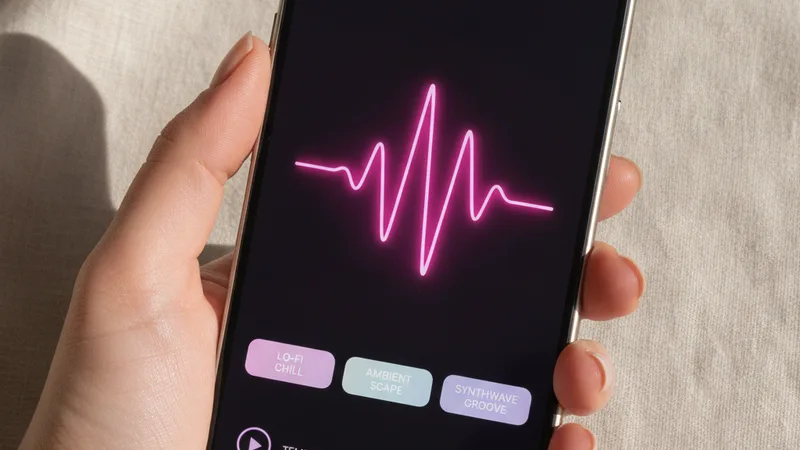
Here's exactly how I generated the nu-disco track I ended up using for that party's secondary playlist:
- Open Muziko, tap Describe. For instrumental disco and background tracks, Describe mode gives you the most precise control over arrangement. For full songs with your own lyrics, use Write Lyrics.
- Select Dance / Disco genre tag. Muziko has a dedicated Disco/Dance sub-engine separate from house and electronic. The string arrangement behavior is different — use it.
- Set mood to Euphoric or Joyful. Euphoric gets you big, sweeping, arena-ready disco. Joyful gets you lighter, more intimate. Avoid "Dark" — it fights the disco arrangement logic.
- Write a detailed prompt. Era, string treatment, bass behavior, vocal style, tempo. All of it changes the output significantly.
- Generate. 8-15 seconds.
- Listen to the kick first. Is it four-on-the-floor? Is it hitting on every beat? If not, the prompt needs "four-on-the-floor kick drum" added explicitly — sometimes the model defaults to a standard pop beat.
- Then check the strings. Are they active and melodic or just padding the background? If they're too passive, add "active melodic string hook" to the prompt.
- Regenerate two to four times. Disco string arrangements vary run-to-run — sometimes the model produces a particularly lush, sweeping string line on the third take that makes the whole track feel like a Studio 54 moment.
- Refine with targeted edits. "More orchestral strings," "add wah guitar," "bigger horn section," "slower tempo," "more Moroder-style electronic." Small additions, real differences.
- Export for mixing or content. Disco works brilliantly as video soundtrack, event music, or content for platforms that need original audio — see the TikTok AI music guide for how to use it in Reels and Shorts.
Writing the prompt that makes the floor move
Most people type "disco song" and get a track that sounds like background music in a retro-themed hotel lobby. The prompts that produce something worth dancing to are built around specific sonic decisions.
Layer 1: Era + subgenre anchor. The most important choice. "1975 Philadelphia soul disco" gives you lush orchestral strings, Motown-influenced vocals, and warm analog production. "1977 Eurodisco, Giorgio Moroder style" gives you electronic synthesizers, robotic vocoder, and relentless machine rhythm. "1979 New York underground" gives you longer, more hypnotic arrangements. "2005 French house" gives you filtered, chopped samples and the Daft Punk-adjacent aesthetic. "2025 nu-disco" gives you modern production with vintage soul influence. Pick one.
Layer 2: String specification. This separates good AI disco from generic AI disco. "Active melodic string hook, strings as lead instrument" (Philadelphia soul). "Pizzicato strings on the offbeat with rising countermelody" (classic orchestral disco). "Minimal strings, synth-led" (Eurodisco). "Chopped, filtered string stabs" (French house). "Lush sweeping string arrangement with brass accents" (full orchestra disco).
Layer 3: Bass line. "Octave-jump bass line, one-note-low one-note-high pattern" (classic disco bass). "Smooth melodic bass with chromatic movement" (soul disco). "Synth bass, repetitive and locked" (Eurodisco). "Filtered bass with pump" (French house). The bass pattern is how people on the floor feel the track before they consciously hear it.
Layer 4: Drums. Always specify "four-on-the-floor kick drum" for disco — it's the genre's heartbeat and the model doesn't always default to it. Add "open hi-hat on the offbeat" for the classic disco hi-hat feel. Add "tambourine layer" for extra shimmer.
Layer 5: Vocals and extra color. "Soaring falsetto lead vocal" (Bee Gees-influenced). "Powerful gospel-trained soul voice" (Donna Summer style). "Vocoder robotic lead" (electronic Eurodisco). "No lead vocal, orchestral instrumental" (for background use). "Backing vocal oohs and aahs" as texture.
Here's a working classic disco prompt:
"1976 Philadelphia soul disco, 118 BPM, four-on-the-floor kick with open hi-hat offbeat, active melodic strings as lead hook, octave-jump bass line, soaring falsetto lead vocal, punchy brass stabs, warm analog orchestral production, Studio 54 energy"
And a nu-disco prompt for a modern setting:
"2024 nu-disco, 122 BPM, four-on-the-floor kick, lush sweeping strings with modern production clarity, deep melodic bass with subtle filter, breathy female lead vocal, vintage-inspired but crisp mix, euphoric and contemporary"
Both produce convincingly distinct results. The era and string specification are doing most of the work.
For broader prompt strategy — verses, bridges, full song structures — see the full AI prompt guide.
Disco subgenre chart
Two months of disco prompt testing across the genre's history. Here's what produces the most convincing results:
| Subgenre | BPM | Strings | Bass | Vocals | Era Anchor |
|---|---|---|---|---|---|
| Philadelphia soul disco | 112-120 | Orchestral lead, lush | Octave-jump melodic | Soulful, Motown-influenced | "1974-77 Philadelphia International" |
| Classic NY disco | 115-125 | Active counter-melody | Smooth and melodic | Powerful diva | "1977-79 Studio 54, Chic influence" |
| Eurodisco (Moroder) | 120-130 | Minimal or synthesized | Synth bass, repetitive | Vocoder or robotic | "1977 Giorgio Moroder, Munich sound" |
| Hi-NRG / Eurodisco late | 130-145 | Synth stabs | Driving synth bass | Hi-energy pop vocal | "1982-85 Hi-NRG, Bobby O style" |
| French house | 120-128 | Chopped filtered stabs | Filtered pump bass | Vocal sample chops | "2001 Daft Punk, Cassius, Modjo" |
| Nu-disco | 116-124 | Modern lush strings | Deep melodic | Contemporary soul | "2010s-2020s nu-disco revival" |
| Disco-funk | 105-118 | Spare strings | Funky active bass | Funk-influenced | "1976 Earth Wind & Fire, KC & Sunshine" |
| Italo disco | 120-135 | Synth strings | Synth bass | Melodic European pop | "1982-86 Italian synth-pop disco" |
| Boogie / post-disco | 100-115 | Minimal | Groove bass | Soulful, R&B-influenced | "1979-83 post-disco R&B" |
| Cosmic disco | 105-118 | Psychedelic pads | Deep rolling | Spacey, echoey | "1977-80 cosmic Baldelli style" |
Quickest test: try "Philadelphia soul disco" and "Eurodisco Giorgio Moroder style" with the same vocal description. The model produces completely different string arrangements, bass behaviors, and production textures. That's one prompt word changing everything.
When AI disco works, when it doesn't
It works when:
- You're making content — party videos, lifestyle Reels, fashion content — and want original disco music that won't get Content ID flagged
- You're a DJ looking for custom edits or original tracks for a private event or themed night
- You want background music for a party, event space, or rooftop bar with a specific disco atmosphere
- You're testing whether a lyric or vocal idea works over disco before committing to a studio session
- You want to hear the same song concept in four different disco eras — Philadelphia, Eurodisco, French house, nu-disco — to find the right one for your project
It falls short when:
- The strings sound like a pad rather than an active melodic voice. This is the most common failure. Fix it by adding "strings as melodic lead instrument" explicitly to every disco prompt.
- You need a 7-minute extended club mix. Muziko generates shorter tracks — for full DJ-length edits, extend in your DAW by looping the groove section.
- You need the Nile Rodgers guitar tone specifically. The model gets Chic-era disco guitar close but not the exact cut of his Stratocaster through a specific amp chain. Real guitar is irreplaceable there.
- The four-on-the-floor kick is missing. Always include "four-on-the-floor kick drum" explicitly — the model sometimes defaults to a standard pop beat without it.
- You need stems for serious production. Muziko outputs a stereo master. For stems, see the stem extraction guide.
Try this prompt right now
Open Muziko, tap Describe, and paste this in:
"1976 Philadelphia soul disco, 118 BPM, four-on-the-floor kick drum with open hi-hat on offbeat, active orchestral strings as the main melodic hook, octave-jump bass line, soaring falsetto lead vocal with backing oohs, warm analog production, Studio 54 euphoria"
Generate four takes. On each one, listen to the strings first — find the take where they're doing something melodic and active, not just padding. That's your dance floor track.
Open Muziko in the App Store →
Frequently asked questions
Can AI generate authentic 1970s disco music?
Yes, with era-specific prompts. Anchoring to "1975 Philadelphia soul disco" or "1977 Eurodisco Giorgio Moroder style" produces noticeably different results from generic disco — different string arrangements, bass behaviors, and production textures. The era anchor is the most important single element in a disco prompt.
What makes disco different from house music in AI prompts?
Disco uses orchestral strings as a melodic lead voice, has a more complex arrangement with brass and real instruments, and carries a 1970s-80s production aesthetic. House strips the arrangement down, adds synthesizers, and pushes the tempo higher. In Muziko, they're separate genre engines with different default behaviors. See the house music guide for comparison.
What BPM is classic disco?
Classic 1970s disco runs between 112 and 125 BPM. Philadelphia soul disco tends toward 112-118. New York club disco runs 118-125. Eurodisco and Hi-NRG push to 128-135. Nu-disco sits around 116-124. Specify your target BPM in the prompt — it significantly affects how the track feels on a dance floor.
Can I use AI disco music for a party or event?
Yes. With Muziko Pro you own commercial rights to the music you generate. Private parties, themed events, and club nights are all fine. For the full commercial and public performance breakdown, see the AI music licensing guide.
What is nu-disco and can AI generate it?
Nu-disco is the 2010s-2020s revival of disco aesthetics with modern production — lush strings, four-on-the-floor, soulful vocals, but with contemporary clarity and sometimes synthesizers instead of full orchestras. AI handles it well. Specify "2020s nu-disco" with "modern production, lush strings, deep melodic bass" for something contemporary rather than retro-pastiche.
Why does my AI disco track sound like hotel lobby music?
Usually missing two things: the four-on-the-floor kick drum (add it explicitly in the prompt) and an active string melody (specify "strings as melodic lead instrument, not background pad"). Without those two elements, AI disco defaults to a generic, safe sound. With them, the track has actual floor energy.
Try everything you just read about. Muziko is free to download.
![AI Amapiano Generator: Log Drum Tracks [Tested 2026]](/_next/image?url=%2Fimages%2Fblog%2Fai-amapiano-generator-log-drum-tracks%2Fhero.webp&w=3840&q=75)
![AI Cinematic Music Generator: Trailer Scores [Tested]](/_next/image?url=%2Fimages%2Fblog%2Fai-cinematic-music-generator-trailer-scores%2Fhero.webp&w=3840&q=75)