
AI House Music Generator: Club Tracks That Bounce (2026)
AI house music generator that makes deep, tech, and disco house tracks on iPhone. Real four-on-the-floor energy, tested on Muziko — club-ready in 5 minutes.
I was at a wedding in Lisbon last month where the DJ played four hours of house and didn't drop a single song I recognized. People danced harder than they would have to a Top 40 set. By 2 a.m. there were forty-somethings doing the thing where they point at the ceiling on every kick.
That's the magic of house. You don't need to know the track. The four-on-the-floor does the work for you.
I went home and tried to make my own house track for a vacation reel. Not because I'm a DJ — I'm not. But because every stock house loop on Epidemic Sound sounds like a corporate yoga ad, and every "free deep house" Spotify playlist is the same eight songs the algorithm pushes to everyone. I wanted something that felt like that wedding — bouncy, warm, a little dusty, late-night Lisbon at 1 a.m.
That's the case for an AI house music generator: not because house is rare, but because the house you want is rare.
Why generic house loops fall short

House music has been around since 1985. There are roughly four billion house tracks in the wild. The problem isn't supply — it's that the supply is sorted by what algorithms think a generic listener wants, not by what you want.
Stock house libraries sound like commercials. Open any stock-music site, search "deep house," and listen to the top ten. They're all 124 BPM, all in C minor, all have the same plucky synth lead, all crescendo at 30 seconds. They're built to score a SaaS product launch video, not to make a room dance.
Subgenres get flattened. Real house is wildly varied. Deep house is slow and warm. Tech house is groove-locked and minimal. Disco house has horns and strings. Afro house has live percussion. Garage house has shuffled hats. Acid house has 303 squelch. Most generic libraries collapse all of that into one "house" mood.
The build matters more than the loop. Good house tracks live or die on the build — the slow filter sweep, the snare roll, the moment the kick drops back in. Stock loops have no build. They start at full energy and stay there. They're useful for backgrounds, useless for actual dance energy.
You can hear the AI in 2024-era models. The first generation of AI house tools produced tracks with a specific tell — the kick was too quantized, the hats were too uniform, the bass had no movement. Modern prompt-driven generation fixes most of that, but only if you write a real prompt instead of typing "house music."
What custom AI house adds

When you generate house with a specific prompt on a tool like Muziko, you get:
- Subgenre precision. "Deep house" sounds different from "tech house" sounds different from "disco house" sounds different from "Afro house." The model picks up on those cues.
- BPM control. House lives between 118 and 132 BPM, and one BPM up or down changes everything. You can target 122 for deep, 126 for tech, 128 for peak-time.
- Real four-on-the-floor weight. Kick on every quarter note, but with the hi-hat patterns that make house swing instead of march.
- Build and drop structure. Filter sweeps, snare rolls, breakdowns — house's architecture is built into the genre prompt.
- Vocal options. Diva vocals, sampled chops, spoken-word loops, or instrumental.
- Stylistic decades. "1990s Chicago house" sounds different from "2020s tech house." You can era-target.
The other big thing: you own the result. If you're DJing a private event or making content for TikTok or Reels, you don't have to clear samples or pay royalties on a loop you found.
Step-by-step in Muziko
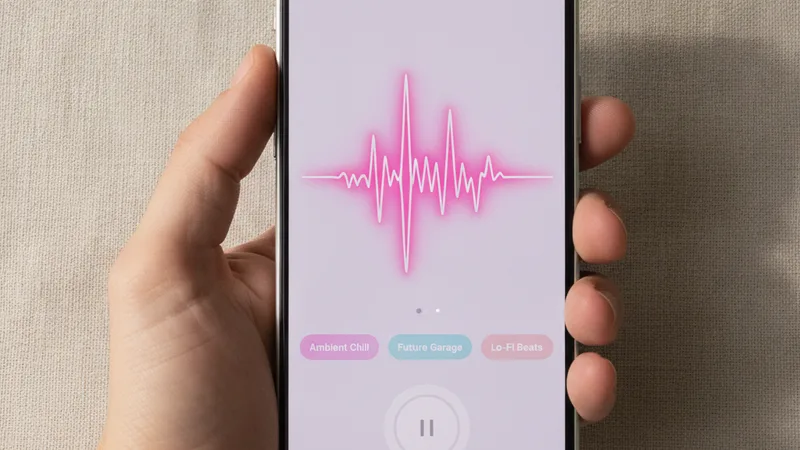
Here's the workflow I used to make a deep house track for that Lisbon reel in under five minutes:
- Open Muziko, tap Describe. For house, Describe mode is better than Write Lyrics because you want to specify groove and texture, not narrative.
- Pick the Electronic / House genre tag. Muziko's House sub-engine is separate from EDM — they're not the same model behavior.
- Set mood to Energetic or Euphoric. Avoid "Chill" — that pushes you toward lo-fi house, which is a different sound entirely.
- Write a prompt with subgenre, BPM, and key elements. "Deep house, 122 BPM, warm analog bass, dusty Rhodes piano, vocal chop loop, filter sweep build" — that level of detail.
- Decide on vocals. For DJ tracks, leave lyrics blank — vocal chops will appear if you mention them in the prompt. For full songs, add lyrics in the Write Lyrics tab.
- Generate. 8 to 15 seconds. Faster than booting Ableton.
- Listen on actual speakers if possible. Headphones flatten the kick weight. Bluetooth speakers reveal whether the low end is bouncing or sitting flat.
- Regenerate three or four times. The first take rarely lands. House groove is finicky — sometimes the third take is the one where the hi-hats actually swing.
- Edit the prompt iteratively. "Add a vocal chop," "more disco strings," "tighter kick" — small prompt changes produce noticeable shifts.
- Export to your DAW if you want to extend, EQ, or master. GarageBand on iPhone handles the import cleanly.
Writing the prompt that bounces
This is where most people skip steps and end up with generic 4×4 wallpaper instead of an actual house track.
House prompts need five layers:
Layer 1: Subgenre. "Deep house," "tech house," "Afro house," "disco house," "organic house," "melodic house," "garage house," "acid house." These produce meaningfully different outputs. Don't say "house" — be specific.
Layer 2: BPM and groove feel. "122 BPM with relaxed swing" (deep house). "126 BPM with tight straight groove" (tech house). "128 BPM with rolling bass" (driving peak-time). The model uses these as constraints.
Layer 3: Bass character. This is where most house tracks live or die. "Warm analog sub bass with subtle filter movement" (deep). "Punchy plucked bass with sidechain" (tech). "Sliding 808 bass with octave jumps" (UK garage style). Pick one.
Layer 4: Top instrumentation. "Dusty Rhodes piano chords with reverb" (deep). "Filtered disco string stabs" (disco house). "Plucked synth lead with delay" (melodic house). "Acid 303 squelch line" (acid house). "Live conga and shaker percussion" (Afro house).
Layer 5: Vocals or vocal treatment. "Sampled diva vocal chop on the chorus," "male spoken-word loop," "no vocals," "pitched-down 1990s rap acapella." The vocal treatment changes the entire feel.
Here's a working prompt that I keep coming back to:
"Deep house, 122 BPM, warm analog sub bass with subtle filter movement, dusty Rhodes piano chord progression in A minor, sampled female vocal chop loop, sparse hi-hat with shaker swing, atmospheric pad in the breakdown, late-night Ibiza terrace vibe"
That single prompt has produced about fifteen different tracks for me, each usable in different contexts. The model varies the chord progression, vocal phrasing, and arrangement, but the skeleton stays the same.
For broader prompt mechanics — how to build verses, bridges, breakdowns — see my full prompt guide.
House subgenre chart
I've been generating house tracks across subgenres for the last two months. Here's what consistently produces the best results:
| Subgenre | BPM | Bass Character | Top Instruments | Era Cue |
|---|---|---|---|---|
| Deep house | 118-124 | Warm analog sub | Rhodes, soft pads, vocal chops | 1990s NY / 2020s Ibiza |
| Tech house | 124-128 | Punchy plucked, sidechained | Stab synths, percussive loops | 2020s |
| Afro house | 120-126 | Rolling, melodic | Live congas, marimba, kalimba | 2020s |
| Disco house | 122-128 | Funky live-feel bass | Strings, brass stabs, guitar | 1970s disco revival |
| Melodic house | 120-124 | Smooth, melodic | Plucky synth lead, ethereal pads | 2020s Anjunadeep |
| Acid house | 124-130 | TB-303 squelch | Acid line, hand claps | 1988-1992 Chicago |
| Garage house | 130-135 | Sliding sub, shuffled | Vocal chops, organ stabs | 2000s UK |
| Funky house | 122-128 | Filter-modulated bass | Disco sample loops, brass | 2000s |
| Lo-fi house | 110-118 | Saturated, dusty | Lo-fi piano, vinyl crackle | 2020s |
| Tribal house | 124-128 | Bouncy minimal sub | Heavy percussion, chants | 1990s |
| Chicago house | 120-124 | Classic 808 | Drum machine snares, organ | 1985-1990 |
| Future house | 126-130 | Distorted lead bass | Saw lead, bright stabs | 2010s |
Same approach as my drill subgenre chart — keep one part of your prompt fixed and swap the subgenre tag. The model will adjust the bass, instrumentation, and overall vibe to match the era you specified.
When AI house works, when it doesn't
It works when:
- You're making content (TikTok, Reels, vlogs, vacation reels) and want original house music without licensing headaches
- You're prototyping a track idea before a studio session with a producer
- You're a DJ making custom edits for a private event where you can't play commercial releases
- You want background music for a podcast intro or transition — see the podcast music guide
- You're warming up a wedding crowd and want something that feels custom
It falls short when:
- You want a 7-minute extended club mix with multiple builds and drops. Muziko outputs shorter tracks, not full DJ-length edits. You'd have to loop or extend in your DAW.
- You're chasing a specific producer's signature sound — Solomun, Black Coffee, Fisher, Disclosure. The model gets close to the genre but not to the fingerprint.
- You need surgical BPM lock to mix with existing records. AI house BPMs are usually within 1-2 BPM of the prompt but not exact. Time-stretch in your DAW if you're going to mix it live.
- The genre is too niche. "Jungle house" or "broken-beat house" produces inconsistent results because the training data is thinner.
- You need stems. Muziko outputs a stereo master. For stems, see the stem extraction guide.
I'd also be honest that current AI house can occasionally produce a kick that's too soft. Regenerate once or twice — usually the model produces a heavier kick on the third take.
Try this prompt right now
Open Muziko, tap Describe, paste this in:
"Deep house, 122 BPM, warm analog sub bass with slow filter sweep, dusty Rhodes piano chords in A minor, sampled female vocal chop loop on the hook, shuffled hi-hat groove, atmospheric pad in the breakdown, late-night Ibiza terrace vibe"
Generate four takes. Pick the one where the Rhodes feels warmest — that's your starting point. Then iterate: "more vocal chops," "swap to disco strings," "tighter kick."
Open Muziko in the App Store →
Frequently asked questions
Can I DJ with AI-generated house tracks?
Yes, especially for private events, weddings, and warm-up sets where you want custom edits. For peak-time festival sets you'll still want commercial releases because crowds respond to recognition. AI house is best for opening sets, background sets, and content creation.
What BPM should AI house be?
Deep house lives between 118-124 BPM. Tech house is 124-128. Peak-time house is 126-130. Garage house and future house push to 130-135. Lo-fi house drops to 110-118. Specify a BPM in your prompt — the model targets it within 1-2 BPM accuracy.
Can AI make full-length club edits?
Muziko outputs shorter tracks rather than 7-minute DJ edits. For club length, you'd export and extend in your DAW — loop the groove, add your own builds and drops. Most house tracks loop cleanly because of the four-on-the-floor structure.
Is AI house music legal to sell?
On Muziko Pro you own commercial rights to the music you generate, including the right to sell it. For the full licensing breakdown — including the gotchas around streaming royalties and DJ mix uploads — see our guide to selling AI-generated music.
How does AI house compare to Suno or Udio?
Suno and Udio are web-based and produce longer, vocal-heavy tracks. Muziko is iPhone-native and faster, with stronger four-on-the-floor groove tuning because it's a mobile-first model. For full feature comparison see the Muziko vs Suno head-to-head.
Why does my AI house track sound flat?
Usually one of three things: your prompt didn't specify bass character, you're judging it on AirPods which flatten low end, or the model produced a weaker kick this run. Regenerate with the same prompt — third or fourth take usually delivers more weight.
Try everything you just read about. Muziko is free to download.
![AI Dubstep Generator: Drops That Actually Hit [Tested]](/_next/image?url=%2Fimages%2Fblog%2Fai-dubstep-generator-drops-that-hit%2Fhero.webp&w=3840&q=75)
![AI Ambient Music Generator: Calm Tracks [Tested 2026]](/_next/image?url=%2Fimages%2Fblog%2Fai-ambient-music-generator-calm-tracks%2Fhero.webp&w=3840&q=75)
![AI Techno Generator: Warehouse Tracks That Hit [Tested]](/_next/image?url=%2Fimages%2Fblog%2Fai-techno-generator-warehouse-tracks-that-hit%2Fhero.webp&w=3840&q=75)