
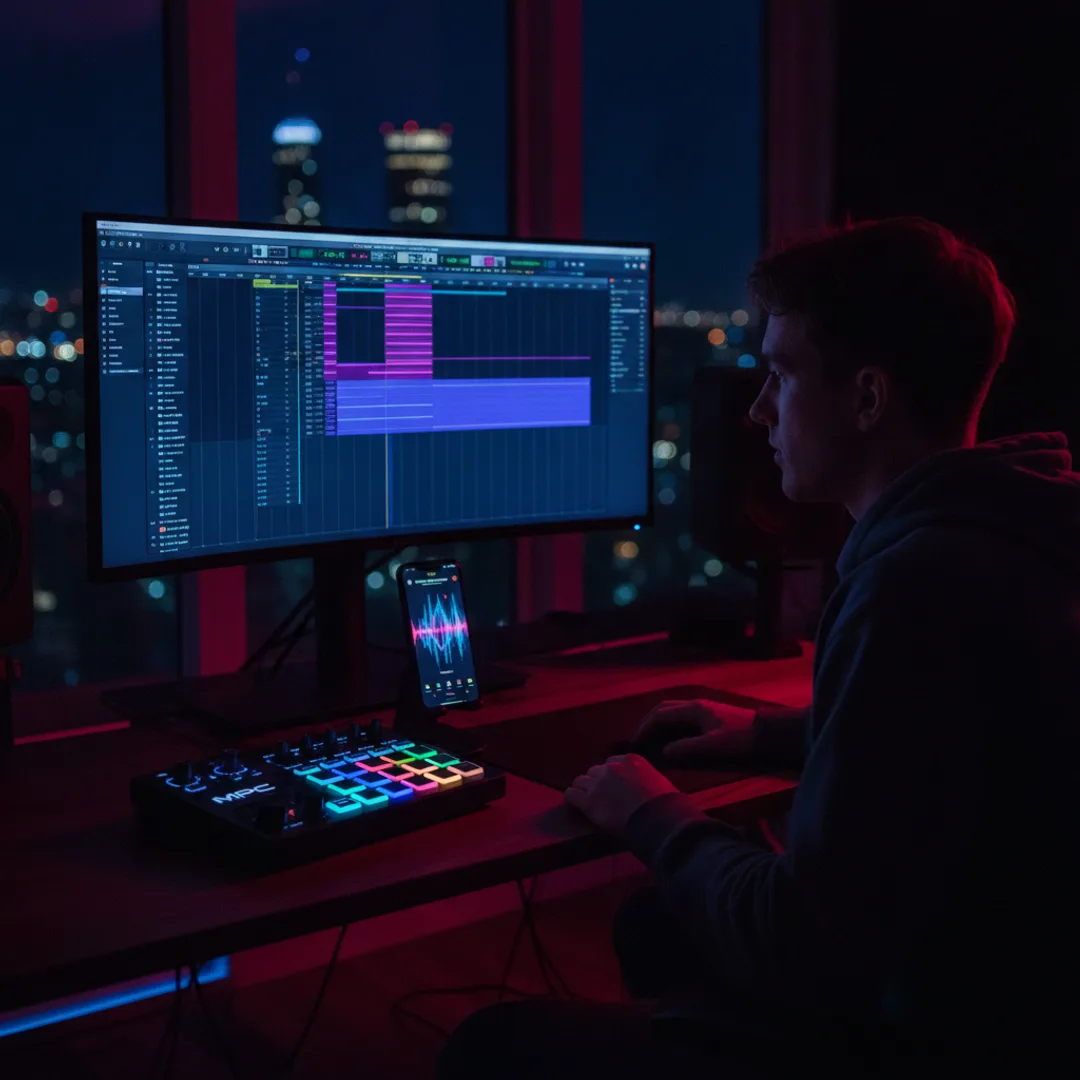
AI Drill Generator: UK + NY Drill Beats That Hit (2026)
Generate UK drill, NY drill, and Brooklyn drill beats with AI on iPhone — sliding 808 basslines, drill hi-hat patterns, 140-150 BPM. Real drill beats, not trap-flavored drill.
A note before this one. Drill music has tight production conventions and a complicated cultural history — the genre's UK and Chicago and NY scenes have been entangled with real-world community contexts in ways that matter. This guide focuses on the production craft side: how AI music apps in 2026 handle drill's specific sonic signatures, what prompts produce real drill versus trap-flavored drill, and the workflow for generating drill beats for content creators, producers experimenting with the genre, and songwriters working with drill production. Lyric content is a separate question that artists working seriously in drill navigate with their own communities; this guide stays on the production-craft side and recommends staying respectful of the genre's cultural origins.
Drill has tight production conventions that get lost when AI music apps default to generic "hip-hop" or "trap" prompts. The sliding 808 bassline (which slides between notes rather than holding flat), the drill hi-hat pattern (usually triplet rolls), the BPM range (140-150 with a half-time vocal feel that makes it sound like 70-75), the dark melodic chord progressions, the specific drum kit selections — these are the markers that separate real drill from trap with drill flavoring. AI music apps in 2026 handle the core drill sound when prompted with the right specificity. Generic prompts produce trap-flavored drill; specific prompts produce real drill.
This guide is the workflow for generating drill on iPhone — UK drill, NY drill, Brooklyn drill, Chicago drill, melodic drill — in under five minutes per track. The prompt templates that hit each subgenre's conventions and the honest limits of drill generation in 2026.
Why generic prompts produce trap-flavored drill
A few specifics about drill that most non-drill listeners miss.
The sliding 808 bassline is drill's signature production element. Unlike mainstream trap where 808s sit flat on root notes, drill 808s slide between notes — usually descending — following a dark melodic progression. The slide is the producer's signature; flat 808s read as trap, sliding 808s read as drill. Naming "sliding 808 bassline that slides between notes following the chord progression, descending slides on the chorus" is the single most important production direction for drill prompts.
Drill hi-hat patterns use triplet rolls in specific places. Mainstream trap uses straight 16th-note hi-hat patterns with occasional rolls. Drill uses triplet rolls — specifically 1/12-note rolls — at specific moments in the pattern. Prompt "drill hi-hat pattern with triplet rolls on the off-beats, 1/12-note hi-hat rolls leading into the chorus."
Tempo is 140-150 BPM with a half-time vocal feel. Drill BPMs sit in trap-adjacent territory but the vocal delivery feels half-time — 70-75 BPM by feel. Generic prompts produce tracks where the vocal matches the tempo (which reads as fast and energetic, not drill). Prompt "140-150 BPM with a half-time vocal feel, vocals delivered at a 70-75 BPM cadence over the 140 BPM instrumental."
Dark melodic chord progressions define drill harmony. Drill uses minor-key progressions, often with augmented or diminished chords, that produce a specific dark melodic atmosphere. Pop and trap default to brighter major-key progressions. Prompt "dark minor-key chord progression with augmented chords on the turnaround, melancholy melodic atmosphere."
Specific drum kit selections matter. UK drill kits are different from NY drill kits are different from Chicago drill kits. Each has specific kick samples, snare samples, and percussion. AI music apps approximate the kit differences when prompted, but the level of granularity isn't perfect.
Vocal delivery has subgenre-specific conventions. UK drill uses faster delivery with British accents and Brit slang. NY drill uses lower delivery with NY accents. Chicago drill uses Chicago-specific cadence. AI vocal generation handles the accent and cadence approximately when prompted; for serious work, real vocalists still produce more authentic results.
For the foundational prompt-craft, how to write AI song prompts that actually produce great music is the most useful companion read.
What AI drill gets right — and what it still misses
Honest accounting of where AI drill lands in 2026.
Gets right consistently:
- Drill instrumental beats with sliding 808s. The core production element handles cleanly when prompted explicitly for sliding 808 movement.
- UK drill production aesthetic. Sliding 808s, drill hi-hats, dark minor-key progressions, UK-specific drum kit feel produce well on the second or third generation.
- NY drill production aesthetic. Brooklyn drill / NY drill production with the slightly different drum patterns from UK drill handles cleanly.
- Melodic drill. Dark melodic chord progressions over drill drums for the more melodic side of the genre work well.
- Drill-trap crossover. The hybrid territory between mainstream trap and drill handles cleanly.
- Short beat loops for content creators. 30-90 second drill beat loops for TikTok, Instagram Reels, YouTube content work well.
Still misses or inconsistent:
- Authentic vocal delivery with regional accents. UK drill cadence with British accents, NY drill cadence with NY accents, Chicago drill cadence with Chicago slang — AI vocal generation approximates these but doesn't fully replicate them. For serious drill releases, real vocalists are the right call.
- Specific drill producer signatures. Named drill producers (808 Melo, AXL Beats, etc.) have specific production signatures that AI doesn't replicate (and shouldn't try to, per AI music app policies).
- The specific micro-timing of drill grooves. Real drill drummers and beat-makers swing the hi-hats and snare in specific ways that AI tends to over-quantize.
- Region-specific drill scenes. Russian drill, Irish drill, Spanish drill, French drill all have specific regional conventions AI tends to homogenize into a generic drill sound.
- The cultural context. Drill is more than production conventions; it's embedded in specific community contexts that AI generation can't replicate. Use AI drill for production craft, not for cultural authenticity.
For more on AI music quality across genres, the best AI music app for iPhone 2026 ranking covers what each major app handles best.
Step-by-step: a drill beat in Muziko
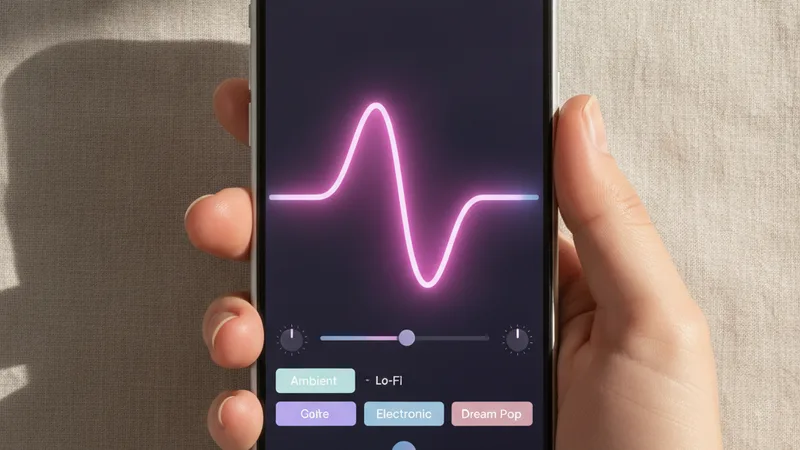
The workflow for an instrumental drill beat. Total time on a successful run averages 4-5 minutes.
1. Open Muziko on iPhone or iPad. Switch to Describe mode — most drill beat generation is instrumental.
2. Pick the genre tag. Pick Hip-Hop or Trap — most AI music apps don't have a dedicated Drill tag yet. The prompt does the work of redirecting toward drill specifically.
3. Pick a mood. Confident and dark are the two for most drill. Confident + sentimental for melodic drill. Confident + aggressive for harder drill.
4. Lead with the sliding 808 direction. "Drill beat with sliding 808 bassline that slides between notes following the chord progression, descending 808 slides on the chorus, sub bass with audible glide between notes."
5. Specify the drill hi-hat pattern. "Drill hi-hat pattern with triplet rolls on the off-beats, 1/12-note hi-hat rolls leading into the chorus, classic drill kit with crispy snare and deep kick."
6. Set the tempo and half-time vocal feel direction. "140 BPM with a half-time vocal feel, instrumental sits at 140 BPM but the vocal delivery cadence reads as 70 BPM."
7. Specify the chord progression. "Dark minor-key chord progression with augmented chords on the turnaround, melancholy melodic atmosphere, ambient pad layered with the chords."
8. Specify the subgenre. "UK drill in the modern London tradition with brushed snare and drill kit" or "NY drill in the Brooklyn tradition with harder kick and 808 emphasis" or "Chicago drill with the original genre kit and dark melodic atmosphere."
9. Length. Drill beats work well at 90-180 seconds. Generate at 120 seconds for most use cases.
10. Mastering. "Mastered for car-system and earbud playback with prominent bass, controlled mid-range, slight saturation on the master."
11. Generate four to six takes. Listen on subwoofer-capable speakers — drill lives or dies on the 808 movement, which laptop speakers hide. Pick the take with the cleanest 808 slides, the most authentic hi-hat pattern, and the darkest chord progression.
For the full mobile workflow, the AI song generator for iPhone 2026 guide covers each creation mode in depth.
Matching drill subgenre to production conventions
Drill subgenres differ on drum kit, vocal cadence, BPM emphasis, and melodic atmosphere.
| Subgenre | Tempo | Drum kit | 808 character | Vocal cadence | Mood |
|---|---|---|---|---|---|
| UK drill (London) | 140-145 BPM | UK kit with brushed snare | Sliding with quick descending slides | Fast UK cadence | Confident + dark |
| NY drill (Brooklyn) | 140-150 BPM | NY kit with harder kick | Sliding with deeper sub | NY cadence with lower delivery | Confident + dark |
| Chicago drill (classic) | 140-150 BPM | Original drill kit | Sliding with raw character | Chicago-specific cadence | Confident + dark |
| Melodic drill | 135-145 BPM | Drill kit with light percussion | Sliding with smoother movement | Sung-rap hybrid | Sentimental + dark |
| Drill-trap crossover | 135-145 BPM | Trap kit with drill 808s | Sliding mixed with trap 808 | Modern trap cadence | Confident |
| Russian drill | 140-150 BPM | Drill kit with regional flavor | Sliding with darker character | Russian cadence | Aggressive + dark |
| Irish drill | 140-145 BPM | UK-influenced kit | Sliding with quick descending slides | Irish UK cadence | Confident + dark |
| Spanish / Latin drill | 130-145 BPM | Drill kit with Latin percussion | Sliding with Latin influence | Spanish cadence | Confident + dark |
| French drill | 135-145 BPM | French-influenced drill kit | Sliding with melodic emphasis | French cadence | Sentimental + dark |
| Drill-pop crossover | 130-145 BPM | Drill kit with pop production | Sliding with smoother movement | Sung-rap melodic | Confident + sentimental |
| Detroit drill hybrid | 140-150 BPM | Detroit-influenced kit | Sliding with Detroit character | Detroit cadence | Confident + dark |
| Atmospheric drill | 135-145 BPM | Sparse drill kit | Sliding with ambient pad | Sparse delivery | Dreamy + dark |
Pick the row matching what you want. For related genre work, see the AI hip-hop generator guide, AI phonk generator guide, and AI R&B generator guide.
When AI drill works — and the limits
Honest accounting.
Works:
- TikTok and Instagram Reels drill instrumentals for content creators wanting drill aesthetic for video content.
- Songwriter and producer demos for those exploring drill production direction.
- Indie game and content creator background music for drill-aesthetic visual content.
- Vocalist beat-pack work for vocalists who want drill instrumentals to write to.
- Producer practice tracks for producers learning drill production conventions.
Falls short or carries risk:
- Serious drill artist releases for the drill audience. The drill listening audience is highly aware of the genre's authenticity markers. AI drill released as a serious artist track will receive critical scrutiny, especially on the vocal performance side.
- Prompts that imitate specific living drill producers. Named-producer prompts are prohibited in commercial AI music apps. Stay generic with subgenre and production direction.
- Authentic vocal delivery with regional accents. AI vocal generation in drill is approximate at best. For serious releases, bring in real vocalists from the specific scene.
- Cultural-context replication. Drill is embedded in specific community contexts. AI generation produces the production sound; it doesn't produce the cultural authenticity. For serious work in drill, collaborate with people from the scene.
For the broader licensing context for commercial release, the can you sell AI-generated music legal guide covers the rights and disclosure questions.
Try the prompt now
Open Muziko on iPhone, switch to Describe mode, pick Hip-Hop or Trap genre and Confident mood, and paste:
"UK drill beat at 142 BPM with a half-time vocal feel, sliding 808 bassline that slides between notes following a dark minor-key chord progression with augmented chords on the turnaround, descending 808 slides on the chorus, sub bass with audible glide between notes, drill hi-hat pattern with triplet rolls on the off-beats, 1/12-note hi-hat rolls leading into the chorus, UK drill kit with brushed snare and deep kick, ambient pad layered with the chords, instrumental only with no vocals, two minutes total, melancholy melodic atmosphere, mastered for car-system and earbud playback with prominent bass and controlled mid-range."
Generate four to six takes. Listen on subwoofer-capable speakers. Pick the take with the cleanest sliding 808 movement, the most authentic UK drill hi-hat pattern, and the darkest chord progression.
For related genre how-tos, see the AI hip-hop guide, AI phonk guide, AI R&B guide, and AI EDM guide.
Frequently asked questions
Can AI generate convincing drill beats?
Yes for the core drill sound, when prompted with the right specificity. The four production elements that need to be in the prompt: sliding 808 bassline that slides between notes following the chord progression (not flat 808s), drill hi-hat pattern with triplet rolls and 1/12-note rolls, 140-150 BPM with a half-time vocal feel, and dark minor-key chord progression with augmented chords. Get all four right and AI music apps in 2026 produce drill-grade beats on the second or third generation. Get any wrong — especially the sliding 808 — and the track reads as trap-flavored drill rather than real drill. The sliding 808 is the single most important production direction; lead the prompt with it.
What's the difference between UK drill and NY drill?
Different drum kits, different 808 character, different vocal cadence. UK drill uses a London-rooted kit with brushed snare and quick descending 808 slides; NY drill uses a Brooklyn-rooted kit with harder kick, deeper sub-bass 808s, and slightly different snare. UK drill vocal cadence is faster with British accents and Brit slang; NY drill vocal cadence is lower with NY accents and NY slang. The tempo is similar (140-150 BPM) but the half-time vocal feel differs between the subgenres. For AI generation, prompt explicitly for "UK drill in the modern London tradition" or "NY drill in the Brooklyn tradition" to push the AI toward the correct subgenre defaults — the specificity makes a meaningful difference in the output.
How do I get the sliding 808 sound right in AI drill?
Lead with it in the prompt and be very explicit about both the slide direction and the harmonic context. The phrase "sliding 808 bassline that slides between notes following the chord progression, descending 808 slides on the chorus, sub bass with audible glide between notes" produces the right 808 movement. Don't just prompt "sliding 808" — generic phrasing produces approximate slides that don't follow the chord progression. Specify "following the chord progression" to lock the slides to harmonic context, "descending slides on the chorus" to direct the slide direction, and "audible glide" to make sure the slide is prominent rather than subtle. Generate four to six takes and listen specifically for whether the 808 slides match the chord movement — that's the take that lands the drill aesthetic.
Can AI generate convincing drill vocals with regional accents?
Approximately. AI vocal generation in 2026 handles the broad drill vocal cadence and aesthetic but doesn't fully replicate the specific regional accents and slang of UK drill, NY drill, Chicago drill, or other regional scenes. For demo work and content creator background music, the AI vocal is acceptable. For serious artist releases where authentic vocal delivery is the centerpiece, bring in a real vocalist from the specific scene you're working in. The drill scene's audience is quick to recognize when vocal delivery isn't authentic to the regional style, and AI-generated drill vocals tend to get flagged as such. For pure beat production where the user plans to write and perform their own vocals, AI drill is excellent. For vocal-led drill releases, real vocalists remain the right call.
Is it legal to release AI drill tracks on Spotify and SoundCloud?
Yes, when generated on the paid tier of a reputable AI music app like Muziko Pro at $34.99 per year, Suno Pro, or Udio Pro. The paid tier grants commercial usage rights including release on Spotify, Apple Music, YouTube Music, Amazon Music, and SoundCloud through distribution services like DistroKid or TuneCore. Disclose AI use where required — all major streaming platforms in 2026 ask for AI content disclosure on uploads. Never prompt the AI to imitate a specific living drill producer or artist's style; the drill scene has well-known artists whose names should not appear in commercial prompts. SoundCloud has a large drill audience and is the platform where audience feedback is most direct — be ready for honest reactions if you release AI drill into that community. Also be thoughtful about lyric content if you generate drill with vocals; the genre has cultural sensitivities around violent content that serious artists navigate carefully within their own communities.
Should I use AI drill for beat-making practice?
Yes for studying the production conventions and as a quick reference for what specific elements should sound like, but not as a substitute for learning drill production directly. AI drill is useful for: producers who want to hear what a UK drill beat versus a NY drill beat versus a Chicago drill beat sounds like back-to-back, beat-makers checking whether their own production direction matches genre conventions, and vocalists who want quick drill instrumentals to write to. AI drill is less useful for: developing your own production signature (AI produces approximations of existing styles rather than novel approaches), and for understanding the cultural context of drill (which AI generation can't replicate). For serious drill production, study real drill producers' work, learn the kit selections and 808 techniques directly, and develop your own signature within the genre's conventions.
Try everything you just read about. Muziko is free to download.
![AI Cinematic Music Generator: Trailer Scores [Tested]](/_next/image?url=%2Fimages%2Fblog%2Fai-cinematic-music-generator-trailer-scores%2Fhero.webp&w=3840&q=75)
![AI Dubstep Generator: Drops That Actually Hit [Tested]](/_next/image?url=%2Fimages%2Fblog%2Fai-dubstep-generator-drops-that-hit%2Fhero.webp&w=3840&q=75)