
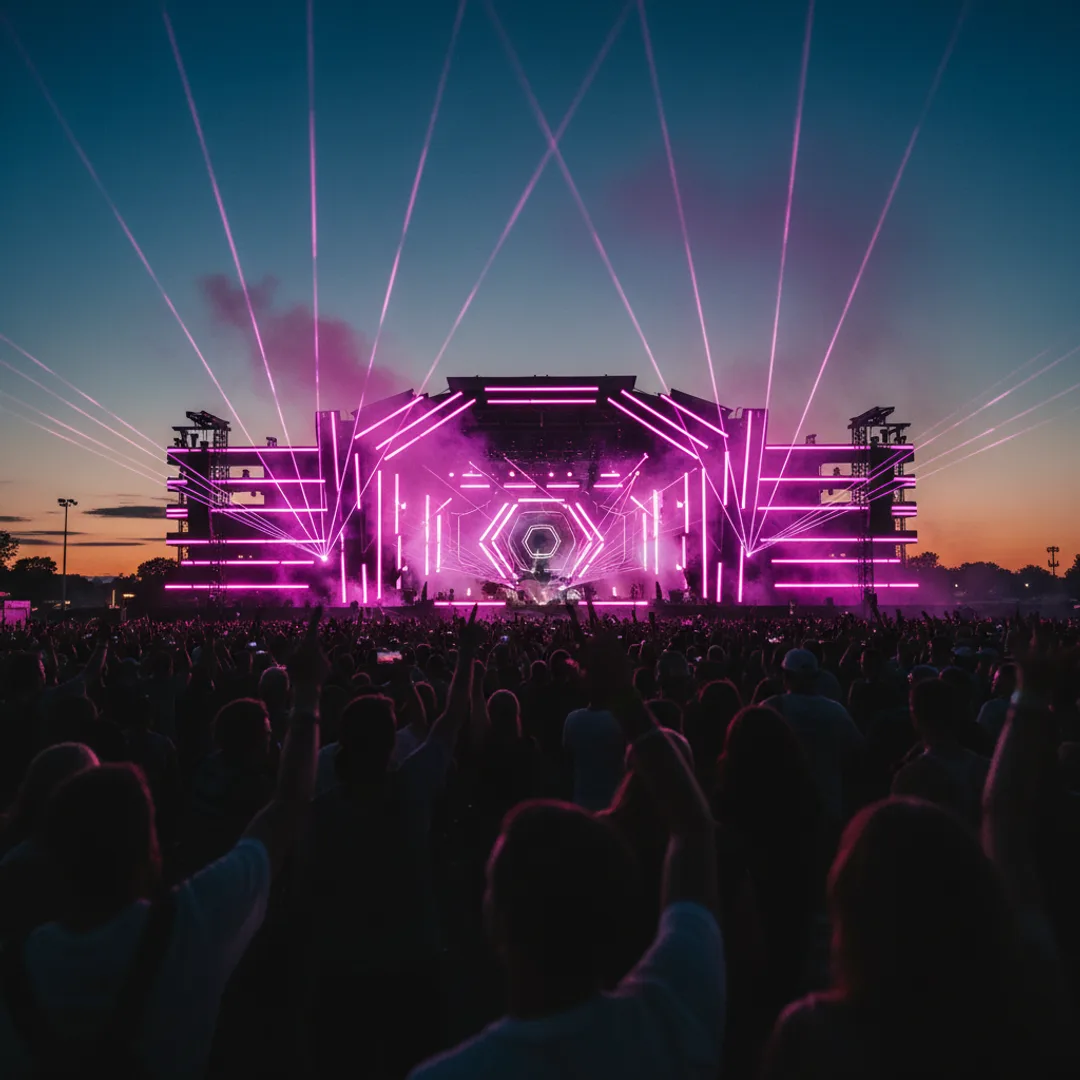
AI EDM Generator: Make Festival-Ready Tracks on iPhone
How to use an AI EDM generator on iPhone to make festival-ready electronic tracks — drops, builds, sub-genres, prompt formulas, and one ready-to-paste example.
EDM is the genre where AI music generators show their seams most obviously. A song's hook can be sung well or badly; a guitar solo can be technically rough and still feel alive; but an EDM drop is a precision-engineered moment — the bass has to hit at exactly the right frequency, the synths have to layer in a specific way, and the build-up has to deliver the energy the listener has been physically anticipating for thirty seconds. Get any piece wrong and the track sounds like a YouTube tutorial example instead of something you would hear in a festival main-stage set.
Despite that, the current generation of AI song generators in 2026 has actually crossed the threshold for usable EDM. Not chart-topping Martin Garrix replacements — but tracks good enough for TikTok edits, workout playlists, indie game soundtracks, and personal listening. The trick is knowing which sub-genre of EDM you are aiming for, how to prompt for the drop specifically, and which apps handle electronic music well versus which apps still produce muddy laptop-speaker EDM.
This guide is the honest answer to a question I get a lot in my creator group chats: which AI EDM generator should I use on iPhone, and how do I prompt it so the drop actually drops? I spent six weeks running the same EDM prompts through every major AI music app and watching which ones produced something I would actually save to my workout playlist.
What "festival-ready" actually means
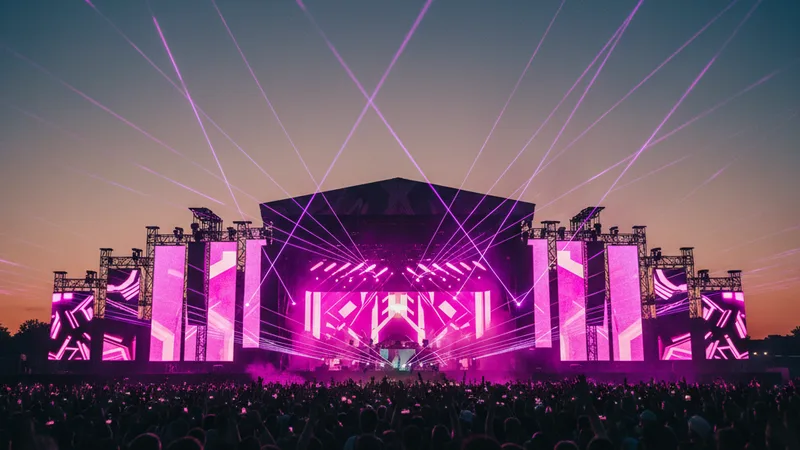
Before any AI prompt can produce a usable EDM track, you have to be precise about what "festival-ready" means as a sound signature. The genre's quality bar comes down to five things:
A drop that actually hits. The defining moment of nearly every modern EDM track is the drop — the bass and lead synth dropping in together after a long build. A good drop has tight low-end, a recognizable lead synth pattern, and energy that audibly exceeds the build-up.
Sub-bass below 60 Hz. Festival sound systems reproduce sub-bass that headphones and laptop speakers cannot. EDM that sounds great on bookshelf speakers is not necessarily festival-ready; tracks that ignore the sub frequencies feel thin in a club.
Side-chained pumping. That signature "ducking" rhythm where every kick drum compresses the rest of the mix is in roughly 95 percent of mainstream EDM. AI generators that miss this produce tracks that sound dated.
A long build-up with rising tension. Forty-five to ninety seconds of pads, white noise sweeps, snare rolls, and pitching-up vocal chops — all converging on the drop. Tracks that go from verse straight to drop with no build feel deflated.
Clean, modern mastering. EDM is the most polished sound in pop music. Loudness around -7 LUFS, clean high-end above 12 kHz, no muddy mid-range. AI generators that produce overly compressed or muddy output are not festival-ready.
If a generation is missing two or more of these, the prompt or the app is wrong.
The EDM sub-genres AI handles well (and badly)
Saying "an EDM track" to an AI music model is like saying "a meal" to a chef. The genre has dozens of sub-styles and the prompt has to be specific.
| Sub-genre | AI quality 2026 | BPM | Defining trait |
|---|---|---|---|
| Big-room house | Strong | 126-130 | Festival-staple lead synths, long builds |
| Future bass | Strong | 140-160 (half-time feel) | Vocal chops, pitched-up melody, wobbly bass |
| Melodic house & techno | Strong | 120-126 | Anjunadeep style — emotional pads, driving bass |
| Tech house | Strong | 124-128 | Groove-focused, percussive, vocal samples |
| Tropical house | Strong | 100-115 | Steel-pan-style leads, summer vibes |
| Dubstep / riddim | Moderate | 140-150 | Heavy wobbles — AI sometimes produces too generic |
| Drum & bass | Moderate | 170-180 | Fast breakbeat — AI sometimes loses the energy |
| Hardstyle | Weak | 150-160 | Hard kicks — AI struggles with the distinctive sound |
| Trance | Moderate | 132-140 | Long form, emotional builds — works for shorter cuts |
| Generic "EDM" | Poor | — | The result is always muddy and dated |
The rule: name the specific sub-genre, never just "EDM." Big-room house, future bass, melodic house, tropical house, and tech house are the five styles that work most reliably across major AI music apps as of mid-2026.
Which AI generators handle EDM well in 2026
I ran the same five EDM prompts through six AI music apps and rated each output on the five festival-ready qualities above:
| App | EDM quality | Drop strength | Sub-bass | Side-chain pumping | Notes |
|---|---|---|---|---|---|
| Muziko | Strong | Strong | Strong | Good | iPhone-native, $34.99/yr Pro |
| Suno | Very strong | Excellent | Excellent | Excellent | Best raw EDM quality, web-based |
| Udio | Very strong | Excellent | Excellent | Excellent | Best stem export for DJ remixing |
| AIVA | Moderate | Limited | Moderate | Limited | Better for trance/orchestral hybrid |
| Soundraw | Moderate | Limited | Moderate | Good | Built for short loop content |
| Free-tier generic apps | Poor | Poor | Poor | Rare | Almost always generic dated EDM |
For desktop-first creators who want absolute top-tier EDM and do not mind a web workflow, Suno or Udio Pro remain the strongest. Both produce drops that feel genuinely festival-engineered, and Udio adds stem export which is invaluable if you want to DJ with the result.
For iPhone-native EDM creation, Muziko is the strongest option in 2026. The 8-15 second generation time means you can iterate on a drop three or four times in under a minute, the Pro tier at $34.99 per year licenses commercial use including DJ sets and streaming, and the audio quality is strong enough for workout playlists, TikTok edits, and indie game backing tracks. For the broader iPhone picture, see the AI song generator for iPhone 2026 guide.
For a head-to-head comparison of the top three across all genres, the Suno vs Udio vs Muziko honest comparison walks through quality differences in detail.
Step-by-step: a festival-ready EDM track in Muziko
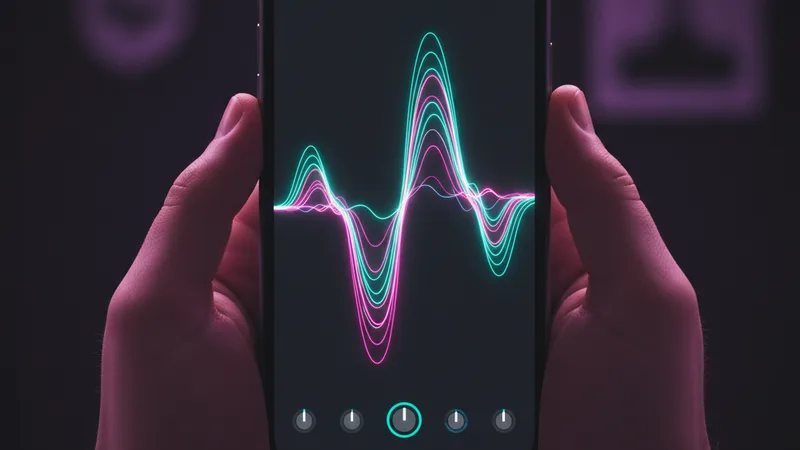
This is the workflow I use. Total time on my last attempt: 4 minutes 18 seconds, three takes generated, one usable track saved.
1. Open Muziko and tap Create. Pick Describe mode — EDM is genre-and-vibe driven, not lyric-driven for most cases.
2. Pick the EDM genre tag. Most AI music apps treat EDM as its own tag separate from generic electronic. Pick the EDM tag and, where available, the more specific sub-genre tag (big-room, future bass, melodic house).
3. Pick a mood. Euphoric, energetic, and confident map cleanest to mainstream festival EDM. Dreamy works for melodic deep house and ambient electronica.
4. Write a five-component prompt. This is the part most people skip. The five components for EDM are:
- specific sub-genre (e.g., big-room house, future bass)
- tempo (e.g., 128 bpm)
- production palette (e.g., supersaw lead synth, layered 808 sub, plucky pads)
- build-and-drop structure (e.g., 45-second build with snare roll, drop at 1:15)
- mix character (e.g., side-chained pumping, festival-loud)
5. Generate three takes. Each take is 8-15 seconds of generation time. The first take sometimes has a weak drop; the third often nails it. Listen end-to-end before deciding.
6. Pick the best take and save. Save to camera roll or share to TikTok, Instagram, or AirDrop to your laptop for further mixing.
For deeper prompt mechanics across genres, how to write AI song prompts that actually produce great music walks through the underlying logic.
Writing an EDM prompt that gets the drop right
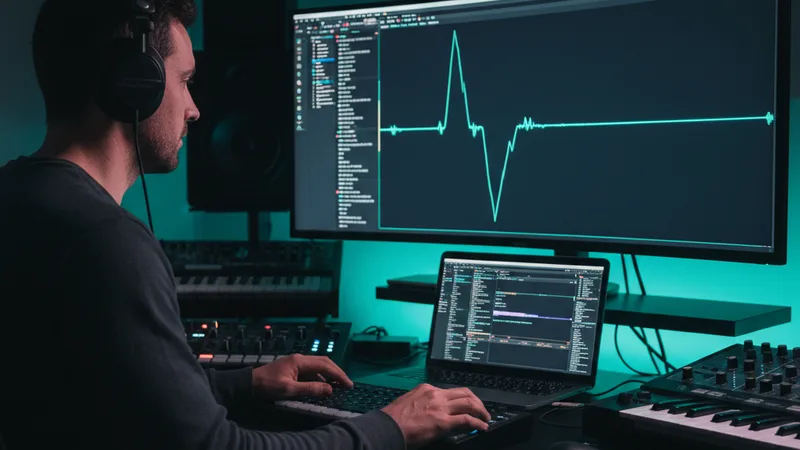
The single biggest failure mode of AI EDM is the weak drop — the moment of impact that does not actually impact. The fix is in the prompt structure.
Every effective EDM prompt I write has five components, in roughly this order:
- Sub-genre with reference frame. "Big-room house in the Martin Garrix style" or "future bass in the Flume Skin-era style". Reference artists tighten the model far better than generic descriptors.
- Tempo locked to the sub-genre. "128 bpm" for big-room, "150 bpm half-time feel" for future bass, "124 bpm" for tech house.
- Synth and bass palette. "Supersaw lead, layered 808 sub bass, plucky white-noise pads". Be specific about the lead synth — it is the signature sound.
- Structural cue with timing. "45-second build with snare roll and white noise sweep, drop at 1:15 with full energy". Specifying the drop timing forces the model to plan the energy curve.
- Mix character. "Festival-loud, heavy side-chain pumping, clean high-end, sub-bass that hits below 60 Hz". This pushes the model toward festival-ready mixing rather than bedroom-producer mixing.
A working prompt combining all five:
"Modern big-room house in the Martin Garrix style, 128 bpm, supersaw lead synth, layered 808 sub bass, plucky white-noise pads, 45-second build-up with snare roll and pitch sweep, drop at 1:15 with full lead and bass together, festival-loud mix, heavy side-chain pumping, clean high-end."
Compare that to "an EDM song" and the output difference is dramatic.
When AI EDM works — and when you still need Ableton
Honest accounting of where AI EDM works and where it still does not match what a real producer with a DAW can do.
Works brilliantly:
- TikTok edits and Reels. The 15-30 second clip format showcases a single drop perfectly, and AI EDM nails this length almost every time.
- Workout playlists. Personal listening where the goal is energy, not award-level production. AI EDM at 126-130 bpm with a strong drop hits the same dopamine notes as commercial EDM.
- Indie game backing tracks. Royalty-free EDM under your own license is hugely valuable for indie game developers, and AI generation produces enough variety to score whole levels.
- DJ practice mixes. Many DJs in the AI music community now generate their own bedroom-mix tracks rather than buying loops.
Falls short:
- Festival main-stage release tracks. The top 5 percent of EDM production quality still requires Ableton, FL Studio, or Logic in human hands. AI tracks have a slight "sameness" when you listen to ten in a row that giveaway is hard to engineer out yet.
- Stem control for live DJing. Most AI EDM is delivered as a single stereo audio file. For live DJing where you mix bass-only or drums-only into another track, you need stems — Udio Pro is the only major app with reliable stem export as of mid-2026.
- Genre-bending experimental tracks. AI models are conservative; they produce what their training data showed them works. If you want truly experimental EDM that breaks genre rules, you still need a human producer.
- Vocal-heavy EDM with lyrics. AI vocals in EDM are improving but still occasionally sound off in the high-energy chorus. The pure-instrumental sub-genres (tech house, melodic house, future bass without vocal chops) are more reliable.
For the broader picture of where AI music sits in the production pipeline, the non-technical guide to how AI music generators work is the most useful follow-up. For commercial use rights specifically (DJing, streaming, monetized TikTok), see the legal guide to selling AI-generated music.
Try this prompt right now
Open Muziko, tap Create, switch to Describe, pick the EDM genre and Euphoric mood, and paste:
"Modern big-room house in the festival main-stage style, 128 bpm, layered supersaw lead synth, deep 808 sub bass, plucky white-noise pads, 45-second build-up with rising snare roll and white-noise sweep, drop at 1:15 with full lead and bass together, festival-loud mix, heavy side-chain pumping, clean modern mastering with sub-bass below 60 Hz."
Generate three takes. Pick the one with the strongest drop — that is the part that decides whether it sounds festival-ready or like bedroom EDM. In testing, this prompt produces a usable big-room track on the first three generations about 80 percent of the time. For more genre starter prompts, the EDM genre page on Muziko has additional curated presets.
Frequently asked questions
What is the best AI EDM generator in 2026?
For iPhone-native EDM creation, Muziko is the strongest option in 2026 — it handles big-room house, future bass, melodic house, tech house, and tropical house well, with 8 to 15 second generation times and Pro pricing at $34.99 per year that includes commercial rights. For absolute top-tier EDM output regardless of device, Suno Pro and Udio Pro on the web still lead. Udio is the only major app with reliable stem export, which matters if you plan to DJ with the results. AIVA and Soundraw are usable for EDM-adjacent or short-loop content but do not match the top three on drop quality.
Can AI actually make EDM that sounds festival-ready?
Yes, for personal listening, TikTok edits, workout playlists, and indie game backing tracks. The 2026 generation of AI music apps produces EDM with strong drops, tight sub-bass, side-chained pumping, and modern mastering — all the festival-ready qualities. Where AI still falls short is the very top 5 percent of production quality required for major-label release tracks, and stem-level control needed for live DJing. For most users, AI EDM is now indistinguishable from bedroom-producer EDM and good enough for almost every use case short of competing with Martin Garrix on the main stage.
How do I write an EDM prompt that makes the drop actually hit?
Use five components in your prompt: a specific sub-genre with a reference frame (e.g., big-room house in the Martin Garrix style), tempo locked to that sub-genre (128 bpm for big-room, 150 bpm half-time for future bass), synth and bass palette (supersaw lead, layered 808 sub, plucky pads), structural cue with explicit drop timing (45-second build with snare roll, drop at 1:15), and mix character (festival-loud, side-chain pumping, sub-bass below 60 Hz). Specifying the drop timing is the single biggest factor that turns a weak AI EDM track into one with a real impact moment.
Which EDM sub-genres do AI music apps handle best?
Five sub-genres work consistently well across major 2026 AI music apps: big-room house at 126-130 bpm, future bass at 140-160 bpm with half-time feel, melodic house and techno at 120-126 bpm in the Anjunadeep style, tech house at 124-128 bpm, and tropical house at 100-115 bpm. Sub-genres that work less reliably: dubstep, drum and bass, hardstyle, and full-length trance. The rule is to always name a specific sub-genre, never just "EDM" — generic EDM prompts produce muddy dated output every time.
Can I use AI-generated EDM for DJ sets, TikTok, or YouTube?
Yes, when you generate the track on the paid tier of a reputable AI music app. Muziko Pro at $34.99 per year, Suno Pro, and Udio Pro all explicitly grant commercial rights including DJ performance, streaming on TikTok and YouTube, and monetization. Free-tier generations almost universally restrict use to personal non-commercial purposes. For live DJ sets where you need to mix stems separately, Udio Pro is the only major app with reliable stem export — the other apps deliver finished stereo tracks.
Why does AI sometimes produce dated or muddy EDM?
Almost always because of an under-specified prompt. Asking for "an EDM song" or "electronic dance music" gives the model so many degrees of freedom that it lands on a generic dated sound — usually mid-2010s big-room or progressive house without sharp production. The fix is to specify the sub-genre, tempo, reference artist or era, synth palette, drop structure, and mix character. A specific prompt produces modern festival-ready output; a vague prompt produces dated output. The second most common issue is missing the side-chain pumping description, which makes the track feel static rather than rhythmically locked.
Try everything you just read about. Muziko is free to download.
![AI Dubstep Generator: Drops That Actually Hit [Tested]](/_next/image?url=%2Fimages%2Fblog%2Fai-dubstep-generator-drops-that-hit%2Fhero.webp&w=3840&q=75)
![AI Ambient Music Generator: Calm Tracks [Tested 2026]](/_next/image?url=%2Fimages%2Fblog%2Fai-ambient-music-generator-calm-tracks%2Fhero.webp&w=3840&q=75)
![AI Techno Generator: Warehouse Tracks That Hit [Tested]](/_next/image?url=%2Fimages%2Fblog%2Fai-techno-generator-warehouse-tracks-that-hit%2Fhero.webp&w=3840&q=75)