
![AI Halloween Songs: Spooky Party Tracks [Tested 2026]](/_next/image?url=%2Fimages%2Fblog%2Fai-halloween-songs-spooky-party-tracks%2Fhero.webp&w=3840&q=75)
AI Halloween Songs: Spooky Party Tracks [Tested 2026]
Yes, AI Halloween songs can actually sound spooky — if you prompt them right. I tested 40+ takes: haunted waltzes, horror trap, and monster-mash pop.
Last October I got roped into running music for a friend's Halloween party. Forty-ish people, a converted garage, a fog machine somebody's cousin brought and nobody knew how to turn off. My job was simple: keep it spooky, keep it moving.
I did what everyone does. I pulled up a "Halloween Party Hits" playlist. And within ninety minutes I'd heard "Monster Mash" twice, "Thriller" once, "Ghostbusters" once, and then the algorithm gave up entirely and started feeding me regular pop songs with the word witch in the title. The actual spooky-music portion of the night lasted maybe twenty minutes. Everything after that was just a normal party with cobwebs on the wall.
That's the gap. Halloween has a canon of roughly eight songs and a genuinely enormous appetite for atmosphere, and nothing in between. So this year I spent a couple of weeks testing what AI generation could actually fill that space with — haunted waltzes, horror-trap instrumentals, a fake 1962 novelty song about my neighbor's cat. Some of it was great. Some of it was unusable. Here's what I learned about which is which.
Why the standard Halloween playlist runs out
The canon is tiny. Genuinely Halloween-specific songs that most people recognize number under a dozen. "Monster Mash" came out in 1962. "Thriller" in 1982. The list has barely moved in forty years. Compare that to Christmas, which gets a new entrant into the standards every few years and has hundreds of viable tracks.
Everything else is a stretch. Playlist curators pad the gap with songs that are dark-adjacent rather than Halloween-specific — "Superstition," "Bad Moon Rising," "Sweet Dreams." Good songs. But they're not spooky, they're just moody, and a room full of people in costumes notices the difference around the third one.
Horror soundtrack music doesn't work as party music. The obvious fix is to reach for the actual scores — Carpenter, Goblin, the Stranger Things synths. I tried this. The problem is that real horror scoring is written to create dread and then leave space for it. It has long silences and slow builds. In a room with forty people talking, those silences read as "the music stopped." You need something with the texture of horror and the pulse of party music, and that combination barely exists commercially.
Licensing kills it for anyone recording. If you're making a Halloween TikTok, a haunted-house walkthrough video, or a costume reel, none of the canon is usable. You'll get claimed instantly. That pushes creators toward the same three royalty-free "spooky loop" tracks that every other Halloween video on the platform is using, which is its own kind of generic.
And nothing is about your Halloween. The party in your garage, the specific bit about your friend who dresses as the same character every year, the name of the haunted-house attraction you're actually running. Store-bought music can't do any of that.
What custom AI Halloween tracks actually add
Here's where generation earns its place — not as a replacement for "Thriller," but as everything around it:
- Long-form atmosphere. The thing a party genuinely needs is 40 minutes of continuous spooky texture that doesn't demand attention. Generate six or seven instrumental tracks in a consistent style and you have a bed that runs the whole night without repeating.
- Specific-to-you novelty songs. A 1960s-style monster-mash pastiche about your friend group, with names in the lyrics, lands harder at a party than anything on the radio. This is the single highest-return use I found.
- Genre-crossed spooky. Horror trap. Haunted bossa nova. Gothic country. Synthwave with a diminished-chord melody. These combinations basically don't exist as commercial recordings, and AI generation is genuinely good at them because it's just interpolating between two things it knows well.
- Copyright-clear video music. For anyone posting Halloween content, generated tracks sidestep the claim problem entirely. Worth reading our guide to copyright-safe tracks for YouTube before you publish anything, since the rules differ by platform.
- Haunted-house and event scoring. If you're running an actual attraction — a school fundraiser, a yard haunt, an escape room — you need room-specific loops, and you need a lot of them. This is the use case where the cost math becomes absurd in your favor.
- Speed. A track takes 8 to 15 seconds. You can build a whole party set in the time it takes to decide on a costume.
Step-by-step: building a Halloween set in Muziko
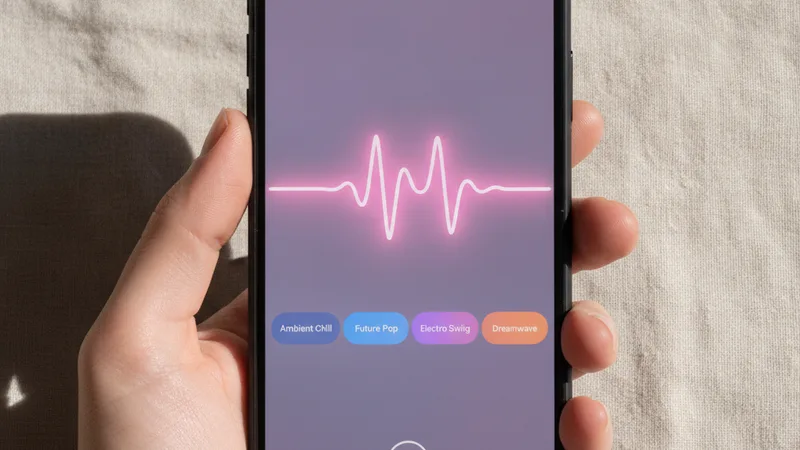
This is the workflow I settled on after a lot of trial and error. It takes about twenty minutes for a full night's worth of music.
- Decide the register first. Halloween splits into two moods that don't mix well: fun spooky (novelty, camp, orange-and-purple) and actually creepy (dread, tension, dark). Pick one per set. Mixing them mid-party kills the room.
- Open Muziko and choose Describe mode for instrumentals, or Write Lyrics if you're doing a novelty song with names in it.
- Name the genre and the era together. "1960s novelty rock" produces something completely different from "horror trap," and both are more useful than the word "Halloween" on its own.
- Add two or three concrete instruments. Theremin, church organ, harpsichord, celesta, detuned music box, bowed cymbal. These are the sounds that read as spooky rather than merely minor key.
- Set the mood tag. Muziko has 14 — Dark, Mysterious, and Playful are the three that do the heavy lifting here depending on your register.
- Generate three takes of the same prompt. They come out different. For atmosphere beds especially, take two is often better than take one.
- Keep the ones that hold up at low volume. This is the party test most people skip. Play it at background level. If it disappears entirely, it's too subtle. If it fights the conversation, it's too busy.
- Build variety within one style. Generate your seven tracks from prompt variations, not seven unrelated prompts. Change the tempo and one instrument each time. The set will feel intentional rather than shuffled.
- For the novelty song, write the lyrics yourself. Feed real names, real details, the running joke. The music model handles the arrangement; you handle the part that makes people laugh.
- Sequence before the party. Front-load the fun, save the genuinely creepy stuff for after 11pm when the kids have gone home. Export to your Files app and build the playlist in advance.
If you want the deeper mechanics of getting a model to hit a target sound, our prompt-writing guide goes into more detail than I can here.
Writing the prompt that actually sounds spooky
The single biggest mistake is using the word "Halloween." Models trained on music descriptions associate it loosely with "October" and "party" and give you something that sounds like a generic upbeat pop track with a slightly minor chorus. It's the most disappointing output in this whole category.
Describe the sound, not the holiday. Instead of "spooky Halloween song," say what makes something sound frightening: minor key, dissonant intervals, slow tempo, reverb-heavy, distant.
Reach for the specific instruments. There's a small vocabulary of sounds that carry supernatural connotation almost automatically — pipe organ, theremin, harpsichord, celesta, music box, bowed saw, low strings played tremolo. Naming two of these does more work than any amount of atmospheric adjectives.
Use harmonic language if you know it. Terms like diminished chords, tritone, chromatic descent, and whole-tone scale genuinely steer the output. The tritone in particular is the interval that centuries of Western music has used to signal wrongness, and models have absorbed that association thoroughly.
Control the tempo deliberately. Dread lives between 60 and 80 BPM. Chase-scene tension lives around 140. Party-spooky sits at 100 to 120. A prompt that doesn't specify tends to land at a neutral 110 that isn't scary or danceable.
Name a reference era, not a reference artist. "Early-80s analog synth horror score" works. Naming a specific composer usually doesn't, and the model will either ignore it or produce something vague.
For novelty songs, lean fully into the camp. The 1962 monster-mash register isn't scary and isn't trying to be. Ask for upbeat 1960s novelty rock and roll, walking bass, hand claps, cheerful spooky lyrics, vintage tape warmth and you'll get something genuinely fun.
A combined prompt that worked well for me:
Slow gothic waltz in 3/4 at 68 BPM, church pipe organ and distant celesta, minor key with chromatic descending bassline, heavy hall reverb, dark and mysterious, no vocals, instrumental
And the party-register counterpart:
Upbeat 1960s novelty rock and roll at 128 BPM, surf guitar, walking upright bass, hand claps, playful cheerful mood, vintage tape saturation, campy monster movie feel
The Halloween style chart: matching mood to genre
This is the reference table I built while testing. Find your situation in the left column.
| Use case | Genre / style | Tempo | Mood tag | Notes |
|---|---|---|---|---|
| Party background, early evening | 1960s novelty rock | 120-130 | Playful | The monster-mash register. Reads as festive, not frightening. |
| Party background, late night | Dark synthwave | 100-110 | Dark | Analog arpeggios carry a room without demanding attention. |
| Trick-or-treat porch loop | Gothic organ waltz | 60-75 | Mysterious | Loops cleanly. Audible from the sidewalk. Kid-safe. |
| Haunted house room ambience | Ambient horror drone | Free / very slow | Dark | Ask for no drums at all. Texture only. |
| Costume reveal reel | Horror trap | 140 (70 half-time) | Dark | See our trap generator guide for the beat mechanics. |
| Halloween TikTok / short | Spooky hyperpop | 150-160 | Playful | Fast, bright, weird. Cuts through on mobile speakers. |
| Kids' school party | Cheerful minor-key pop | 115-125 | Playful | Spooky-adjacent without anything actually frightening. |
| Costume contest walk-on | Cinematic orchestral | 90-100 | Mysterious | Big brass stabs. Two-minute versions work best. |
| Yard haunt exterior | Music box / celesta | 55-70 | Mysterious | The single most reliably unsettling texture I tested. |
| Personalized novelty song | 1960s rock and roll | 125-135 | Playful | Write your own lyrics. This is where names go. |
| Vampire / gothic romance theme | Neo-classical piano | 65-80 | Mysterious | Overlaps with classical generation. |
| Zombie / apocalypse vibe | Industrial metal | 130-145 | Dark | Heavy, mechanical, relentless. Not subtle. |
| Witchy / folk-horror | Dark acoustic folk | 80-95 | Mysterious | Modal melodies, hand drums, close-mic'd. Ages well. |
| Countdown to midnight | Building orchestral tension | 100 → 160 | Dark | Ask explicitly for "gradual build, accelerating." |
| Ghost-story podcast intro | Ambient with sparse piano | 60-70 | Mysterious | Keep it under 30 seconds of usable loop. |
When AI Halloween music works, and when it doesn't
Works well:
- Instrumental atmosphere. This is the strongest category by a distance. Long, textural, no vocals, low attention demand — models handle it beautifully.
- Genre-crossing. Haunted bossa nova, gothic country, spooky lo-fi. The stranger the combination, the more interesting the result, because you're getting something that has no commercial equivalent.
- Novelty songs with personal lyrics. The music is a vehicle for the joke. It doesn't need to be great, it needs to be recognizable as a genre and clear enough to hear the names.
- Loops for events and attractions. Volume matters more than perfection here. Generating twelve room-specific loops for a yard haunt is trivially easy and genuinely useful.
- Video and social content. Copyright-clear, fast, and specific to the clip.
Falls short:
- Genuine, sustained dread. Real horror scoring is built on restraint and silence, and generation models tend to fill space. You can get creepy. You can't reliably get terrifying.
- Jump-scare timing. If you need a sting to hit at exactly 0:47, you're going to be editing in another app. Generated tracks don't take timing direction.
- Anything with screaming or extreme vocal effects. Vocal output stays fairly clean. Growls, whispers, and distorted horror vocals are inconsistent at best.
- Replacing the canon. Nobody is going to sing along. The classics do a social job that a new track can't, and a Halloween party without at least one recognizable song feels off.
- Very long single tracks. You'll be generating several and sequencing them rather than getting one twenty-minute piece.
- Sound design. Creaking doors, footsteps, thunder. That's a foley library, not a music generator.
Try this prompt right now
Open Muziko on the App Store, pick Describe mode, and run this:
Slow gothic waltz in 3/4 at 68 BPM, church pipe organ with distant celesta and soft timpani, minor key with a chromatic descending bassline, heavy cathedral reverb, dark and mysterious, instrumental, no vocals
Generate three takes — it's about ten seconds each. Then listen for two specific things: does the organ sit behind the celesta rather than swallowing it, and does the bassline actually descend step by step rather than just sitting on one note? Those two details separate a track that sounds genuinely haunted from one that just sounds slow and minor. Keep the take that gets both.
Then change one word — swap "pipe organ" for "detuned music box" — and run it again. That single substitution is the fastest way to feel how much instrument choice drives this whole category.
Frequently asked questions
Can AI actually make music that sounds scary?
It can reliably make music that sounds creepy, eerie, and unsettling — minor keys, dissonant intervals, organ and music-box textures, slow reverb-heavy arrangements. What it struggles with is sustained dread, which real horror scoring builds through silence and restraint. Generation models tend to fill space rather than leave it. For party atmosphere and video backing, the output is more than good enough. For a genuinely frightening film score, you'd still want a composer.
Why does the word "Halloween" produce bad results in prompts?
Models associate "Halloween" loosely with October and parties rather than with a specific sound, so you often get generic upbeat pop with a slightly minor chorus. Describe the sonic qualities instead: minor key, slow tempo, pipe organ, dissonant intervals, heavy reverb. Naming two spooky-coded instruments does more work than any amount of holiday vocabulary.
Can I use AI Halloween songs in my TikTok or YouTube videos?
Yes. Tracks generated in Muziko under a Pro subscription can be used in your videos without the copyright claims you'd get from using "Thriller" or "Monster Mash." This is one of the strongest practical reasons to generate rather than license for seasonal content, since Halloween is one of the highest-claim periods of the year on both platforms. Our TikTok music guide covers the format specifics.
What instruments make a track sound the most haunted?
In my testing the most reliable are: detuned music box or celesta, church pipe organ, theremin, harpsichord, bowed saw, and low tremolo strings. Music box was the single most consistently unsettling — it carries a childhood association that makes the dissonance land harder. Naming two of these in a prompt is more effective than a paragraph of atmospheric adjectives.
How many tracks do I need for a Halloween party?
For a four-hour party, plan on six to eight generated instrumental tracks plus whatever classics you want in the mix. Build them from variations of one prompt rather than eight unrelated prompts, changing tempo and one instrument each time, so the set feels intentional. At 8 to 15 seconds per generation, the whole set takes about twenty minutes to build.
Can I make a personalized Halloween song with my friends' names in it?
Yes, and this is the highest-return use of the whole category. Use Write Lyrics mode, write the words yourself with real names and inside jokes, and ask for upbeat 1960s novelty rock and roll as the style. The campy monster-mash register is forgiving — it doesn't need to be scary, it needs to be clear enough that people can hear the names and laugh. If you're new to the app, the iPhone workflow guide walks through the basics.
Try everything you just read about. Muziko is free to download.
![AI Cinematic Music Generator: Trailer Scores [Tested]](/_next/image?url=%2Fimages%2Fblog%2Fai-cinematic-music-generator-trailer-scores%2Fhero.webp&w=3840&q=75)
![AI Dubstep Generator: Drops That Actually Hit [Tested]](/_next/image?url=%2Fimages%2Fblog%2Fai-dubstep-generator-drops-that-hit%2Fhero.webp&w=3840&q=75)