
AI Classical Music Generator: Compose a Piano Piece
Generate solo piano pieces and small chamber works with AI on iPhone — minimalist, neo-classical, baroque-style, romantic. Prompt templates that produce real classical-style music, not pop with piano, in under five minutes.
Classical music is the genre AI music generators have to fake more carefully than any other. Four hundred years of compositional tradition, a vocabulary of forms and conventions that took conservatory students a decade to absorb, and an audience that includes listeners who can tell a Chopin from a Schumann from a Liszt within four bars — generating convincing classical-style music with a 2026 AI music app is genuinely harder than generating pop, country, jazz, or any urbano genre. The good news is that not all classical is equally hard. Modern neo-classical and minimalist piano music — the Max Richter, Ólafur Arnalds, Nils Frahm school of contemporary piano — is much closer to what AI can produce well than baroque counterpoint or romantic sonata-allegro form.
This is the case for narrow classical prompting that I have tested across about thirty generations. Generic "classical" prompts produce a pleasant generic piano-and-strings sound that fits no period, no school, no specific compositional language. Prompting explicitly for "minimalist solo piano in the tradition of contemporary neo-classical composers" or "baroque-style two-voice invention for solo harpsichord" produces tracks that actually sit within a recognizable tradition.
This guide is the workflow I have refined for generating classical-style music on iPhone — minimalist piano, neo-classical, baroque-style counterpoint, romantic-era piano, impressionist atmospheric pieces, modern film score, sacred choral — in under five minutes per piece. The prompt templates that hit each tradition's conventions, where AI is on convincing footing versus where it still falls short, and the honest limits of classical generation in 2026.
Why classical music exposes AI music generators most honestly
A few specifics about classical music that almost no non-classical listener fully thinks about:
Classical is dozens of periods and schools, not one genre. Baroque (1600-1750) sounds different from Classical-period (1750-1820) sounds different from Romantic (1820-1900) sounds different from Impressionist (1890-1925) sounds different from contemporary neo-classical. Asking AI for "classical music" without a period gets a generic average of all of them, which sits in none of them.
Counterpoint is the single hardest classical skill for AI. Real counterpoint — two or more independent melodic lines moving simultaneously with their own logic, harmonizing as they go — is what defines baroque (Bach) and what made centuries of composition difficult to learn. AI music generators in 2026 produce homophonic textures (melody plus accompaniment) much more reliably than they produce true counterpoint.
Form matters in classical in ways it does not in pop. A Mozart piano sonata has a specific sonata-allegro form with exposition, development, and recapitulation. A Bach fugue has subject and answer entries in specific keys. AI tends to produce free-form classical-sounding music without internalizing these forms. For listeners trained on classical structure, the lack of form reads as off.
Solo piano music is where AI does its best work. A single instrument removes the need for AI to manage ensemble balance, orchestral arrangement, or counterpoint between multiple voices. Solo piano in minimalist or contemporary neo-classical style is AI's strongest classical territory.
Real orchestral music is at the limit of current AI capability. Generating a convincing full orchestra — strings, woodwinds, brass, percussion all interacting in ensemble texture — is beyond what 2026 AI music apps reliably produce. The orchestral mockups they generate read as sample libraries playing the part rather than as a real orchestra performing.
For the broader prompt-craft foundation, how to write AI song prompts that actually produce great music is the most useful companion read.
What AI classical gets right — and what it still misses
AI music apps in 2026 handle classical music at varying levels of competence depending on the period and style. Honest accounting.
Gets right consistently:
- Minimalist solo piano in the Erik Satie / contemporary neo-classical tradition. Repetitive simple patterns, sparse texture, gentle dynamics. AI handles this on the first or second generation.
- Modern neo-classical piano in the Ólafur Arnalds / Max Richter / Nils Frahm tradition. Solo piano with light strings or electronics, ambient texture. Works well.
- Atmospheric impressionist-influenced piano. Debussy-adjacent territory with whole-tone scales and pedaled textures handles cleanly at the surface level.
- Modern film score atmospheric pieces. Soft orchestral or piano-and-strings ambient cues for film and TV are achievable.
- Sacred choral background music. Light choral textures for ambient or background use work for non-demanding contexts.
- Romantic-era solo piano nocturnes. Slow, expressive solo piano in the Chopin-adjacent tradition handles at the surface level.
Still misses or inconsistent:
- Real counterpoint and fugue. Baroque two-voice and three-voice counterpoint is at the edge of AI capability. Generated counterpoint tends toward parallel motion rather than true independence of voices.
- Classical-period sonata form. Mozart and Haydn sonata structure with proper exposition, development, and recapitulation is beyond current AI form modeling.
- Late Romantic and modernist orchestral music. The harmonic complexity and orchestral density of Mahler, Strauss, or Stravinsky is beyond what AI reliably produces.
- Authentic period instrument textures. Harpsichord, fortepiano, period strings each have specific tonal characteristics that AI approximates as generic samples.
- Virtuosic piano writing. Liszt-level technical demand or the cross-rhythmic complexity of late Rachmaninoff is at the limit of AI capability.
- Choral writing with proper voice leading. Real four-part choral writing with correct voice leading rules is at the edge of what AI does well.
- Twelve-tone or serial composition. Atonal twentieth-century classical is not really what AI music models are trained on, and the results read as random tonal mush rather than as serial composition.
For more on AI music quality across genres, the best AI music app for iPhone 2026 ranking covers what each major app handles best.
Step-by-step: a solo piano piece in Muziko, under five minutes
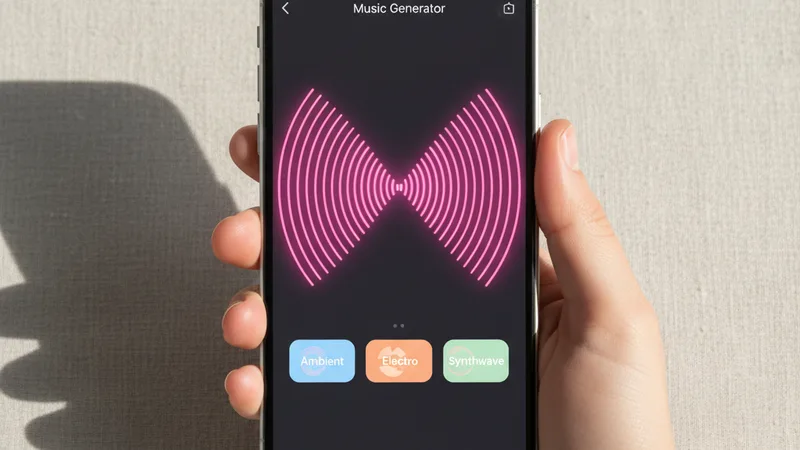
The workflow I have used for fifteen test classical pieces across periods. Total time on a successful run averages 5 minutes 15 seconds — slightly longer than pop because classical prompts need more compositional specificity.
1. Open Muziko and tap Create. Switch to Describe mode for instrumental classical pieces; Write Lyrics mode for choral or vocal classical works.
2. Pick the genre tag. Pick Classical if available. If not, the closest options are Piano (for solo piano), Ambient (for atmospheric pieces), or Cinematic (for film-score-style work).
3. Pick a mood. Dreamy for impressionist and atmospheric pieces. Sentimental for Chopin-adjacent nocturnes and romantic-era piano. Confident for baroque-style energy. Playful for Classical-period and early classical work. Sentimental + dreamy combinations work for neo-classical.
4. Specify the period or tradition explicitly. "Minimalist solo piano in the contemporary neo-classical tradition" or "baroque-style two-voice invention for harpsichord in the Bach tradition" or "impressionist solo piano in the Debussy tradition" or "romantic-era nocturne in the Chopin tradition" or "modern film score atmospheric piano with light strings." The period direction is the single biggest lever.
5. Name the instrumentation. "Solo piano only, no other instruments" is the cleanest classical territory for AI. "Solo piano with light string section entering on the second section" adds strings carefully. "Solo harpsichord" for baroque-style work.
6. Specify the structure. "ABA ternary form with the A section as the main theme, B as contrasting middle section, and A as a varied return of the main theme" gives the AI form. "Two-voice imitative counterpoint in the manner of a baroque invention" for counterpoint work. "Through-composed reflective form, no repetition" for impressionist atmospheric pieces.
7. Set the tempo carefully. Classical tempos are subtle. 60-72 bpm for slow nocturnes and ballades. 76-92 bpm for moderate tempo. 100-130 bpm for allegro and faster movements. Use Italian tempo markings if they help: andante (76-108), moderato (108-120), allegro (120-156).
8. Generate four to six takes. Classical benefits from more generations because the form and harmonic logic emerge differently across iterations. Listen on real speakers in a quiet room — classical mixes need quiet listening to reveal their texture.
For the full mobile workflow walkthrough, the AI song generator for iPhone 2026 guide covers each creation mode in depth.
Writing a classical prompt that produces actual classical-style music
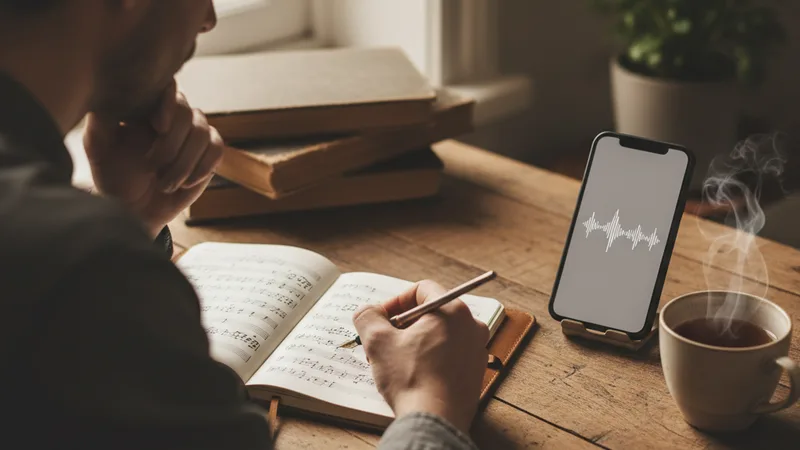
A working classical prompt has eight ingredients — more than other genres because classical has more compositional dimensions to specify. Miss any one and the track lands in the generic-piano-music valley rather than a specific classical tradition.
The period or tradition, named explicitly. "Minimalist solo piano in the contemporary neo-classical tradition" or "baroque-style invention for harpsichord" or "impressionist atmospheric piano in the Debussy tradition." Reference traditions and movements, not specific living composers.
The instrumentation, narrow and named. Classical is instrument-tight. "Solo piano only" is the cleanest. "Solo piano with a small string quartet entering on the development section" layers carefully. "String quartet only, two violins, viola, cello" for chamber work.
The form and structure. "ABA ternary form" or "two-voice imitative counterpoint structure" or "theme and three variations form" or "through-composed reflective form, no repetition." Without structural direction the AI defaults to verse-chorus pop structure with classical instruments.
The harmonic language. "Tonal harmony in C minor with modulation to the relative major in the middle section" gives the AI a tonal map. "Modal harmony with whole-tone color" for impressionist work. "Functional tonal harmony with circle-of-fifths progressions" for baroque-style.
The tempo and dynamic direction. "Andante tempo at 88 bpm, restrained dynamics with subtle crescendo through the development section, soft pianissimo opening building to mezzo-forte at the climax, fading back to pianissimo at the close."
The texture. "Sparse texture with melody in the right hand and broken chord accompaniment in the left hand" for solo piano. "Two independent melodic lines in counterpoint" for inventions. "Atmospheric pedaled texture with overlapping resonances" for impressionist work.
Length and clean ending. Classical pieces are length-specific. "Three minutes total, clean ending on a final cadence in the home key" gives the AI a structural endpoint.
Mastering for classical playback. "Wide dynamic range, mastered for classical listening with no compression, room ambience preserved, mastered at a low overall level for headphone listening at moderate volume."
A combined working prompt for a contemporary neo-classical piano piece:
"Minimalist solo piano in the contemporary neo-classical tradition, andante tempo at 78 bpm, dreamy and sentimental, solo piano only with no other instruments, ABA ternary form with the A section as a quiet flowing main theme over broken chord accompaniment in C minor and the B section as a slightly more active contrasting middle in E-flat major returning to a varied A in C minor, sparse texture with melody in the right hand and broken chord accompaniment in the left hand, restrained dynamics with the climax at mezzo-forte and the opening and close at pianissimo, three minutes total, clean ending on a final perfect cadence in C minor, wide dynamic range mastered for classical listening with no compression and preserved room ambience."
In testing, that prompt produces a neo-classical-grade piano piece in roughly three to four generations about 80% of the time. For more on iterating prompts, the perfect prompts breakdown covers the underlying patterns.
Matching classical period to instrumentation and form: a starter chart
Classical periods and styles have very different conventions. Patterns that hold consistently for AI generation:
| Period / style | Tempo | Instrumentation | Form | AI quality |
|---|---|---|---|---|
| Minimalist (contemporary) | 70-100 bpm | Solo piano or piano + light strings | Repetitive patterns, slow harmonic change | Excellent |
| Neo-classical (contemporary) | 70-100 bpm | Solo piano + ambient electronics | Through-composed, ambient texture | Excellent |
| Impressionist (1890-1925) | 60-100 bpm | Solo piano or chamber | Atmospheric, modal | Good |
| Romantic (1820-1900) solo piano | 60-130 bpm | Solo piano | ABA, theme-and-variations, nocturne | Good for nocturnes, harder for sonatas |
| Modern film score | 60-110 bpm | Piano + strings, light orchestra | Through-composed cinematic arcs | Good |
| Classical-period (1750-1820) | 70-150 bpm | Piano, string quartet, small ensemble | Sonata-allegro, rondo, theme-and-variations | Inconsistent, especially full sonatas |
| Baroque (1600-1750) | 60-160 bpm | Harpsichord, organ, small ensemble | Fugue, invention, dance suite, concerto | Inconsistent, counterpoint is the weak spot |
| Sacred choral | 50-90 bpm | Choir + organ | Hymn, motet, mass | Good for background, poor for traditional voice-leading rules |
| Late Romantic orchestral | 60-130 bpm | Full orchestra | Symphony, tone poem, concerto | Limited |
| Modernist / 20th-century | Variable | Variable | Variable | Limited, especially atonal |
| Folk-influenced classical | 70-130 bpm | Strings or piano + folk instruments | Variable | Good in surface texture |
| Ambient classical / drone | 30-70 bpm | Long sustained piano or strings | Drone, slowly evolving | Excellent |
Pick the row that matches what you want. Lock the tempo. Layer the period-specific instrumentation and form direction on top. For related ambient territory, the AI lo-fi guide covers the lo-fi piano crossover that overlaps with minimalist neo-classical.
When AI classical works — and when it still falls short
Honest accounting of where AI classical is the right tool and where actual composers and performers still win decisively.
Works:
- Background piano music for video, podcasts, ads, and meditation apps. Contemporary neo-classical and minimalist solo piano are AI's strongest classical territory. The market for ambient piano background music is large and AI fills it cleanly.
- Wedding ceremony processionals and small instrumental cues. Custom piano cues for weddings — processional, recessional, signing of the register — work well in the neo-classical tradition. Cheaper than hiring a live pianist if budget is tight.
- Funeral and memorial piano pieces. Restrained, contemplative solo piano for memorial use is achievable. Same quality bar as professional ambient piano libraries.
- Composer demos for film and TV music submissions. Composers pitching film score demos can use AI to sketch atmospheric piano and string textures before booking studio time. The cost-time math is decisive in the demo phase.
- Personal meditation and study background music. Custom piano tracks at low tempos for personal use — focus, sleep, meditation — work cleanly.
- Sync licensing for ambient classical placements. Brands and content creators needing ambient classical music for sync placements (luxury ads, contemplative content) can use AI to fill catalog niches.
Falls short or carries risk:
- Serious classical compositions intended for the classical music audience. The classical listening audience is the most demanding in popular music criticism. AI-generated classical pieces presented as serious composition will receive critical scrutiny.
- Counterpoint, fugue, and baroque writing. AI does not yet do real counterpoint. Baroque-style pieces produced with AI work for casual listening but read as off to anyone familiar with Bach.
- Full orchestral works. Real orchestral writing requires ensemble balance, instrumental idiom, and orchestrational craft that AI does not reliably produce.
- Vocal classical with proper voice leading. Choral and solo vocal classical with traditional voice-leading rules is at the edge of AI capability.
- Performance-quality interpretation. AI generates a recording; it does not interpret. The expressive nuance of a great pianist or violinist phrasing the same piece is not yet reproducible.
- Imitating specific living composers. "In the style of Ludovico Einaudi" or "in the style of Max Richter" prompts are prohibited in commercial AI music apps. Stay generic with tradition and period directions.
- Compositions for live classical performance. A piece intended to be performed live by classical musicians needs to be written by a composer who understands what the instruments can actually do. AI pieces often request impossible passages.
For the broader licensing context for commercial classical releases, the can you sell AI-generated music legal guide covers the rights and disclosure questions.
Try this prompt right now
Open Muziko on iPhone, tap Create, switch to Describe mode, pick Classical genre and Dreamy mood, and paste this prompt (adjust the key and form to fit your purpose):
"Minimalist solo piano in the contemporary neo-classical tradition, andante tempo at 78 bpm, dreamy and sentimental, solo piano only with no other instruments, ABA ternary form with the A section as a quiet flowing main theme over broken chord accompaniment in C minor and the B section as a slightly more active contrasting middle in E-flat major returning to a varied A in C minor, sparse texture with melody in the right hand and broken chord accompaniment in the left hand, restrained dynamics with the climax at mezzo-forte and the opening and close at pianissimo, three minutes total, clean ending on a final perfect cadence in C minor, wide dynamic range mastered for classical listening with no compression and preserved room ambience."
Generate four to six takes. Listen on real speakers or quality headphones in a quiet room — classical music needs quiet listening to reveal its texture and emotional arc. Pick the take where the melody flows naturally, the harmonic motion makes sense, the dynamic shape arcs through the form, and the ending lands on a satisfying final cadence rather than fading awkwardly.
In testing, this template produces a neo-classical-grade piano piece in roughly four total generations about 80% of the time. For other genre how-tos in the same workflow style, the AI jazz guide covers the jazz crossover, and the AI lo-fi guide covers the ambient piano crossover that overlaps with contemporary neo-classical.
Frequently asked questions
Can AI really generate convincing classical music?
It depends entirely on the period and style. Contemporary minimalist and neo-classical solo piano, modern film score atmospheric pieces, impressionist solo piano, and ambient drone classical are achievable at high quality on the second or third generation in 2026. Romantic-era solo piano nocturnes work at a good level. Baroque counterpoint and fugue, Classical-period sonata form, late Romantic orchestral works, twelve-tone modernist music, and full orchestral compositions are at the edge of or beyond current AI capability. The pattern: solo piano works in modern traditions are AI's strength; complex multi-voice or orchestral writing remains hard. Pick a working style for your purpose rather than forcing a struggling one.
Which classical styles work best for AI generation?
In order of how consistently they land: contemporary minimalist solo piano (best), neo-classical piano with electronics, ambient classical drone, modern film score atmospheric pieces, impressionist solo piano, Chopin-adjacent romantic nocturnes, modern sacred choral background music. Styles that struggle: baroque counterpoint and fugue, Classical-period sonata-allegro form, late Romantic orchestral works, twelve-tone and serial composition, full orchestral works, virtuosic piano writing, proper four-part choral voice leading. The pattern: AI does well with single-instrument modern traditions where form is loose and texture is sparse; it struggles with traditions that depend on counterpoint, large ensemble writing, or strict form.
How do I get AI to compose with classical form like sonata or fugue?
Prompt for it explicitly with structural language. "ABA ternary form with A as main theme, B as contrasting middle, varied A as return" is achievable. "Theme and three variations form, each variation more elaborate than the last" is achievable. "Two-voice imitative counterpoint in the manner of a baroque invention" is at the edge of capability. "Sonata-allegro form with exposition, development, and recapitulation" produces approximations that lack proper sonata logic. "Fugue with subject, answer in the dominant, episodes, and stretto" is beyond current AI form modeling. The general rule: simple structures (ABA, theme-and-variations, through-composed) work; complex contrapuntal or developmental structures remain hard.
Can I use AI classical music for weddings, funerals, or commercial sync?
Yes, when generated on the paid tier of a reputable AI music app like Muziko Pro at $34.99 per year, Suno Pro, or Udio Pro. The paid tier grants commercial usage rights including wedding processionals, funeral and memorial piano cues, ambient meditation music for apps, sync licensing for ads and contemplative content, and personal background music for events. Free-tier generations are not licensed for commercial use. Modern neo-classical solo piano and ambient classical work especially well for these use cases — the quality bar matches professional ambient piano libraries, and the cost-time math is decisive against hiring live pianists for short ceremonial cues.
Is it legal to release AI classical music on Spotify and Apple Music?
Yes, when generated on the paid tier of a reputable AI music app and distributed through a service that supports AI music (DistroKid, TuneCore, CD Baby). All major streaming platforms in 2026 ask for AI content disclosure on uploads; provide that disclosure honestly. Never prompt the AI to imitate specific living composers (Ludovico Einaudi, Max Richter, Ólafur Arnalds, Nils Frahm); stay generic with period and tradition directions. The classical music audience on streaming platforms is discerning and tends to leave honest reviews about whether tracks read as real composition or as ambient pastiche. Position your releases honestly — contemporary neo-classical and ambient piano work well as a category; baroque-style releases get scrutinized more rigorously by the audience that follows actual baroque performance.
What tempo and dynamics should I prompt for classical music?
Tempo depends on the form and emotional tone. Slow contemplative pieces (nocturnes, ambient, sleep music) at 60-72 bpm. Andante moderate tempo at 76-92 bpm. Moderate flowing pieces at 92-108 bpm. Allegro and faster tempos at 108-156 bpm. For dynamics, prompt explicitly for the dynamic shape — "pianissimo opening building to mezzo-forte climax in the middle section, fading back to pianissimo at the close" produces a tracked dynamic arc rather than flat dynamics. Italian tempo markings can help if the AI music app recognizes them: largo, adagio, andante, moderato, allegretto, allegro, presto. For classical mastering, prompt "wide dynamic range, no compression, room ambience preserved, mastered at a low overall level" — the opposite of pop mastering.
Try everything you just read about. Muziko is free to download.
![AI Amapiano Generator: Log Drum Tracks [Tested 2026]](/_next/image?url=%2Fimages%2Fblog%2Fai-amapiano-generator-log-drum-tracks%2Fhero.webp&w=3840&q=75)
![AI Cinematic Music Generator: Trailer Scores [Tested]](/_next/image?url=%2Fimages%2Fblog%2Fai-cinematic-music-generator-trailer-scores%2Fhero.webp&w=3840&q=75)