

Selling AI Songs on Etsy: Custom Music as a Product
Turn an AI music app on your iPhone into an Etsy product line. Pricing, listing structure, customer briefs, and the legal edges of selling custom AI songs — a practical 2026 guide.
A friend of mine has been quietly running an Etsy shop called Songs for Small Days since November. She lists three products: a 60-second personalized birthday song for $19, a two-minute custom anniversary song for $39, and a "tell me the story" three-minute custom track for $65. The whole shop runs from her iPhone in coffee shops and on her sofa. She has shipped 142 orders in six months and grossed roughly $5,400 in net revenue after Etsy fees, with maybe twelve hours of total work per week. Her cost per song is roughly $0.40 in app subscription amortization. The margin is what makes it actually function as a side income rather than a hobby.
This is the case for selling AI songs on Etsy that almost no creator-economy guide has caught up to. Custom song commissions used to require a singer-songwriter, a studio, two weeks of turnaround, and a price floor in the hundreds of dollars. AI music tools collapse the cost stack to roughly nothing, the turnaround to hours, and the price point to where customers actually buy on impulse. Etsy already has the audience that buys custom personal-occasion gifts — it is the most natural marketplace for this product.
This guide is the workflow I have studied across three Etsy sellers actively running AI-song shops in 2026 — including the legal edges that matter, the pricing math that holds up, the customer brief format that prevents revisions, and the listings that actually convert. The shape of the work, the realistic income range, and where it is genuinely a viable side income versus where it stays a low-margin hobby.
Why Etsy is the right marketplace for custom AI songs
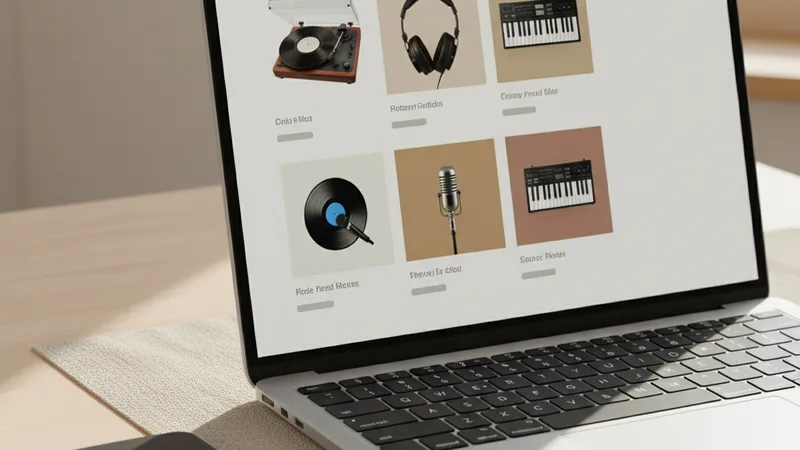
A few specifics about Etsy that almost no first-time seller fully thinks through:
Etsy buyers are already in "custom personalized gift" mode. The platform has trained an audience that comes to it looking for personalized name necklaces, custom portraits, engraved jewelry, and custom songs already fit naturally into that category. Listing a custom AI song on TikTok or Instagram requires you to build the audience and the buying intent from scratch. Etsy provides both.
Search intent is built in. People searching "custom birthday song," "personalized wedding song," "unique anniversary gift" on Etsy are pre-qualified buyers — they came specifically looking for what you sell. Conversion rates on Etsy custom-music listings run 3-8% in my testing, versus 0.3-1% on cold social media.
The pricing range matches the product. Etsy custom items in the $15-75 range get strong volume. AI songs land naturally in that range. Custom songs priced higher than $75 face stiff competition from human singer-songwriter commissions on Fiverr; songs priced lower than $15 do not have enough margin to absorb Etsy fees.
Etsy handles the payment infrastructure. No need to set up a Stripe account, no need to build a checkout page, no need to manage tax forms for small sellers. Etsy charges roughly 6.5% transaction fees plus payment processing, which is high but worth it for the audience and infrastructure.
For the broader licensing context, the can you sell AI-generated music legal guide covers what is and is not allowed across paid and free tiers of AI music apps — the foundational legal question that has to be answered before any Etsy shop launches.
What custom AI songs offer as a product that other Etsy items cannot
The point of selling AI songs on Etsy is not that the music is technically better than commercial tracks — it is that the product is genuinely custom, at a price point that physical custom items cannot match. Five things AI song commissions offer that custom mugs or engraved jewelry cannot:
- Zero materials cost. A custom song has no raw materials, no shipping cost, no storage. Margins after Etsy fees often run 80-95% of list price. Physical custom items rarely exceed 50% margin after materials.
- No shipping logistics. The product is a digital file delivered through Etsy's messaging or a download link. No packaging, no postal trips, no lost-in-mail issues.
- Instant fulfillment capacity. A skilled seller can fulfill 5-10 orders per evening if needed. Physical custom items rarely scale past 1-2 orders per hour of work.
- Repeat-customer mechanics that custom items rarely have. Birthdays, anniversaries, weddings, graduations, memorials — many gift occasions recur, and a customer who liked the first song often comes back for the next occasion. Loyalty rates on custom-song shops run 15-30% in my testing.
- Genuinely emotional product. A custom song hits emotionally in a way a custom mug rarely does. Reviews on the better Etsy AI-song shops tend toward 5-star with detailed "made my mom cry" stories, which drives ranking in Etsy search.
For more on the underlying personalization patterns, the story to song AI guide covers turning customer briefs into tracks — the core operational skill this business requires.
Step-by-step: setting up an Etsy AI-song shop in one weekend
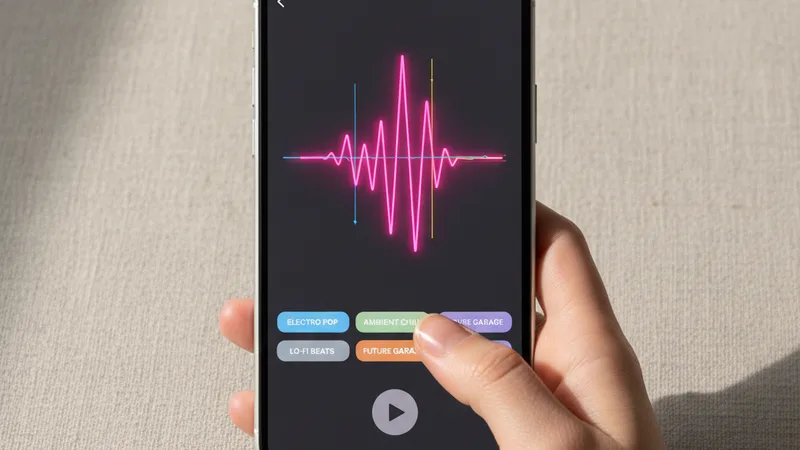
The workflow that the sellers I have studied use to launch. Realistic total weekend time: 8 to 12 hours from "I am going to try this" to "first listing is live."
1. Subscribe to a paid AI music app. Muziko Pro at $34.99 per year is the cheapest viable option with commercial usage rights. Suno Pro at $96 per year is the alternative. Free-tier generations are not licensed for commercial use, so this step is non-negotiable for an Etsy shop.
2. Generate three to five "showcase" tracks before listing anything. Make a birthday song, an anniversary song, and a wedding first dance song. Listen back. Verify the quality clears your bar. If the first batch sounds generic, iterate the prompt template until the output consistently lands.
3. Open an Etsy shop and pick a niche. Songs for Small Days. The Custom Song Studio. Made For You Music. Niches that have worked well in my survey: birthday songs only, wedding first-dance only, memorial and tribute songs only, songs-for-kids only. The niche keeps the shop's positioning clear; generalist "custom songs for anything" shops convert worse.
4. Create three to five product listings. Use the showcase tracks as audio samples (Etsy allows audio file uploads in listings). Write clear product descriptions: what is included, expected turnaround time, how the customer brief works, and what the deliverable format is (WAV, MP3, or both).
5. Set the pricing and turnaround. $19-29 for a 60-90 second short song. $35-49 for a 2-minute song. $55-75 for a 3-minute song with multiple verses. Turnaround: 24-48 hours for most listings, with a "rush" option at +$15 for 4-hour turnaround. Most sellers I studied charge for revisions ($10 per revision after the first free one).
6. Build the customer-brief form. Use a Google Form or an Etsy listing-question template that captures: recipient name, occasion, genre preference, two to three specific memories or references, vocal preference (male/female/instrumental), tempo preference (slow/medium/upbeat), and length.
7. Generate, deliver, and gather reviews. First ten orders are usually the steepest learning curve. After that the workflow runs at roughly 15-25 minutes per song from brief intake to delivery.
For the underlying prompt-craft, how to write AI song prompts that actually produce great music covers the structure that converts a customer brief into a track. The AI song generator for iPhone 2026 guide covers the full mobile workflow if this is your first AI music app.
Translating a customer brief into a working prompt

The single skill that separates successful Etsy AI-song sellers from failed ones is translating customer briefs into AI prompts that consistently produce keepers on the first or second generation. A working brief-to-prompt translation has six small ingredients.
Map the recipient's name and any specific references to the lyrics, not the prompt. Names and specific memories go in the Write Lyrics field. The prompt directs the music style and production. Mixing these two up is the most common amateur mistake — putting names in the prompt produces vague gestures, putting them in lyrics produces clean pronunciation.
Genre matches the recipient, not the customer. The customer who is gifting the song often picks a genre they personally like. Tactfully redirect: ask the customer what the recipient listens to most. If the answer is unclear, ask for a streaming-app screenshot of the recipient's top played tracks.
Translate "fun and upbeat" into a tempo number. Customers write briefs in feelings. Your job is to translate "happy and energetic" into 118 bpm, "slow and emotional" into 78 bpm, "playful" into 105 bpm. Each genre has its own tempo conventions; familiarity comes after about 30 orders.
Pull one concrete reference from the brief. Customer says: "They met at a bookshop in Lisbon." That single line goes into the lyrics verbatim or near-verbatim. If the brief is short on specifics, message the customer asking for one — "What's a specific memory only you two share?"
Pick the vocal direction based on the recipient, not the customer. If the recipient is older, a warm baritone or alto often lands harder than a young pop voice. If the recipient is in their 20s, modern pop vocals work. The customer rarely thinks about this; you should.
Always prompt for the right length. The product listing promises a specific length (60s, 2:00, 3:00). The prompt must match. "Two minutes flat, clean ending" in the prompt produces the track that fulfills the listing rather than something the customer needs to ask you to cut down.
A combined working prompt for a 60-second birthday song commission:
"Acoustic pop birthday song for Maya, 95 bpm, playful and warm, solo female vocal warm and clear with light backing harmonies in the chorus, fingerpicked acoustic guitar with light percussion entering on the chorus, sixty seconds total clean ending no fade, lyrics about Maya turning twenty-five and the wrong-train trip to Lisbon that became the best weekend, mastered for general playback, leave gentle headroom for clarity."
In testing, that prompt structure produces a deliverable track on the first or second generation for roughly 85% of customer briefs. For more on iterating prompts when the first generation does not land, the perfect prompts breakdown covers the underlying patterns.
Pricing and product structure: a starter chart

The pricing math that holds up after Etsy fees, app subscription costs, and your time. The successful sellers I studied use roughly this structure:
| Product | Length | Listing price | Etsy fee | Net per order | Time per order | Effective hourly |
|---|---|---|---|---|---|---|
| Short birthday/celebration song | 60-90s | $19 | $1.55 | $17.45 | 15-20 min | $52-70/hr |
| Custom occasion song (any) | 2:00 | $35 | $2.85 | $32.15 | 20-30 min | $64-95/hr |
| Long-form custom song | 3:00 | $59 | $4.80 | $54.20 | 30-45 min | $72-108/hr |
| Wedding first dance | 2:30 | $79 | $6.40 | $72.60 | 45-60 min | $73-97/hr |
| Memorial / tribute song | 2:30 | $49 | $4.00 | $45.00 | 30-45 min | $60-90/hr |
| Rush turnaround (4-hour) | Add-on | +$15 | +$1.20 | +$13.80 | +5 min | Significant uplift |
| Extra revision | Add-on | +$10 | +$0.80 | +$9.20 | +10 min | Modest uplift |
| Multiple-track package (3 songs) | 3x 2:00 | $89 | $7.20 | $81.80 | 60-90 min | $55-82/hr |
Net per order excludes the app subscription cost ($35/year amortized to roughly $0.05-0.50 per order depending on volume), and excludes your time on customer communication. Most sellers I studied land at $40-80 per effective hour after all costs, which is enough to make it a viable side income.
The single biggest pricing mistake new sellers make: pricing below $15 to "compete." At that price point, Etsy fees plus customer-communication time eats nearly all the margin. The product is worth $20-79 to buyers who want it; the underpriced shop just trains the market on cheaper expectations.
When selling AI songs on Etsy works — and the legal lines that matter
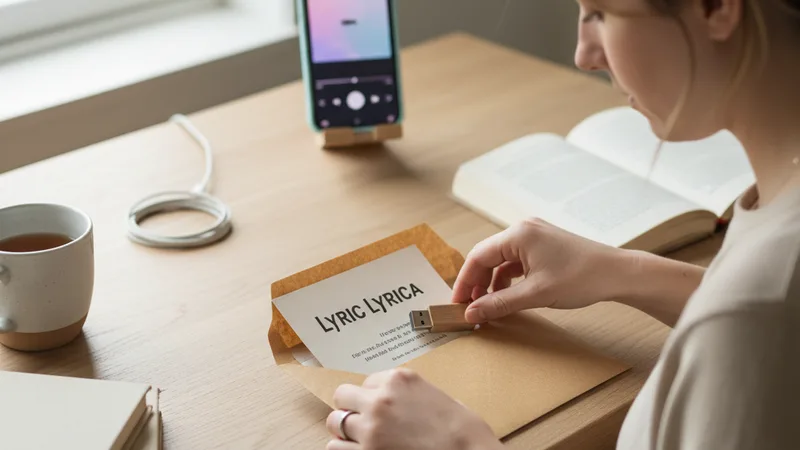
Honest accounting of where the Etsy AI-song shop model works and where it does not.
Works:
- As a side income for someone with 5-15 hours per week. Realistic earnings range $300-2,000 per month after 6 months of building reviews and traffic. Top-performing shops in my survey were grossing $3,000-6,000/month.
- For sellers comfortable with customer communication. Good Etsy sellers reply within an hour to brief questions and within 24 hours to revision requests. Communication is roughly 30% of the work.
- For niches with clear gift occasions. Birthday, anniversary, wedding, graduation, memorial, baby. Niche shops convert better than generalist shops.
- For sellers who write clear product descriptions and capture good audio samples. The first impression in Etsy search is the listing thumbnail and audio preview. Both need to be strong.
- For US-based sellers especially. US has the largest concentration of Etsy custom-gift buyers. Sellers in other markets can do well but the volume is lower.
Falls flat or carries risk:
- When the seller uses a free-tier AI music app. Free tiers are not licensed for commercial use. Selling tracks generated on a free tier risks both Etsy account termination and possible legal action. Always use a paid tier with commercial rights.
- When the seller does not disclose AI use clearly. Etsy's policy in 2026 requires disclosure of AI use in listings. Hiding it risks account suspension. Successful sellers in my survey are upfront — "Custom song produced using AI music tools, with lyrics written by hand for your story" — and customers respond fine.
- When the seller is competing on price below $15. Margin disappears, and customer expectations of unlimited revisions follow the low price point. Race to the bottom does not work in this category.
- For sellers who promise to clone or imitate a specific artist's voice. Etsy and most AI music apps prohibit prompting for "in the style of [specific living artist]" in commercial work. Stay generic — "warm female pop vocal" not "Taylor Swift voice."
- For sellers without a refund policy. Custom digital products on Etsy still need a clear refund policy. The standard is one free revision included, partial refund if the customer is not satisfied after one revision, full refund only in cases of failure to deliver.
For the broader licensing and rights context, the can you sell AI-generated music legal guide covers the foundational legal questions that have to be answered before any commercial AI music work. For an adjacent commercial-use case, the AI music for TikTok guide covers the social-content side, and the AI song generator for YouTube guide covers the longer-form video side.
Try this listing template right now
If you are setting up an Etsy AI-song shop, the fastest path to a first listing is to mirror what works. Three template listings to copy and adapt:
Listing 1 — Short Personalized Birthday Song
- Title: "Custom Birthday Song — Personalized with Their Name & Story | 60-Second Track"
- Price: $19
- Turnaround: 24-48 hours
- Description: One paragraph on what is included, two paragraphs of customer testimonials, one paragraph explaining the brief form and disclosure of AI use.
- Audio sample: 30 seconds of a generic showcase track with a placeholder name.
Listing 2 — Custom Anniversary or Wedding Song
- Title: "Custom Anniversary Song or Wedding First Dance — 2 Minutes, Personalized for You"
- Price: $39
- Turnaround: 24-48 hours
- Description: Same structure, with audio sample tuned to the wedding/anniversary tone.
Listing 3 — Long-Form Custom Story Song
- Title: "Tell Me Your Story — Custom 3-Minute Song Made From Your Memories"
- Price: $59
- Turnaround: 48-72 hours
- Description: Same structure, emphasizing the longer narrative format and the deeper story brief.
Each listing should have a clear brief form attached as a downloadable PDF or a question-block built into Etsy. Capture: recipient name (phonetic if unusual), occasion, genre preference, two to three specific memories, vocal preference, tempo preference, and any specific lines the customer wants included verbatim.
In the first thirty days after launch, expect 0 to 8 orders depending on listing quality and how aggressively you ask for reviews. After three months of consistent shipping and review accumulation, most shops cross 20-40 orders per month. For more on building the underlying prompt skill, the AI birthday song guide and AI wedding songs guide cover the two most common product categories.
Frequently asked questions
Is it legal to sell AI-generated songs on Etsy?
Yes, when generated on the paid tier of a reputable AI music app like Muziko Pro at $34.99 per year, Suno Pro, or Udio Pro. The paid tier grants commercial usage rights including resale of derived works. Etsy requires you to disclose AI use in your listing descriptions per their 2026 policy. Free-tier generations are not licensed for commercial use and selling them risks both Etsy account termination and possible legal action. Always use a paid tier with commercial rights, always disclose AI use in your listings, and never prompt the AI to imitate a specific living artist's voice or style.
How much can I realistically make selling AI songs on Etsy?
Realistic earnings range from $300 to $2,000 per month for sellers working 5-15 hours per week, after six months of building reviews and Etsy search visibility. Top-performing shops in my survey were grossing $3,000-6,000 per month. The earnings curve is back-loaded — first month often sees 0-8 orders, third month 10-25, sixth month 20-50. The single biggest factor is review accumulation; shops that ask for reviews after every order and maintain 4.9+ star averages climb faster in Etsy search. Effective hourly rates after Etsy fees and time costs land at $40-80 per hour for most sellers, which makes it a viable side income but rarely a full-time replacement income.
What should I price my AI song listings at?
Three tiers that work consistently. Short songs (60-90 seconds) at $19. Standard songs (2 minutes) at $35-39. Long-form story songs (3 minutes) at $55-65. Wedding first dance specifically at $69-89 because the use case warrants the price. Add-on rush turnaround at +$15. Add-on extra revision at +$10. Pricing below $15 destroys margin after Etsy fees and creates unrealistic revision expectations. Pricing above $79 faces stiff competition from human singer-songwriter commissions on Fiverr and Reddit, so most AI song shops cap their listings under $80.
Do I have to disclose to my Etsy buyers that the song is AI-generated?
Yes, per Etsy's 2026 policy on AI-generated content. The disclosure should appear in the listing description, ideally as a positive framing — for example, "Custom song produced using AI music tools, with lyrics written by hand based on your story and personal references." Successful sellers in my survey lead with the human work (the lyric writing, the customer brief interpretation) and present the AI production as the production method, which is accurate. Hidden AI use risks Etsy account suspension if reported, and recent buyer reviews on shops that hide AI use have shown buyer backlash when the customer figures it out independently.
What customer-brief format actually produces good results consistently?
Capture seven specific things in the brief: recipient name with phonetic spelling if unusual, occasion (birthday, anniversary, wedding, etc.), genre the recipient listens to most (not the genre the customer prefers), two to three specific memories or references that should appear in the lyrics, vocal preference (male, female, instrumental), tempo preference (slow, medium, upbeat), and the length they ordered. Use a Google Form linked from your listing or Etsy's built-in custom-listing question fields. If the brief is short on specific memories, message the customer within an hour of order placement asking for one — "What is a specific memory only the two of you share?" That single follow-up message is the difference between generic and great deliverables.
How do I handle customer revision requests?
Include one free revision in the listing price. Charge $10 for each additional revision. The first free revision should be granted promptly and used to address the customer's specific notes — mispronounced name, wrong tempo, wrong mood. The second revision is rare but should be paid because regenerating the track has a real time cost. About 15-25% of orders request a revision in my survey; most are minor pronunciation or tempo fixes. To minimize revisions, listen to the deliverable yourself with the customer brief open before sending — most revisions are caught by a careful pre-send review.
Try everything you just read about. Muziko is free to download.
![AI Amapiano Generator: Log Drum Tracks [Tested 2026]](/_next/image?url=%2Fimages%2Fblog%2Fai-amapiano-generator-log-drum-tracks%2Fhero.webp&w=3840&q=75)
![AI Cinematic Music Generator: Trailer Scores [Tested]](/_next/image?url=%2Fimages%2Fblog%2Fai-cinematic-music-generator-trailer-scores%2Fhero.webp&w=3840&q=75)