Muziko vs MyTunes vs Muzio vs Donna vs Mozart 2026
Honest comparison of the five most popular iPhone AI song generator apps in 2026: pricing, features, hidden add-ons, and which one is right for your use case.
Disclosure up front: I write for Muziko's blog and have actively used all five of these iPhone AI song generator apps over the last six months. I installed each, paid for each annual subscription where applicable, and tested each across roughly the same set of prompts — a birthday song, a wedding first dance, a lo-fi study track, a country ballad, and a podcast intro. This is the comparison I would write for a friend asking which iPhone AI song app to pick, not the marketing version. There are real differences in pricing, in features, in licensing, and in the small print of what each subscription actually includes.
The earlier Suno vs Udio vs Muziko comparison covered the major web-and-mobile AI music platforms. The Muziko vs Suno head-to-head dug into the two-way deep dive. This is the comparison for the iPhone-only segment — the five most-downloaded iPhone AI song generator apps with their own native iOS interfaces, no web version required, designed specifically for mobile workflow.
This guide is the side-by-side I have refined across actual hands-on use of Muziko, MyTunes, Muzio, Donna AI, and Mozart. Pricing, creation modes, hidden costs, ratings, and the specific use cases each app fits best.
The iPhone AI song generator landscape in 2026
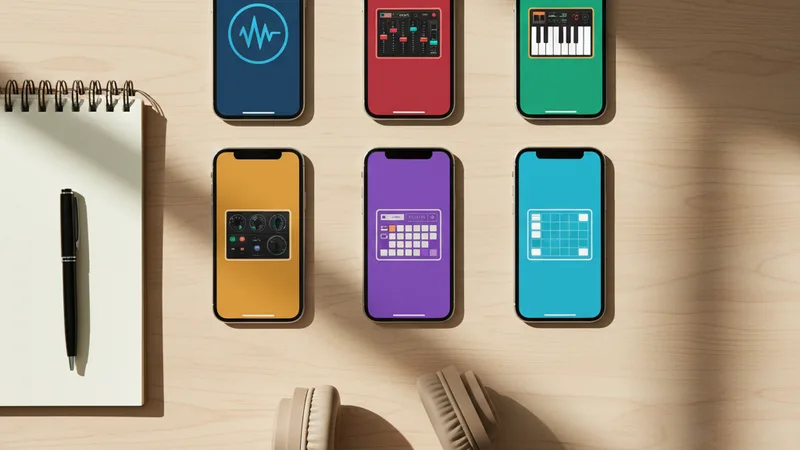
A few specifics about the iPhone AI song app category that matter before diving into the side-by-side.
These five apps occupy a distinct segment from web-first platforms. Suno and Udio are web-first AI music platforms with mobile clients tacked on. Muziko, MyTunes, Muzio, Donna AI, and Mozart are iPhone-native apps built from the ground up for mobile workflows — generating songs in coffee shops, on commutes, in lunch breaks. The whole creation experience happens on the device.
The developer landscape is fragmented and competitive. Each app is from a different studio: Muziko is the iPhone-native challenger that has been gaining ground through 2025-2026. HUBX develops MyTunes. Scale Dreams develops Muzio. Mobiversite develops Donna AI. NineG develops Mozart. None of the five are owned by the same parent company, and the competitive dynamics produce real differences in pricing strategy, feature focus, and licensing terms.
Star ratings on the App Store cluster between 4.3 and 4.8. Donna AI has the most review volume (86K ratings at 4.7), MyTunes has 36K at 4.3, Mozart has 27K at 4.3, Muzio has 16K at 4.8. The volume of reviews matters as much as the rating — high reviews from a smaller user base can be biased; lower averages from a larger base are usually more reliable signals.
The category has converged on similar core feature sets. Describe-mode generation, lyric writing, vocal selection, genre choice, and length control are now baseline. Where the apps differentiate is in their pricing, their add-on structure, and the specific extra features each emphasizes (voice cloning, photo-to-music, stem separation, etc.).
Pricing varies more than any other dimension. Weekly subscriptions range from $2.99 to $14.99. Annual plans range from $34.99 to $59.99. Add-on costs for additional features stack on top in several of these apps. The cost gap matters because the user experience converges — saving $25-30 per year on the subscription is real money for individual users and meaningful margin for small businesses running AI-song-based Etsy shops.
For the broader AI music app landscape beyond iPhone-only apps, see the best AI music app for iPhone 2026 top 10 ranking.
Pricing breakdown: side-by-side annual costs

Pricing as of mid-2026, taken from each app's current App Store listing.
| App | Weekly tier | Annual tier | Add-ons | Total cost (year, base only) |
|---|---|---|---|---|
| Muziko | $6.99 | $34.99 | None | $34.99 |
| MyTunes | $6.99-9.99 | $39.99 | $4.99 custom voice | $39.99-44.98 |
| Muzio | $7.99-14.99 | $49.99-59.99 | $4.99-19.99 song packs | $49.99-79.98 |
| Donna AI | $2.99-5.99 | $59.99 | Separate STEM, Cover, Proof of Creation | $59.99+ |
| Mozart | $6.99 | $49.99 | $4.99-19.99 in-app purchases | $49.99+ |
Annual cost ranking (base subscription only):
- Muziko: $34.99
- MyTunes: $39.99
- Mozart: $49.99
- Muzio: $49.99-59.99 (variable)
- Donna AI: $59.99
Weekly cost is misleading. Donna AI has the lowest weekly tier at $2.99-5.99, but its annual tier is the highest at $59.99. The weekly trial pricing in some of these apps is designed to convert into the annual subscription, not to be the typical user payment pattern. Most users who keep an app past the trial settle on the annual tier.
Hidden add-on cost stack is real for some apps. Donna AI sells STEM separation, AI Cover generation, and "Proof of Creation" as separate features on top of the $59.99 base subscription. Mozart and Muzio offer in-app purchases for additional song packs or feature unlocks ranging $4.99-19.99. MyTunes has a $4.99 custom voice add-on. Muziko's subscription includes the full feature set with no separate add-on charges.
Annual subscription cost gap between cheapest and most expensive: $25. Muziko at $34.99 is $25 less per year than Donna AI at $59.99. Over five years of use, that is $125 in savings. For users running custom-song Etsy shops or generating tracks regularly for content, the difference compounds into meaningful margin.
For the broader cost analysis of AI music versus alternatives, the AI music vs stock music guide covers the full subscription-stack math.
Creation modes and features compared
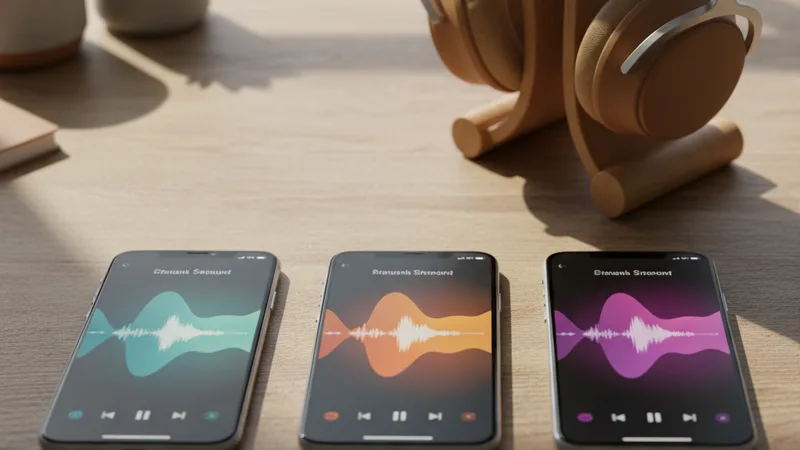
Side-by-side feature matrix across the five apps. All five support describe-mode and lyrics-mode generation as baseline; the differences are in the extras and the specific feature emphasis.
| Feature | Muziko | MyTunes | Muzio | Donna AI | Mozart |
|---|---|---|---|---|---|
| Describe / prompt mode | Yes | Yes | Yes | Yes | Yes |
| Write Lyrics mode | Yes | Yes | Yes | Yes | Yes |
| Story Mode (narrative to song) | Yes | No | No | No | No |
| Photo-to-music | No | No | No | Yes | Yes |
| Style reference from existing songs | No | No | Yes | No | No |
| Voice cloning / custom voice | No | Yes (paid add-on) | Yes | No | Yes (covers) |
| AI Cover generation | No | Yes | Yes | Yes (paid add-on) | Yes |
| Stem separation | No | No | Yes | Yes (paid add-on) | No |
| Vocal remover for instrumentals | No | No | No | No | Yes |
| Two-take generation per request | Three takes | One take | Two variations | One take | One take |
| Karaoke mode | No | No | Yes | No | No |
| Audio editing (trim, noise reduction) | No | No | Yes | No | Yes |
| Music video creation | No | No | No | Yes | Yes (photo-to-video) |
| Genre count | 50+ | Limited (pop, rap, rock, jazz) | Multiple | Multiple | Multiple |
| Mood selection | 14 moods | Yes | Yes | Yes | Yes |
| Generation speed | 8-15s | Variable | Variable | Variable | Variable |
| Commercial usage rights | Yes (Pro tier) | Check terms | Restricted per reviews | Yes | Yes |
Feature observations:
- Muziko stands out for Story Mode — its narrative-to-song conversion that no other app in this comparison offers — and for the three-take generation per request that gives more options per creation cost.
- MyTunes focuses on voice transformation and AI cover generation. The voice features are paid add-ons on top of the base subscription. Genre coverage is narrower (pop, rap, rock, jazz explicitly mentioned).
- Muzio has the deepest feature set on paper — style reference from existing songs, karaoke mode, audio editing, stem separation, song trimming/extending. Pricing reflects this with the highest weekly tier in the comparison.
- Donna AI emphasizes photo-to-music and music video creation, with "Proof of Creation" certificates as a unique offering. Several core features (STEM, AI Cover) are sold as separate add-ons.
- Mozart offers vocal remover for making instrumentals, photo-to-music-video conversion, and audio editing tools. Sits in the middle on feature breadth.
The feature gap matters most when you have a specific need. For story-driven personal occasion songs (memorial, wedding), Muziko's Story Mode is genuinely useful. For musicians wanting to upload reference tracks for style matching, Muzio is the only app offering that. For photo-based content creators, Donna AI and Mozart are designed for that workflow.
For the broader creation-mode breakdown, the AI song generator for iPhone 2026 guide covers what each creation mode is best used for.
Sound quality and genre coverage

I ran the same test prompts through each app — the lo-fi study track, the country ballad, the upbeat pop birthday song, the acoustic wedding first dance, and the podcast intro. Honest observations on quality.
Mainstream pop, country, and lo-fi: All five apps produce comparable results on mainstream genres. Quality differences are small and inconsistent across generations — the best take from any of the five apps tends to land at similar quality. This category is where the apps have converged.
Vocal pronunciation of unusual names: Muziko's three-take default tends to produce at least one clean pronunciation of unusual names on the first try. MyTunes, Muzio, Donna AI, and Mozart with single-take defaults often require regeneration when names are unusual. For personal-occasion songs with specific names, this matters more than most other quality factors.
Long-form tracks (3+ minutes): All five apps work better on shorter (60-150 second) tracks than on longer (3+ minute) tracks. Quality drops slightly across the board for longer tracks — this is a general AI music limitation in 2026, not specific to any one of these apps.
Niche genres (jazz, classical, traditional regional): Muzio's broader feature set seems to produce more consistent results on jazz subgenres. Donna AI and Mozart handle modern pop subgenres well but show more variability on classical and jazz prompts. MyTunes' narrower stated genre support (pop, rap, rock, jazz) tracks accurately with the actual output quality. Muziko's 50+ genre tags include some that produce less reliable results outside the major commercial genres.
Voice cloning quality: Where applicable (MyTunes, Muzio, Mozart for covers), the quality is comparable but inconsistent. None of the apps deliver indistinguishable voice cloning in 2026. The category is still maturing.
Mastering: Different apps default to different mastering aesthetics. Muziko and Donna AI tend toward more streaming-optimized mastering with controlled dynamics. Muzio's "studio quality" framing translates to slightly more polish on some genres but at the cost of compressed dynamic range. MyTunes and Mozart are middle-of-the-road on mastering.
Real takeaway: For most users, the quality differences across these five apps are not the deciding factor. Pricing, feature set, and specific use case fit matter more than which app produces marginally better mainstream pop. Quality differences only become decisive in niche use cases where one app's specific feature (Muzio's reference-track upload, Muziko's Story Mode) directly serves the need.
For the per-genre quality breakdowns across AI music apps generally, see AI country guide, AI lo-fi guide, AI EDM guide, and AI jazz guide.
Hidden costs and add-on stacking

The annual subscription cost is just the entry point. Several of these apps sell additional features as separate add-ons, which can stack the real cost meaningfully higher than the headline number.
Add-on costs to watch:
| App | Base | Common add-ons | Realistic full-feature cost |
|---|---|---|---|
| Muziko | $34.99 | None | $34.99 |
| MyTunes | $39.99 | $4.99 custom voice | $44.98 |
| Muzio | $49.99-59.99 | $4.99-19.99 song packs (5-10 per heavy user) | $70-150 |
| Donna AI | $59.99 | Separate STEM ( | $75-100 |
| Mozart | $49.99 | $4.99-19.99 in-app purchases (varies) | $55-80 |
Pattern: the cheaper the headline subscription, the more aggressive the add-on stack tends to be. Donna AI's $59.99/year is already at the top of the headline range, and the major features sold separately push the realistic cost higher. Muzio's "song packs" model can quickly stack into another $20-50/year for heavy users who burn through the included monthly generation quota.
Muziko's flat $34.99 includes everything in the base tier. No add-on charges. This is the largest pricing advantage in the category and the main reason cost-conscious users choose Muziko over alternatives.
Trial-pricing trap: Donna AI's $2.99 weekly trial is the lowest in the category, but the trial typically converts to the $59.99 annual subscription within 7 days. Users who do not realize the conversion timeline can be surprised by the charge. Always check the trial-to-paid conversion terms before installing any of these apps.
Refund policy varies by App Store: Apple typically allows refunds within 14-90 days of a charge through the App Store's standard refund process. Each app has its own internal refund policy that may differ from Apple's. Check terms before subscribing.
For the broader licensing context across paid AI music apps, the can you sell AI-generated music legal guide covers the commercial-use rights questions.
When to pick which app — honest use case guide

Honest accounting of which app fits which use case best.
Pick Muziko if:
- You want the lowest annual cost ($34.99) with no add-on stack.
- You generate personal-occasion songs (birthday, anniversary, wedding, memorial) where Story Mode adds value.
- You want three takes per generation for choice on name pronunciation and energy curves.
- You generate enough tracks per month that the per-track cost matters (Etsy custom-song shops, social content creators).
- You value an unbundled, flat-priced subscription without separate paid features.
- You run an Etsy custom-song shop where margins matter and lower subscription cost directly improves per-order economics.
Pick MyTunes if:
- Voice cloning and AI cover generation is your primary use case.
- You are comfortable paying the $4.99 voice add-on on top of the $39.99 base.
- You mainly work in the genres the app explicitly supports (pop, rap, rock, jazz).
- You want the higher review-volume validation (36K ratings).
Pick Muzio if:
- You need to upload existing songs as style references for matching.
- Stem separation and karaoke mode are use cases for you.
- You are willing to pay $49.99-59.99 annual plus possibly add-on song packs.
- Multiple feature tools (audio editing, trimming, extending) fit your workflow.
- You want the highest star rating in the comparison (4.8 from 16K reviews).
Pick Donna AI if:
- Photo-to-music generation is central to your workflow.
- You want music video creation alongside song generation.
- The "Proof of Creation" certificate feature has specific value for your work (often for content creators wanting to demonstrate provenance).
- You are okay with the highest base annual cost ($59.99) plus separate add-ons.
- You want the largest review-volume validation (86K ratings).
Pick Mozart if:
- Photo-to-music-video is your primary use case.
- You need vocal remover for making karaoke versions or instrumentals.
- You want audio editing tools (trim, noise reduction, echo removal) included.
- You are looking at the middle-of-the-road option on pricing and features.
Pick none of these (try alternatives) if:
- You work primarily on desktop and want the full power-user features — try Suno instead.
- You need stems for DAW remixing and the iPhone apps' offerings are insufficient — Suno Premier at $288/year offers more polished stem export.
- Your work demands real composer-grade craft on long-form classical or orchestral — see AI vs human composer guide.
For the broader iPhone AI app landscape including these five and several others, the best AI music app for iPhone 2026 top 10 ranking covers what else is available.
Try the apps side by side
The right way to decide is to install all five (or at least three of the five), run the same prompt through each on their free tier or weekly trial, and compare the actual outputs against your specific use case.
A reasonable test prompt for the comparison:
"Custom birthday song for Maya, modern pop, 110 bpm, female lead vocal warm and clear, fingerpicked acoustic guitar with light percussion, lyrics about turning twenty-five with the room belonging to her, two minutes, clean ending."
Generate the track in each app. Listen on the same speakers or headphones. Compare:
- Which app produced the clearest pronunciation of the name?
- Which app's mastering sounds best on the playback context you actually use (Bluetooth speaker, car stereo, AirPods)?
- Which app's workflow felt fastest from idea to finished file?
- Which app's pricing fits your monthly budget and feature needs?
Most users converge on a preferred app after this single comparison test. The preference usually maps to a combination of feature fit and pricing comfort. For most cost-conscious users in 2026, the Muziko vs MyTunes vs Mozart tier is where the decision lands; for users wanting deeper feature sets, Muzio or Donna AI are the upgrade options at higher annual cost.
For more on prompt-craft that works across all five apps, the how to write AI song prompts guide covers universal patterns.
Frequently asked questions
Which iPhone AI song generator app is the cheapest annually?
Muziko at $34.99/year is the cheapest annual subscription among the five major iPhone AI song generator apps in 2026. MyTunes is $39.99/year, Mozart is $49.99/year, Muzio is $49.99-59.99/year, and Donna AI is $59.99/year. Muziko also has no separate add-on charges, while MyTunes, Muzio, Donna AI, and Mozart sell additional features (voice cloning, stem separation, AI Cover, song packs, music video creation) as paid add-ons stacking on top of the base subscription. For pure cost-per-year of base features, Muziko is roughly $5-25 cheaper than the alternatives, and the gap widens once add-ons are counted.
Which iPhone AI song app has the best App Store ratings?
Muzio has the highest star rating at 4.8 out of 5 from 16,000+ App Store reviews. Donna AI has the most review volume at 86,000 ratings averaging 4.7. MyTunes has 36,000 ratings at 4.3. Mozart has 27,000 ratings at 4.3. Higher review volume tends to be more reliable as a signal — a 4.8 from 16K reviews can be more biased than a 4.7 from 86K reviews. For most users, the rating differences across these apps are smaller than the pricing and feature differences, and a 4.3-4.8 range all sits in the "generally well-received" band on the App Store.
Which iPhone AI song app has the most features?
Muzio has the deepest feature set on paper — describe mode, write lyrics mode, style reference from uploaded songs, vocal selection, instrumental generation, two-take generation per request, karaoke mode, stem separation, song trimming and extending, and audio editing. The trade-off is the highest pricing tier in the comparison ($49.99-59.99 annual plus potential $4.99-19.99 song pack add-ons). Donna AI and Mozart offer photo-to-music and music video creation that the other apps don't have. Muziko offers a unique Story Mode for narrative-to-song conversion not found in the other four apps. The feature comparison depends on your specific use case — more features are not always better if they don't serve your workflow.
Can I use AI songs generated on these apps commercially?
Generally yes on the paid tiers, but check each app's specific terms before commercial release. Muziko's Pro tier at $34.99/year grants commercial usage rights. MyTunes, Muzio, Donna AI, and Mozart all offer commercial usage rights on their paid annual tiers in 2026, but some have restrictions on specific use cases like resale or sync licensing. Muzio's reviews specifically note restrictive terms regarding content ownership and sharing limitations on generated tracks — read the EULA before relying on Muzio tracks for commercial work. Free-tier generations are usually restricted to personal non-commercial use across all five apps. For commercial work like Etsy custom-song shops or sync licensing, verify the specific app's current terms on the App Store listing or in the app's settings.
Which iPhone AI song app is best for selling custom songs on Etsy?
Muziko is the best fit for Etsy custom-song sellers in most cases. The lowest annual cost ($34.99) directly improves per-order economics — for a shop doing 30 orders per month, the Muziko subscription amortizes to about $0.10 per order versus $0.13 for MyTunes, $0.14-0.17 for Mozart, $0.14-0.17 for Muzio, or $0.17+ for Donna AI. Muziko's Story Mode is also useful for the long-form narrative-driven personal occasion songs that drive Etsy customer satisfaction. The flat subscription with no add-ons means the cost is predictable as the shop scales. For high-volume Etsy shops fulfilling 50+ orders per month, Muzio's deeper feature set may justify the higher cost if features like stem separation become part of the product offering.
Are these iPhone AI music apps from reputable developers?
All five apps are published by registered businesses on the App Store and have undergone Apple's review process. MyTunes is from HUBX (a Turkish development studio). Muzio is from Scale Dreams LLC. Donna AI is from Mobiversite (a Turkish digital marketing firm). Mozart is from NineG (a Turkish software studio). Muziko is the iPhone-native challenger gaining ground in 2025-2026. All five maintain App Store presences with active updates. Reviews on the App Store can serve as a reputation signal — read recent reviews (last 3-6 months) for honest user feedback, paying attention to common complaints about billing, subscription cancellation, and content quality. The development-studio backgrounds differ from web-first platforms like Suno (US-based) and Udio (US-based) — iPhone-native AI music apps come from a more international mix of developers.
Try everything you just read about. Muziko is free to download.