ChatGPT Music vs AI Music Apps: 2026 Honest Test
Can ChatGPT make songs? Honest test of what ChatGPT actually does for music in 2026 — lyrics, prompts, structure, melody — and why you still need a dedicated AI music app for the audio.
I keep seeing the same search query trend in 2026: "ChatGPT music generator," "how to make a song with ChatGPT," "can ChatGPT make music." The expectation embedded in those searches is that ChatGPT — the conversational AI assistant most people interact with daily — should generate actual finished music the way it generates essays and code. The honest answer is that it does not, and it does not need to, because what ChatGPT does for music is something different and complementary to what a dedicated AI music app like Muziko does. The confusion between the two is the most common AI music question I get asked.
This is the case for the ChatGPT-versus-dedicated-AI-music-app comparison that almost no piece of online content has clarified honestly. ChatGPT is a text generator — it produces lyrics, song structures, music theory explanations, prompt suggestions, and creative direction. It does not produce audio files. Dedicated AI music apps produce audio files. The two are partners in the modern songwriting workflow, not competitors.
This guide is the honest test I have run across about 30 side-by-side comparisons of ChatGPT, Claude, and Gemini against dedicated AI music apps (Muziko, Suno, Udio) over the last six months. What ChatGPT can actually do for music in 2026, what it cannot, where it slots into a serious songwriter or content creator's workflow, and when you need a dedicated AI music app on top.
What ChatGPT actually does for music (the honest version)
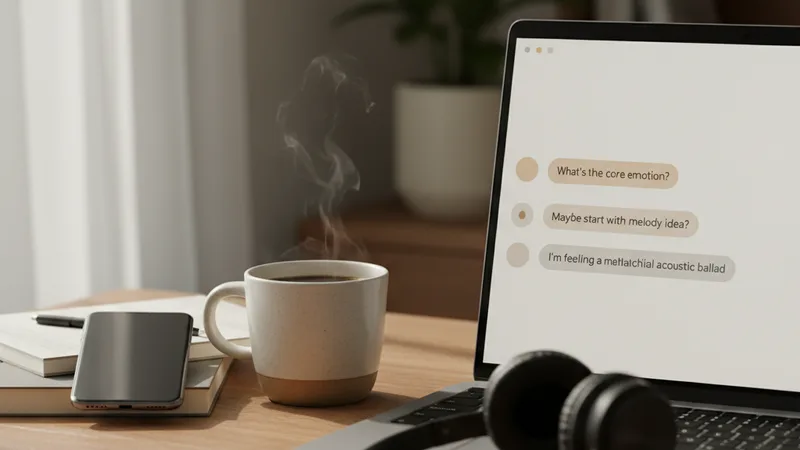
A few specifics about ChatGPT's actual music capabilities that get lost in the broader hype.
ChatGPT is a text-only model. It does not generate audio files. It cannot produce a WAV or MP3. The same applies to Claude (Anthropic) and Gemini (Google) and most general-purpose chat assistants. The output is text — sometimes structured text like JSON or MIDI notation, but not actual sound.
What ChatGPT can produce for music:
- Lyrics. Full song lyrics in any genre, tone, language, or structure. ChatGPT writes solid pop, country, hip-hop, R&B, and folk lyrics. The lyrics need editing for genre-specific authenticity but the raw text generation is reliable.
- Song structure. Verse-chorus-verse-chorus-bridge-chorus form, AABA, 12-bar blues, ternary, sonata — ChatGPT knows the standard forms and can outline any of them.
- Music theory explanations. Chord progressions, scale options, modulation suggestions, voice leading rules. Useful for songwriters wanting to understand what they're prompting.
- Prompt suggestions for AI music apps. ChatGPT can write a Muziko or Suno prompt for you based on a creative brief. The text-to-text translation is exactly what it's good at.
- MIDI notation. Some chat assistants can output MIDI as text-format notation that you can copy into a DAW to play back via synth. Not the same as finished audio, but workable for compositional sketching.
- Chord charts and lead sheets. Text-format chord charts (C - Am - F - G) with lyrics interleaved. Useful for live musicians.
- Song titles, album titles, artist names. Brainstorming concepts.
- Cover song analysis. Breaking down what makes a song work musically.
- Music industry advice. General career and creative direction guidance.
- Lyric translation. Translating song lyrics across languages with attention to rhyme and meter.
What ChatGPT cannot produce for music:
- Audio files. Period. No WAV, no MP3, no AAC, no FLAC.
- Vocal performances. Cannot generate a sung vocal track.
- Instrumental tracks. Cannot generate guitar, piano, or any instrument audio.
- Mixed and mastered recordings. Cannot do any of the audio-engineering side.
- Specific sound design. Cannot generate a particular drum tone, synth patch, or vocal effect chain.
The clarity of the distinction matters. ChatGPT is excellent at the writing side of music creation. It is not capable of the recording side. Both are necessary for a finished song.
For the prompt-craft side that pairs with AI music apps, how to write AI song prompts that actually produce great music covers the universal prompt patterns.
What dedicated AI music apps do that ChatGPT cannot
Dedicated AI music apps like Muziko, Suno, Udio, MyTunes, Muzio, Donna AI, and Mozart do the opposite of what ChatGPT does — they generate audio. The complementary capability set.
What dedicated AI music apps produce:
- Finished audio tracks. Full songs with vocals, instruments, mixing, and mastering in WAV or MP3 format.
- Specific genre production. Pop, hip-hop, country, EDM, R&B, jazz, classical, lo-fi, and everything between, each with genre-appropriate instrumentation and mixing.
- Vocal performances. Generated lead vocals with selectable gender, style, and emotional delivery.
- Instrumental backing tracks. No-vocal versions, karaoke tracks.
- Mixing and mastering. Audio production decisions like compression, EQ, reverb, panning applied automatically.
- Multiple generation options. Most apps generate 2-3 takes per prompt, giving choice on which version lands best.
- Length-specific tracks. 30-second TikTok hooks, 90-second commercial spots, 3-minute full songs.
- Personalized name pronunciation. AI vocal models that handle specific names in lyrics, more or less accurately depending on the app.
What dedicated AI music apps do not do well:
- Write polished lyrics from a vague brief. AI music apps generate lyrics but they tend to be more generic than what ChatGPT produces with good prompting.
- Explain music theory. Music apps focus on output, not education.
- Translate lyrics between languages. ChatGPT and other LLMs handle this better.
- Brainstorm creative concepts at length. AI music apps are tools for execution, not for ideation conversations.
- Provide music industry career advice. Not their purpose.
- Adapt to evolving creative briefs across multiple iterations of conversation. Music apps generate from single prompts; they don't carry conversation context the way ChatGPT does.
The complementarity is the whole point. ChatGPT generates the what (lyrics, structure, concept). AI music apps generate the sound (audio, vocals, production). Together they cover the full song creation workflow.
For specific genre-by-genre AI music app quality, see the AI country guide, AI lo-fi guide, AI EDM guide, and AI jazz guide.
Step-by-step: the ChatGPT plus AI music app combined workflow
The workflow that works in practice combines both tools. The roles divide cleanly.
1. Concept and brief in ChatGPT. Tell ChatGPT what kind of song you want to write — "I want a country ballad for my parents' fortieth anniversary, with their names Maya and Jake, referencing the farm in Tennessee where they raised four kids, around 80 bpm, emotional but not sad." ChatGPT can brainstorm the angle, suggest the song's central image, and outline an approach.
2. Lyrics drafting in ChatGPT. Ask ChatGPT to draft the full lyrics in the genre and tone. Get the first draft, then iterate. "Make the second verse more specific to the seasons on the farm — winter mornings starting the tractor, summer evenings on the porch." ChatGPT handles the back-and-forth lyric refinement naturally.
3. Genre and instrumentation research in ChatGPT. Ask for the specific country subgenre and instrumentation that would fit. "Should this be modern Nashville pop country or traditional acoustic? What instruments should be on the track? What tempo and key would work for a forty-year anniversary ballad?" ChatGPT explains the options and recommends one.
4. Prompt construction in ChatGPT. Ask ChatGPT to write the specific AI music app prompt based on the lyrics and instrumentation. "Write me a Muziko prompt that produces this song. Include the genre, tempo, instrumentation, vocal direction, and length, formatted in a single paragraph." ChatGPT produces a prompt you can paste directly into Muziko or Suno.
5. Audio generation in Muziko or another AI music app. Open the music app. Paste the prompt. Paste the lyrics. Generate three to five takes. Listen and pick the strongest.
6. Iteration loop. If the first take is close but not right, go back to ChatGPT. Describe what is off — "the chorus needs more emotional weight on the third line; can you rewrite that line to land harder?" ChatGPT revises. Paste the revised lyric into the music app. Regenerate.
7. Final adjustments. When the lyric and audio land, save in the music app's highest-quality format. Use ChatGPT for any final touches — a one-line song description for the file, a list of acknowledgments, etc.
This workflow takes 30-60 minutes for a polished song versus 4-5 minutes for an unedited AI-music-app-only generation. The time investment buys substantially better lyrics and a more thoughtful production direction.
For the full mobile workflow, the AI song generator for iPhone 2026 guide covers each creation mode in depth.
When ChatGPT alone is enough

Some music-adjacent work needs ChatGPT but does not need an AI music app. Honest accounting of where ChatGPT is sufficient on its own.
Use ChatGPT alone for:
- Lyric writing for human performance. Songwriters who play their own songs need lyrics, not generated audio. ChatGPT writes the lyrics; the songwriter performs them.
- Music theory study and learning. Understanding chord progressions, voice leading, modal interchange, song form. ChatGPT explains these clearly.
- Lyric translation projects. Translating existing songs into other languages with care for meter and rhyme.
- Songwriter career and creative advice. Brainstorming directions, getting feedback on lyric ideas, planning album concepts.
- Music journalism and writing about music. Drafting reviews, artist bios, album descriptions, liner notes.
- Music education content. Writing lessons, exercises, exam prep material.
- Lead sheets and chord charts. Text-format music notation for live musicians.
- Pre-production planning. Outlining what you want before going into a recording studio with real musicians.
- Lyric editing. Polishing your own lyrics by getting ChatGPT feedback on rhyme, meter, imagery.
- Music industry contracts and licensing language. Understanding standard terms (with the caveat that ChatGPT is not a lawyer).
Use an AI music app alone for:
- Quick personal-occasion songs where the lyrics are simple. Birthday songs with just a name and a quick personal reference do not need ChatGPT-grade lyric drafting.
- Background music with no lyrics. Instrumental tracks for podcasts, content, study sessions, ambient use.
- Game music, film scoring, and content creator background tracks. Where the audio is the deliverable and lyrics are not relevant.
- TikTok and short-form social audio. 15-30 second hooks where prompt-craft for the music matters more than lyric depth.
Use both for:
- Polished songwriter demos pitching to publishers. Lyrics need ChatGPT-grade quality; audio needs music-app-grade production.
- Custom personal-occasion songs with complex stories. Wedding first dances, memorial tributes, anniversary songs that reference specific shared history benefit from careful lyric crafting in ChatGPT before generating audio.
- Songs in non-English languages where you do not have native fluency. ChatGPT can write or translate the lyrics; the music app generates the audio.
- Long-form storytelling songs. Multi-verse narrative songs where the lyric arc matters as much as the audio production.
For the broader use case mapping, the AI music vs human composer guide covers the larger decision framework that includes this ChatGPT-vs-music-app question as a sub-decision.
Workflow mapping: which tool for which task
A consolidated chart of which tool handles which task best.
| Task | ChatGPT | AI Music App | Both |
|---|---|---|---|
| Write song lyrics | Best | Acceptable | Use ChatGPT for polished lyrics, paste to music app |
| Generate finished audio | Not capable | Best | Music app required for audio |
| Brainstorm song concepts | Best | Limited | ChatGPT |
| Suggest chord progressions (text) | Best | Not capable | ChatGPT |
| Generate audio in specific key | Not capable | Best | Music app |
| Explain music theory | Best | Not relevant | ChatGPT |
| Translate lyrics across languages | Best | Limited | ChatGPT |
| Generate genre-specific instrumentation | Not capable | Best | Music app |
| Brand-unique audio identity | Not capable | Best | Music app |
| Adapt lyrics across iterations | Best | Not relevant | ChatGPT |
| Generate vocals | Not capable | Best | Music app |
| Write Muziko/Suno prompts | Best | Not relevant | ChatGPT |
| Genre research and recommendation | Best | Not capable | ChatGPT |
| Generate mastered audio | Not capable | Best | Music app |
| Music industry career advice | Best | Not relevant | ChatGPT |
| Write song titles and album names | Best | Not relevant | ChatGPT |
| Generate stems for DAW remixing | Not capable | Best (some apps) | Music app |
| Generate lyrics in non-English language | Best | Limited | ChatGPT |
| Generate audio in non-English language | Not capable | Variable by app | Music app |
| Audio editing (trim, fade, EQ) | Not capable | Some apps | Music app or DAW |
| Music supervision for film/TV | Best for descriptions | Not capable | ChatGPT + human composer |
| Songwriter demo production | Drafting only | Full audio production | Both |
The pattern is consistent: ChatGPT is the writing tool; AI music apps are the recording tool. For tasks that involve only writing, ChatGPT suffices. For tasks that involve audio output, an AI music app is required. For most polished work, both are useful in different stages.
For more on the prompt construction that combines the two tools, the perfect prompts breakdown covers prompt patterns that work universally.
When you need both — the modern songwriter stack
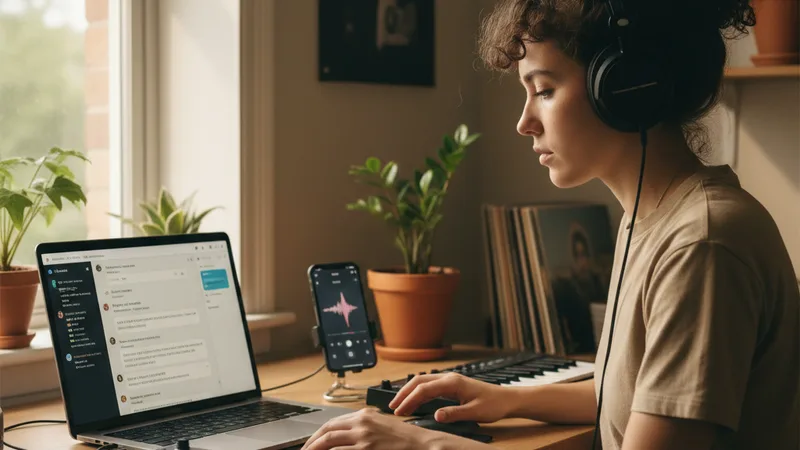
The dominant songwriter stack in 2026 combines ChatGPT (or Claude or Gemini) for the writing and a dedicated AI music app for the audio. Honest accounting of when this combined stack matters most.
Songwriters pitching demos to publishers:
- ChatGPT for full lyric drafting and revision.
- Muziko or Suno for demo audio production at $34-96/year (much cheaper than $400-800 per demo studio session).
- Total annual cost of the stack: $34-96/year for the music app plus a ChatGPT subscription ($20/month if you're a heavy user, free tier suffices for occasional).
Content creators producing personalized songs:
- ChatGPT for crafting the personalized lyrics with specific details from the customer brief.
- Muziko for generating the audio quickly on iPhone.
- Especially useful for Etsy custom-song shops where lyric quality drives customer satisfaction. See the selling AI songs on Etsy guide for the full business workflow.
Podcasters producing show music:
- ChatGPT for lyric writing if the show has a sung intro.
- Muziko or Suno for the actual music generation.
- See the AI podcast intro music guide for podcast-specific workflows.
Personal-occasion song creators:
- ChatGPT for thoughtful lyric drafting referencing real shared memories.
- Muziko for audio generation with name pronunciation handled.
- Especially useful for wedding, anniversary, memorial, and graduation songs where the lyric quality carries the emotional impact.
Indie game developers needing custom music:
- ChatGPT for brainstorming the sonic identity and writing prompts.
- Muziko or Suno for the actual game music cues.
- See the AI game music guide for the game-specific workflow.
Singer-songwriters working on their own material:
- ChatGPT for lyric collaboration (treated as a writing partner, not as the writer).
- AI music app optional — many singer-songwriters use ChatGPT alone and perform their own music.
- The AI music app comes in when wanting a demo to share or pitch.
For more on the broader AI music ecosystem and when each tool fits, the Suno vs Udio vs Muziko comparison and Muziko vs Suno head-to-head cover the AI music app choices.
Try the combined workflow right now
The fastest way to understand the difference between ChatGPT and AI music apps is to test the combined workflow.
Step 1 (ChatGPT): Open ChatGPT and paste:
"I want to write a custom birthday song for my friend Maya who is turning 25. She just moved to Lisbon, she's into indie pop, and one specific shared memory is the time we got lost trying to find a bookshop and ended up eating ice cream on a random side street. Can you draft six to eight lines of lyrics that capture this story with her name in the chorus, in modern indie pop style?"
ChatGPT will draft the lyrics. Iterate with it if needed.
Step 2 (ChatGPT): After the lyrics are right, paste:
"Now write me a Muziko prompt for this song. Include the genre, tempo, instrumentation, vocal direction, and length. Format it as a single paragraph."
ChatGPT will write a complete music app prompt.
Step 3 (Muziko): Open Muziko on iPhone. Switch to Write Lyrics mode. Paste the lyrics ChatGPT generated. Add the prompt note ChatGPT generated. Generate three takes.
Step 4 (Comparison): Pick the strongest take. Save and share.
The whole combined workflow takes 15-25 minutes for a personalized track that is meaningfully better than what either ChatGPT or Muziko alone would produce. The lyric quality from ChatGPT plus the audio quality from Muziko is the modern personalized-song production stack.
For more on iterating prompts toward specific outputs, the perfect prompts breakdown covers patterns that work across both stages.
Frequently asked questions
Can ChatGPT make actual music or songs?
No, ChatGPT cannot generate audio files. It is a text-only AI model that produces lyrics, song structures, music theory explanations, chord charts, and other written content related to music. It does not produce WAV, MP3, or any other audio format. To generate finished audio songs, you need a dedicated AI music app like Muziko, Suno, Udio, or one of the iPhone-native AI song generators. The modern songwriter workflow uses ChatGPT for the writing side (lyrics, structure, prompts) and a dedicated AI music app for the recording side (audio generation, vocals, instrumentation, mixing). The two tools are complementary, not competitive.
Is ChatGPT better than AI music apps for lyrics?
Yes, generally. ChatGPT (and other LLMs like Claude and Gemini) produce more polished, more iteratively refinable lyrics than dedicated AI music apps generate from prompts. AI music apps focus their model capacity on audio generation; ChatGPT focuses its model capacity on text generation. For songs where lyric quality matters — personal occasion songs with specific shared memories, songwriter demos pitching to publishers, custom Etsy-shop commissions — drafting the lyrics in ChatGPT first and then pasting them into the music app's Write Lyrics field produces meaningfully better songs than letting the music app generate lyrics from a brief. The combined workflow takes 15-25 minutes versus 4-5 minutes for music-app-alone but produces noticeably better lyric quality.
Should I use ChatGPT to write prompts for AI music apps?
Yes, this is one of the most useful applications of ChatGPT for music. Tell ChatGPT what kind of song you want and ask it to write a Muziko, Suno, or Udio prompt for you including genre, tempo, instrumentation, vocal direction, length, and any specific structural notes. ChatGPT writes coherent music app prompts that often produce better results than the prompts a non-expert user would write directly. For complex songs with specific subgenre requirements, ChatGPT's prompt construction is particularly useful because it can match production conventions to subgenres in ways most users don't have detailed knowledge to do. Paste ChatGPT's output directly into the music app's prompt field.
Can ChatGPT generate MIDI files that I can use in a DAW?
Sort of. ChatGPT can output MIDI notation as text — chord names, note sequences, and rhythmic patterns in formats like ABC notation or simple text-based MIDI representations. You can copy this notation into MIDI-aware software (some DAWs, MIDI utilities) to play back via virtual instruments. The output is workable for compositional sketching but not for finished audio. ChatGPT does not generate the actual audio rendering of the notes — that requires the DAW's virtual instruments or a real synthesizer to play the MIDI back. For audio output, you still need either a DAW with virtual instruments or a dedicated AI music app. For pure compositional sketching, the MIDI-notation route works but is more cumbersome than just using an AI music app.
Do I need both ChatGPT and an AI music app, or can I just use one?
Depends on what you're making. For background music, instrumental tracks, simple birthday songs with a name and one personal detail, or any audio without complex lyrics: use the AI music app alone. For polished lyrics, songwriter demos for publishers, custom Etsy songs with specific stories, multi-verse narrative songs, or songs in non-English languages: use ChatGPT for the lyrics and an AI music app for the audio. For lyric writing only (songwriters performing their own songs), music theory study, lyric translation, or music journalism: use ChatGPT alone. The combined workflow takes more time but produces better results when lyric quality matters.
How much does the ChatGPT plus AI music app combined stack cost?
ChatGPT has a free tier that suffices for occasional lyric writing and prompt construction. ChatGPT Plus is $20/month or $240/year for heavy users (most songwriters fit within the free tier limits). Claude and Gemini have similar pricing structures with free tiers and paid tiers. Add an AI music app subscription: Muziko Pro at $34.99/year is the cheapest viable commercial-use option. Suno Pro is $96/year. Udio Pro is $120/year. Combined stack total annual cost for serious users: $34-336/year depending on tier choices. For most personal songwriters and small business users, a free ChatGPT plus Muziko Pro ($34.99/year) combined stack is more than sufficient and remains one of the most cost-effective tooling combinations in modern songwriting.
Try everything you just read about. Muziko is free to download.