
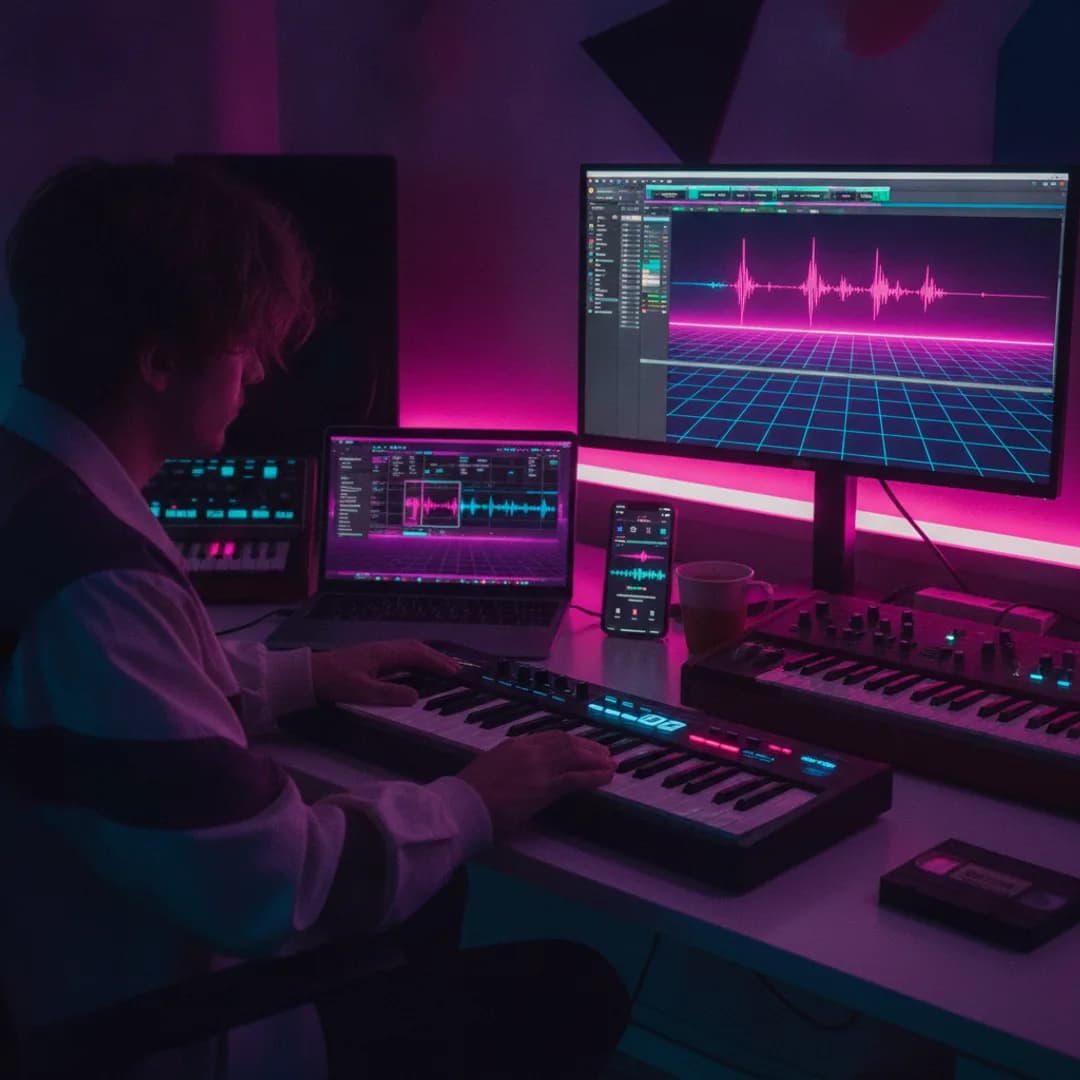
AI Synthwave Generator: 80s Retrowave Tracks (Tested)
Generate synthwave with AI on iPhone — gated reverb, supersaw leads, vintage LinnDrum beats, 90-115 BPM. Real 80s retrowave that doesn't sound like generic synth-pop.
Synthwave is one of the most aesthetically rigid genres I've tested AI music apps against. The 1980s sonic signatures are tight — gated reverb snare from Phil Collins-era Linn drum machines, supersaw lead synths from Roland Juno-60 and Yamaha DX7 patches, sidechain-pumping bass at exactly the right rate, the specific arpeggiated synth pattern from a Sequential Prophet-5, the FM electric piano sound from a Yamaha DX7 — and getting any one of them wrong reads as 90s synth-pop or 2010s indie-pop rather than as actual 80s retrowave. Generic "synthwave" prompts in AI music apps in 2026 mostly produce vague synth-flavored pop. Specific synthwave prompts with the named period instruments and effects produce tracks that actually pass for the era.
This is the case for narrow synthwave prompting that I've tested across about thirty generations. The genre is defined by intentional anachronism — it's music from 2026 that wants to sound like 1985, and the audience comes to it specifically for that aesthetic precision. The Stranger Things synth main theme, the Drive soundtrack, the Hotline Miami soundtrack, the Carpenter Brut catalog, the FM-84 catalog — these are the reference points that synthwave producers and listeners use. AI music apps in 2026 can hit demo-grade synthwave when prompted explicitly for the period-specific gear, effects, and structure.
This guide is the workflow for generating modern synthwave on iPhone — classic retrowave, darksynth, outrun, Miami synthwave, dreamwave, vaporwave-adjacent crossovers, and synthwave ballads — in under five minutes per track.
Why generic prompts produce 90s synth-pop, not synthwave
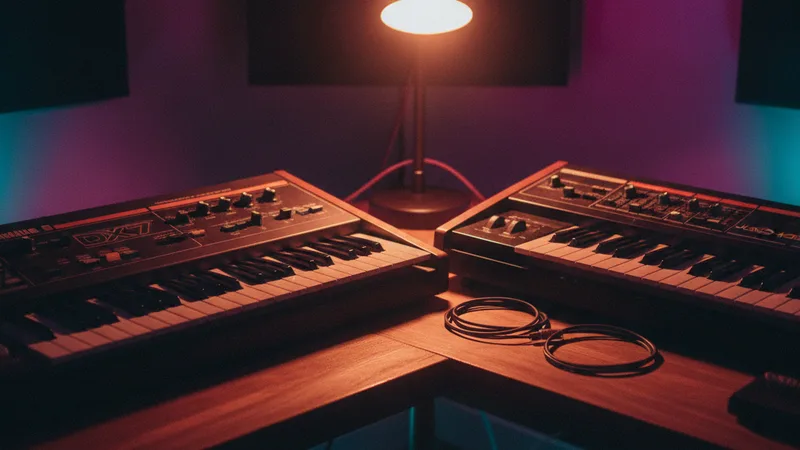
A few specifics about synthwave that get lost in generic prompts.
Gated reverb snare is the genre's signature drum sound. The Phil Collins / In The Air Tonight drum sound — snare hit through huge reverb gated abruptly closed — is the load-bearing drum element in most synthwave. Without explicit gated reverb direction, AI defaults to modern compressed snares. Prompt "gated reverb snare in the Phil Collins 1985 tradition, huge reverb cut off abruptly, prominent in the mix."
Supersaw lead synth is the genre's signature melodic instrument. From the Roland JP-8000 supersaw patch (technically released in 1996 but defining the retrospective synthwave sound), the layered detuned-saw lead carries most synthwave melodies. Prompt "supersaw lead synth with detuned layered saws, vintage Roland Juno-60 character, prominent in the mix with chorus and stereo widening."
Sidechain-pumped bass at exactly the right rate. Modern EDM uses heavy sidechain pumping. Synthwave uses lighter, more musical sidechain — usually a quarter-note or eighth-note rate matched to the kick. The pumping is felt rather than aggressive. Prompt "side chain pumped analog bass with quarter-note rate matched to the kick, lighter pumping than modern EDM, musical and felt rather than aggressive."
FM electric piano (Yamaha DX7 Rhodes patch) for the chord pads. The specific DX7 FM-synthesis Rhodes patch from 1983-1989 era is synthwave's go-to harmonic pad sound. Prompt "FM electric piano pad in the Yamaha DX7 Rhodes tradition, glossy bell-like character, sustained chord voicings."
Linn drum machine kit selection. The Linn LM-1 and LinnDrum from the 80s defined synthwave's drum kit selection — specific kick, snare, hi-hat samples. Prompt "LinnDrum-style drum kit with classic 80s kick and snare samples, programmed eighth-note hi-hats, no modern trap or hip-hop elements."
Sequential Prophet-5 arpeggio for atmosphere. The signature 80s analog arpeggio pattern from a Prophet-5 carries the atmospheric content in much of synthwave. Prompt "arpeggiated analog synth pattern in the Sequential Prophet-5 tradition, sixteenth-note arpeggio with reverb tail, sustained throughout."
Tempos cluster at 90-115 BPM. Synthwave is mid-tempo. Darksynth pushes faster (110-130 BPM). Synthwave ballads slow down (75-90 BPM). Avoid the 120-128 BPM modern EDM tempo zone — that pushes the track toward house and away from synthwave.
For the foundational prompt-craft, how to write AI song prompts that actually produce great music is the most useful companion read.
What AI synthwave gets right — and what it still misses
Honest accounting of where AI synthwave lands.
Gets right consistently:
- Classic retrowave instrumentals. The core synthwave sound with gated reverb, supersaw lead, FM piano, sidechain bass produces well on the second or third generation when prompted explicitly.
- Driving synthwave (outrun-adjacent). The mid-tempo driving synthwave for car content and gym videos handles cleanly.
- Darksynth. The harder, faster Carpenter Brut-adjacent darksynth at 115-130 BPM with distorted bass and aggressive lead synths handles well.
- Synthwave ballads. Slower 75-90 BPM synthwave with sustained pads and FM piano produces consistently.
- Stranger Things-adjacent atmospheric synthwave. The TV-soundtrack synthwave with sustained pads and arpeggios works for content background music.
Still misses or inconsistent:
- Authentic vintage synth character. AI produces synthwave-aesthetic tracks; it doesn't fully replicate the specific timbres of named vintage synths. The differences between a Juno-60, a Prophet-5, a DX7, and a Memorymoog are at the edge of AI's tonal resolution.
- The specific quirks of 80s production technology. Tape saturation, console summing, plate reverb, analog limiting — these accumulated 80s production characteristics are approximated but not fully replicated.
- Synthwave vocals with authentic 80s vocal production. The specific style of 80s pop vocals (gated vocal reverb, vocal delays, specific compression) is approximate at best.
- Region-specific synthwave scenes. Russian synthwave, French synthwave, US synthwave each have specific micro-conventions AI tends to homogenize.
For more on AI music quality across genres, the best AI music app for iPhone 2026 ranking covers what each major app handles best.
Step-by-step: a synthwave track in Muziko
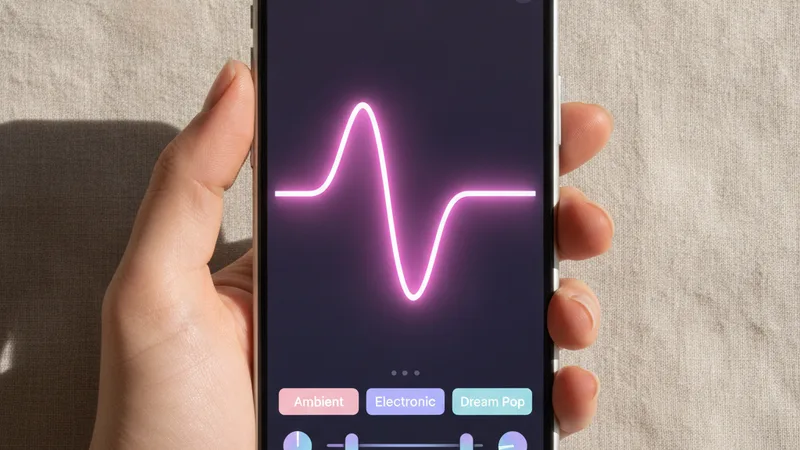
The workflow. Total time on a successful synthwave run averages 4-5 minutes.
1. Open Muziko on iPhone or iPad. Switch to Describe mode — most synthwave is instrumental.
2. Pick the genre tag. Pick Synthwave if available. If not, EDM or Electronic with explicit synthwave redirection in the prompt.
3. Pick a mood. Dreamy + confident for classic synthwave. Confident + dark for darksynth. Dreamy + sentimental for synthwave ballads.
4. Lead with the period markers. "Classic 80s synthwave track at 100 BPM, dreamy confident mood, gated reverb snare in the Phil Collins 1985 tradition, supersaw lead synth with detuned layered saws in the Roland JP-8000 tradition."
5. Specify the synth palette. "FM electric piano pad in the Yamaha DX7 Rhodes tradition, arpeggiated analog synth pattern in the Sequential Prophet-5 tradition with sixteenth-note arpeggio, sustained analog string pad."
6. Specify the rhythm section. "LinnDrum-style drum kit with classic 80s kick and snare samples, programmed eighth-note hi-hats, sidechain pumped analog bass at quarter-note rate matched to the kick, lighter pumping than modern EDM."
7. Specify the song structure. "Intro-verse-chorus-verse-chorus-bridge-chorus-outro structure with key change up a half-step at the start of the final chorus, builds energy across the track."
8. Length. Synthwave works at 3:00-4:00 for full versions. 90 seconds for TikTok-ready cuts.
9. Mastering for synthwave. "Mastered with warm midrange, tape-saturation character, light analog plate reverb on the master, 80s production aesthetic, not modern loudness-war mastered."
10. Generate four to six takes. Listen for: gated reverb snare presence, supersaw lead character, sidechain pump musical rate, FM piano warmth. Pick the take where all four land cleanly.
For the full mobile workflow, the AI song generator for iPhone 2026 guide covers each creation mode in depth.
Writing the synthwave prompt
A working synthwave prompt has seven ingredients. Miss any one and the track lands as 90s synth-pop or 2010s indie-pop rather than as real 80s retrowave.
Gated reverb snare named explicitly with the Phil Collins reference. "Gated reverb snare in the Phil Collins 1985 tradition, huge reverb cut off abruptly."
Supersaw lead synth with vintage character. "Supersaw lead synth with detuned layered saws, vintage Roland Juno-60 or JP-8000 character, prominent in the mix with chorus and stereo widening."
Sidechain-pumped bass at musical rate. "Sidechain pumped analog bass at quarter-note or eighth-note rate matched to the kick, lighter pumping than modern EDM, musical and felt rather than aggressive."
FM electric piano in the DX7 tradition. "FM electric piano pad in the Yamaha DX7 Rhodes tradition, glossy bell-like character."
Linn drum machine character. "LinnDrum-style drum kit with classic 80s kick and snare samples, programmed eighth-note hi-hats, no modern trap or hip-hop elements."
Arpeggiated Prophet-5 atmosphere. "Arpeggiated analog synth pattern in the Sequential Prophet-5 tradition, sixteenth-note arpeggio with reverb tail."
Tempo at 90-115 BPM with synthwave structure. "100 BPM, intro-verse-chorus-verse-chorus-bridge-chorus-outro structure with key change up a half-step at the start of the final chorus."
A combined working prompt for a classic synthwave track:
"Classic 80s synthwave instrumental track at 100 BPM, dreamy confident mood, gated reverb snare in the Phil Collins 1985 tradition with huge reverb cut off abruptly, supersaw lead synth with detuned layered saws in the Roland JP-8000 tradition with chorus and stereo widening, FM electric piano pad in the Yamaha DX7 Rhodes tradition with glossy bell-like character, arpeggiated analog synth pattern in the Sequential Prophet-5 tradition with sixteenth-note arpeggio, sustained analog string pad, LinnDrum-style drum kit with classic 80s kick and snare samples, programmed eighth-note hi-hats, sidechain pumped analog bass at quarter-note rate matched to the kick with lighter pumping than modern EDM, intro-verse-chorus-verse-chorus-bridge-chorus-outro structure with key change up a half-step at the start of the final chorus, three minutes thirty seconds, mastered with warm midrange and tape-saturation character, light analog plate reverb on the master, 80s production aesthetic, not modern loudness-war mastered."
In testing, that prompt produces a synthwave-grade track in roughly three generations about 80% of the time. For prompt iteration craft, the perfect prompts breakdown covers the underlying patterns.
Matching synthwave subgenre to production conventions
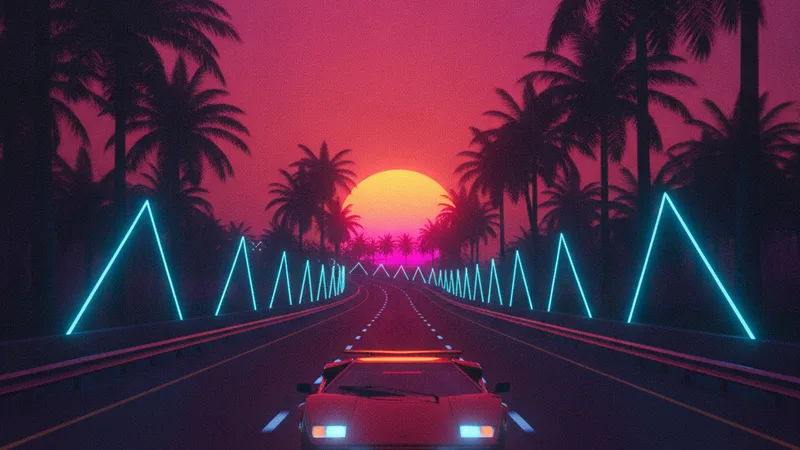
Synthwave subgenres differ on tempo, intensity, atmosphere, and specific synth palette.
| Subgenre | Tempo | Signature character | Synth palette | Mood |
|---|---|---|---|---|
| Classic retrowave (Mitch Murder era) | 95-110 BPM | Full 80s synthwave production | Juno + DX7 + Prophet | Dreamy + confident |
| Outrun / driving synthwave | 100-115 BPM | Driving energy for car content | Supersaw + LinnDrum + sidechain bass | Confident + euphoric |
| Darksynth (Carpenter Brut era) | 115-130 BPM | Harder, distorted bass | Distorted lead synths + driving drums | Confident + dark |
| Synthwave ballad | 75-90 BPM | Slower atmospheric | Sustained pads + FM piano | Sentimental + dreamy |
| Miami synthwave | 100-115 BPM | Tropical 80s influence | Brighter saws + steel drum samples | Dreamy + playful |
| Dreamwave | 90-110 BPM | Hazier, more washed out | Heavy reverb pads + soft leads | Dreamy |
| Vaporwave crossover | 80-100 BPM | Slowed, pitch-shifted samples | Slowed retro samples + ambient pads | Dreamy + dark |
| Synthwave x metal | 110-130 BPM | Distorted guitars + synth leads | Synth leads + distorted electric guitar | Confident + aggressive |
| Cyberpunk synthwave | 110-125 BPM | Darker urban atmosphere | Distorted leads + industrial drums | Dark + confident |
| TV theme synthwave (Stranger Things era) | 95-110 BPM | Atmospheric, narrative | Arpeggios + sustained pads | Dreamy + confident |
| Italo-disco revival | 110-125 BPM | Disco-influenced synthwave | Italo disco synth palette | Playful + euphoric |
| Synthwave with vocals (FM-84 era) | 95-115 BPM | Vocal-led synthwave | Full synthwave palette + 80s vocal | Dreamy + sentimental |
| Future funk x synthwave | 110-125 BPM | Disco/funk influence | Chopped vocal samples + synthwave production | Playful + euphoric |
| Slow synthwave (winter synthwave) | 75-95 BPM | Cold atmospheric | Sustained pads + sparse drums | Dreamy + dark |
Pick the row matching what you want. For related genre work, see the AI EDM generator guide, AI lo-fi guide, AI hyperpop guide, and AI phonk guide.
When AI synthwave works — and the limits
Honest accounting.
Works:
- YouTube content background music for retro-aesthetic gaming videos, car content, cyberpunk gameplay, and synthwave-aesthetic visual content.
- TikTok and Instagram Reels for synthwave-aesthetic fashion content, neon-aesthetic editing, and retro-themed posts.
- Indie game and content creator background music for synthwave-aesthetic visual content.
- Songwriter and producer demos for synthwave producers exploring directions before committing to vintage gear sessions.
- Personal listening for users who want custom synthwave tracks.
- Custom workout playlists in the driving/outrun synthwave style.
Falls short:
- Serious synthwave artist releases for the synthwave audience. The synthwave scene values production craft and period authenticity. AI tracks released as serious artist material will receive critical scrutiny on the period-specific tonal accuracy.
- Prompts that imitate specific living synthwave producers. "In the style of Mitch Murder" or "in the style of Carpenter Brut" or "in the style of FM-84" prompts are prohibited in commercial AI music apps. Stay generic with subgenre and instrumentation directions.
- Authentic vintage synth character. AI produces approximations of vintage synth timbres; real synthwave producers use actual vintage hardware (or high-quality software emulations) for the most authentic character.
For the broader licensing context, the can you sell AI-generated music legal guide covers commercial release questions.
Try the prompt now
Open Muziko on iPhone, switch to Describe mode, pick Synthwave or EDM genre and Dreamy mood, and paste:
"Classic 80s synthwave instrumental track at 100 BPM, dreamy confident mood, gated reverb snare in the Phil Collins 1985 tradition with huge reverb cut off abruptly, supersaw lead synth with detuned layered saws in the Roland JP-8000 tradition with chorus and stereo widening, FM electric piano pad in the Yamaha DX7 Rhodes tradition with glossy bell-like character, arpeggiated analog synth pattern in the Sequential Prophet-5 tradition with sixteenth-note arpeggio, sustained analog string pad, LinnDrum-style drum kit with classic 80s kick and snare samples, programmed eighth-note hi-hats, sidechain pumped analog bass at quarter-note rate matched to the kick with lighter pumping than modern EDM, intro-verse-chorus-verse-chorus-bridge-chorus-outro structure with key change up a half-step at the start of the final chorus, three minutes thirty seconds, mastered with warm midrange and tape-saturation character, light analog plate reverb on the master, 80s production aesthetic, not modern loudness-war mastered."
Generate four to six takes. Listen on quality headphones — synthwave lives or dies on the gated reverb snare and the supersaw lead character, which laptop speakers hide. Pick the take with the most authentic gated snare, the most prominent supersaw lead, the right sidechain pump rate, and the warmest FM piano.
For related genre how-tos, see the AI EDM guide, AI hyperpop guide, AI phonk guide, and AI bedroom pop guide.
Frequently asked questions
Can AI really generate convincing 80s synthwave?
Yes for the core synthwave sound, when prompted with the right period-specific specificity. The four production elements that need to be in the prompt: gated reverb snare in the Phil Collins 1985 tradition, supersaw lead synth with detuned layered saws in the Roland JP-8000 tradition, sidechain pumped analog bass at musical quarter-note rate matched to the kick, and FM electric piano pad in the Yamaha DX7 Rhodes tradition. Get all four right and AI music apps in 2026 produce synthwave-grade tracks on the second or third generation. Get any wrong — especially the gated reverb snare — and the track reads as 90s synth-pop or 2010s indie-pop rather than as real 80s retrowave. Naming the specific vintage gear (Phil Collins, Roland JP-8000, Yamaha DX7, LinnDrum, Sequential Prophet-5) is the single most efficient prompt direction for synthwave.
What BPM should synthwave be?
90-115 BPM is the broad synthwave range. Classic retrowave runs 95-110 BPM. Outrun and driving synthwave run 100-115 BPM. Darksynth pushes faster to 115-130 BPM. Synthwave ballads slow down to 75-90 BPM. Dreamwave runs 90-110 BPM. Vaporwave crossover slows to 80-100 BPM. Match the BPM to the subgenre. Avoid the 120-128 BPM modern EDM tempo zone — that pushes the track toward house and away from synthwave's distinctive mid-tempo feel. The mid-tempo character is part of what gives synthwave its nostalgic "driving toward the sunset" aesthetic versus the more energetic feel of modern EDM.
How do I get the gated reverb snare right in AI synthwave?
Lead with it in the prompt and reference the Phil Collins 1985 tradition explicitly. The phrase "gated reverb snare in the Phil Collins 1985 tradition, huge reverb cut off abruptly, prominent in the mix" produces the right snare aesthetic. Don't just prompt "gated reverb" — generic phrasing produces modern compressed snares. The Phil Collins reference is widely understood by AI music models because In The Air Tonight is the canonical reference for the gated reverb snare technique. Specify "huge reverb cut off abruptly" to lock in the gating character. Generate four to six takes and listen specifically for whether the snare has the characteristic huge-then-suddenly-silent reverb tail — that's the take that lands the synthwave aesthetic.
Is it legal to release AI synthwave tracks on Spotify and Bandcamp?
Yes, when generated on the paid tier of a reputable AI music app like Muziko Pro at $34.99 per year, Suno Pro, or Udio Pro. The paid tier grants commercial usage rights including release on Spotify, Apple Music, Bandcamp, and SoundCloud through distribution services like DistroKid or TuneCore. Disclose AI use where required — all major streaming platforms in 2026 ask for AI content disclosure on uploads. Never prompt the AI to imitate a specific living synthwave producer's style; the synthwave scene has well-known producers whose names should not appear in commercial prompts. Bandcamp specifically has a large synthwave audience and the genre's listeners value production craft authenticity — be ready for honest reactions if you release AI synthwave into that community, and consider framing your release honestly about AI use.
Should synthwave tracks have vocals or be instrumental?
Most synthwave is instrumental, particularly the outrun, driving synthwave, darksynth, and TV-theme subgenres. Vocal synthwave exists — FM-84, The Midnight, NINA, and similar artists make vocal-led synthwave with 80s-styled vocal production — and it's a real subgenre. For AI generation, instrumental synthwave is consistently easier to land because AI vocal generation in 2026 doesn't fully replicate the specific 80s vocal production conventions (gated vocal reverb, vocal delays, specific 80s vocal compression). For TikTok and YouTube background music, instrumental synthwave fits naturally. For dedicated artist releases where vocal performance is the centerpiece, consider hybrid approaches — AI for the instrumental synthwave production layer plus real vocalists for the vocal performance.
Can AI synthwave work for indie game soundtracks and YouTube gaming content?
Yes, and this is one of the strongest synthwave use cases for AI generation. Indie games with retro aesthetics (Hotline Miami-adjacent, cyberpunk-themed, retro-aesthetic platformers, driving games), YouTube gaming content with synthwave/retro themes, and Twitch streams with synthwave aesthetics all benefit from custom AI synthwave tracks tuned to the specific BPM and energy needed for the content. The cost-time math is decisive — $0.40 of subscription per track versus stock library subscriptions or composer commissions. AI synthwave for game and gaming content can be looped, customized to scene length, and made unique per project. For the broader indie game music workflow, see the AI game music generator guide.
Try everything you just read about. Muziko is free to download.
![AI Cinematic Music Generator: Trailer Scores [Tested]](/_next/image?url=%2Fimages%2Fblog%2Fai-cinematic-music-generator-trailer-scores%2Fhero.webp&w=3840&q=75)
![AI Dubstep Generator: Drops That Actually Hit [Tested]](/_next/image?url=%2Fimages%2Fblog%2Fai-dubstep-generator-drops-that-hit%2Fhero.webp&w=3840&q=75)