
AI Hyperpop Generator: Glitchy Tracks That Hit (2026)
Generate hyperpop with AI on iPhone — pitched-up vocals, distorted synths, autotune chops, 150-180 BPM. Real hyperpop in the SOPHIE-rooted PC Music tradition, in 5 minutes.
Hyperpop is the genre that exposed the limits of AI music generation most quickly between 2022 and 2024 — the chaos, the glitch, the distorted pitched-up vocals, the wall-of-sound mastering that breaks every standard production rule was the territory where early AI music apps clearly struggled. By 2026 the landscape has shifted. Modern AI music apps handle the core hyperpop sound — pitched-up vocals with heavy autotune, distorted maximalist synths, brat-pop drum patterns at 150-180 BPM — competently when prompted with the right specificity. The tracks won't replace what 100 gecs or A. G. Cook are making at the artist level, but they hit demo grade for songwriters and content creators wanting hyperpop-aesthetic tracks for TikTok, gym edits, fashion content, and similar use cases.
This is the case for narrow hyperpop prompting that I've tested across about thirty-five generations. The genre has specific production conventions that get lost in generic "pop" prompts. Pitched-up vocals (semitone shifts up of 4-7 semitones), heavy autotune throughout the entire track not just for color, distorted maximalist synth leads, chaotic glitched-out drum programming, mastering pushed past normal loudness ceilings into intentional clipping — these are the sonic markers of hyperpop. AI music apps in 2026 follow these directions when prompted explicitly. Generic prompts produce pop with autotune; specific prompts produce actual hyperpop.
This guide is the workflow I've refined for generating modern hyperpop on iPhone — drift-hyperpop, brat-pop, glitch-pop, hyperpop ballads, K-pop crossover hyperpop, alt-pop hyperpop — in under five minutes per track. The prompt templates that hit each subgenre's conventions and the honest limits of hyperpop generation in 2026.
Why generic prompts produce pop with autotune
A few specifics about hyperpop that most non-hyperpop listeners miss.
Pitched-up vocals are the genre's vocal signature. Hyperpop vocals are typically pitched up 4-7 semitones from the original recording, often to extreme degrees that read as cartoon-character or anime-character voice rather than as conventional singing. Generic AI prompts produce normal-pitched vocals; the fix is explicit "pitched-up vocal in the hyperpop tradition, shifted up 5-6 semitones with heavy autotune throughout the entire track."
Heavy autotune isn't just for color — it's the entire vocal aesthetic. Modern pop uses autotune lightly for tonal correction. Hyperpop uses autotune as the primary vocal aesthetic, with the autotune set to hard quantize and audible robotic character. Prompt for "heavy hard-quantize autotune throughout, audible robotic character, no natural vocal moments."
Synth leads are intentionally distorted and maximalist. Pop synth leads are usually clean. Hyperpop synth leads are saturated, distorted, often pushed into the territory where the synthesizer is audibly being overloaded. The chaos is the point. Prompt for "distorted maximalist supersaw lead synth with heavy saturation and chorus, multiple layered synth lines competing for space."
Drum programming is glitched and chaotic. Pop drums are predictable four-on-the-floor or trap patterns. Hyperpop drums use programmed glitches, sudden time-signature shifts, distorted kick samples, and intentional rhythmic instability. Prompt for "glitched chaotic drum programming with sudden cuts and time-shifts, distorted kick samples, hyperpop drum aesthetic."
Mastering pushes past normal loudness. Hyperpop tracks are intentionally over-compressed and pushed past the loudness ceiling into audible clipping. The mastering aesthetic is part of the genre, not an accident. Prompt for "loud maximalist mastering with intentional clipping, pushed past normal streaming loudness targets, hyperpop loudness aesthetic."
For the foundational prompt-craft, how to write AI song prompts that actually produce great music is the most useful companion read.
What AI hyperpop gets right — and what it still misses
Honest accounting of where AI hyperpop lands in 2026.
Gets right consistently:
- Mainstream brat-pop / hyperpop crossover (2023-2026 era). The Charli XCX brat-era hyperpop crossover into mainstream pop is well-mapped in AI training data and produces convincing demo-grade tracks on the second or third generation.
- Distorted maximalist synth-pop. The wall-of-sound aesthetic with multiple competing synth lines handles well.
- Pitched-up vocals with heavy autotune. When prompted explicitly, the AI vocal generation produces convincing hyperpop vocals.
- Hyperpop-adjacent TikTok content. Short 30-90 second hyperpop hooks for fashion content, beauty content, party content work well.
- K-pop crossover hyperpop. The fourth-generation K-pop production aesthetic that incorporates hyperpop elements handles cleanly.
Still misses or inconsistent:
- The most experimental SOPHIE / A. G. Cook / 100 gecs territory. Genuine artistic-statement hyperpop pushes past what AI training data has internalized. AI produces hyperpop-aesthetic tracks; it doesn't produce SOPHIE-grade sonic experimentation.
- Authentic glitch programming. The specific glitch artifacts in real hyperpop come from intentional plugin abuse, sample chopping, and producer signatures that AI approximates but doesn't fully replicate.
- The specific lo-fi-meets-hyperpop crossover. Bedroom hyperpop with intentional lo-fi degradation is at the edge of AI capability.
- Region-specific hyperpop scenes. UK hyperpop, US hyperpop, K-pop crossover hyperpop, Latin hyperpop all have specific micro-conventions AI tends to homogenize.
- Hyperpop with avant-garde song structures. Hyperpop that breaks form intentionally (suddenly shifting genres mid-song, deliberately incoherent structure) is beyond what AI form modeling produces.
For more on AI music quality across genres, the best AI music app for iPhone 2026 ranking covers what each major app handles best.
Step-by-step: a hyperpop track in Muziko
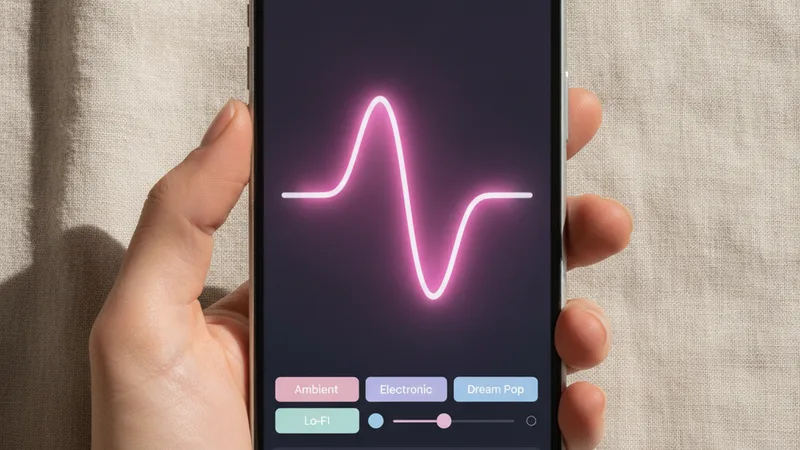
The workflow. Total time on a successful hyperpop run averages 4-5 minutes.
1. Open Muziko on iPhone or iPad. Switch to Write Lyrics mode for vocal hyperpop, Describe mode for instrumental.
2. Pick the genre tag. Pick Hyperpop if available. If not, Pop with explicit hyperpop redirection in the prompt, or EDM for the more electronic-leaning subgenres.
3. Pick a mood. Euphoric + playful are the two for most hyperpop tracks. Confident + euphoric for harder brat-pop crossover. Dreamy + playful for the more atmospheric subgenres.
4. Lead with the vocal direction. "Pitched-up vocal in the hyperpop tradition, shifted up 5-6 semitones with heavy hard-quantize autotune throughout the entire track, audible robotic character, no natural vocal moments."
5. Specify the synth direction. "Distorted maximalist supersaw lead synth with heavy saturation and chorus, multiple layered synth lines competing for space, sidechain compression pumping with the kick, pitched-up synth stabs on the chorus."
6. Specify the drum programming. "Glitched chaotic drum programming with sudden cuts and time-shifts, distorted kick samples, double-time hi-hats during the chorus, hyperpop drum aesthetic."
7. Set the tempo. 150-180 BPM is the hyperpop range. 160 BPM is a safe default. Brat-pop crossover at 130-150 BPM. Atmospheric hyperpop at 140-160 BPM.
8. Lyric direction if using Write Lyrics mode. Hyperpop lyrics often lean toward chaotic, internet-culture-aware, slightly absurdist content. Brat-pop lyrics lean toward party-confident with raw emotional honesty. Keep lyrics short — 4-6 lines is enough for the typical hyperpop hook.
9. Mastering for hyperpop. "Loud maximalist mastering with intentional clipping, pushed past normal streaming loudness targets, hyperpop loudness aesthetic, no clean digital polish."
10. Length. Hyperpop works best at 60-150 seconds. Generate at 90-120 seconds for most use cases.
11. Generate four to six takes. Listen for: pitched-up vocal authenticity, synth distortion character, drum chaos level, overall loudness. Pick the take where the aesthetic lands most cleanly.
For the full mobile workflow, the AI song generator for iPhone 2026 guide covers each creation mode in depth.
Matching hyperpop subgenre to production conventions
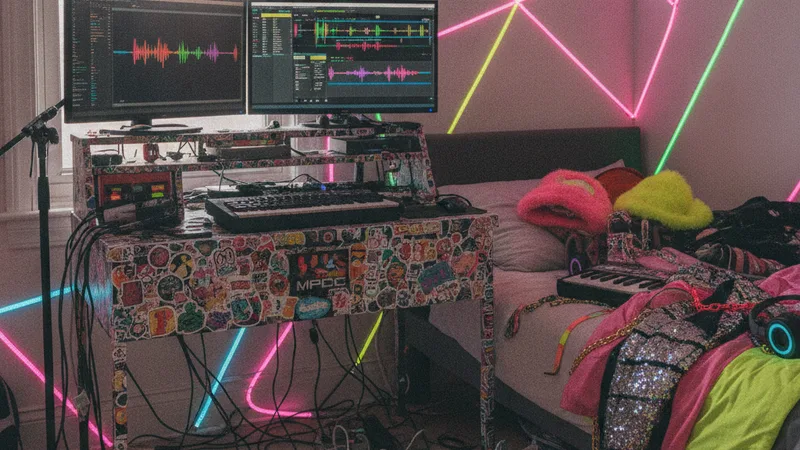
Hyperpop subgenres differ on tempo, intensity, atmosphere, and vocal aesthetic.
| Subgenre | Tempo | Vocal style | Synth character | Mood |
|---|---|---|---|---|
| Mainstream hyperpop (2023-2026) | 150-170 BPM | Pitched-up + autotune | Distorted maximalist supersaw | Euphoric + playful |
| Brat-pop / pop crossover | 130-150 BPM | Light pitched-up + heavy autotune | Polished distorted synth | Confident + euphoric |
| Glitch-pop | 140-160 BPM | Chopped + pitched | Glitched synth with cuts | Playful + chaotic |
| Bedroom hyperpop | 145-165 BPM | DIY lo-fi pitched vocal | Lo-fi distorted synth | Dreamy + playful |
| Hyperpop ballad | 100-130 BPM | Pitched-up + emotional autotune | Sustained distorted synth pad | Sentimental + dreamy |
| K-pop x hyperpop | 120-140 BPM | K-pop crossover vocal with autotune | Polished maximalist synth | Confident + euphoric |
| Latin x hyperpop | 95-115 BPM | Spanish pitched-up vocal | Reggaeton + hyperpop synth | Confident + playful |
| Drum and bass hyperpop | 165-180 BPM | Pitched-up + heavy autotune | Distorted DnB synth | Euphoric + chaotic |
| Hardstyle hyperpop | 145-160 BPM | Aggressive pitched-up | Hardstyle synth + saturation | Confident + aggressive |
| Avant-garde hyperpop | Variable | Experimental pitched | Experimental synth | Variable |
| Hyperpop-trap hybrid | 130-150 BPM | Pitched-up + trap autotune | Trap 808 + hyperpop synth | Confident + chaotic |
| PC Music revival | 140-170 BPM | Cartoon pitched-up | Bubblegum-bass synth | Playful + dreamy |
Pick the row matching what you want. For related genre work, see the AI EDM generator guide, AI K-pop generator guide, and AI hip-hop generator guide.
When AI hyperpop works — and the limits
Honest accounting.
Works:
- TikTok and Instagram Reels hyperpop background music for fashion content, beauty content, party content, gym edits.
- Songwriter demos for pop and hyperpop writers exploring the genre direction.
- Indie game and content creator background music for hyperpop-aesthetic visual content.
- Hyperpop-adjacent K-pop and pop crossover demos.
- Personal use for anyone wanting custom hyperpop tracks for personal listening.
Falls short:
- Serious artist releases for the hyperpop scene. The hyperpop audience is highly aware of the genre's artistic statements and tends to recognize AI-generated tracks as such. AI hyperpop doesn't replace SOPHIE-tier artistic work.
- Prompts that imitate specific living hyperpop producers. "In the style of A. G. Cook" or other named-producer prompts are prohibited and risk legal and platform-policy issues. Stay generic.
- Long-form serious hyperpop releases. Hyperpop works best at 60-150 seconds. Longer AI tracks tend to lose energy or feel repetitive.
For the broader licensing context, the can you sell AI-generated music legal guide covers commercial release questions.
Try the prompt now
Open Muziko on iPhone, switch to Describe mode (or Write Lyrics for vocal), pick Hyperpop genre (or Pop as fallback) and Euphoric mood, and paste:
"Hyperpop track at 160 BPM, euphoric and playful mood, pitched-up vocal shifted up 5-6 semitones with heavy hard-quantize autotune throughout the entire track and audible robotic character, distorted maximalist supersaw lead synth with heavy saturation and chorus, multiple layered synth lines competing for space, sidechain compression pumping with the kick, glitched chaotic drum programming with sudden cuts and time-shifts, distorted kick samples, double-time hi-hats during the chorus, pitched-up synth stabs on the chorus, ninety seconds total, loud maximalist mastering with intentional clipping pushed past normal streaming loudness targets, hyperpop loudness aesthetic, no clean digital polish."
Generate four to six takes. Listen on earbuds — laptop speakers hide the chaos and distortion that define the genre. Pick the take with the most authentic pitched-up vocal, the most distorted synth lead, and the highest overall energy level.
For other genre how-tos, see the AI EDM guide, AI K-pop guide, AI phonk guide, and AI Sweet 16 song guide for the broader teen-pop crossover.
Frequently asked questions
Can AI generate convincing hyperpop in 2026?
Yes for the mainstream brat-pop / hyperpop crossover, glitch-pop, K-pop hyperpop crossover, and TikTok-ready hyperpop hooks. AI music apps in 2026 produce demo-grade hyperpop when prompted with the right specificity. The four production elements that need to be in the prompt: pitched-up vocal shifted up 5-6 semitones with heavy hard-quantize autotune throughout, distorted maximalist supersaw lead synth with saturation and multiple competing synth lines, glitched chaotic drum programming with sudden cuts and time-shifts, and loud maximalist mastering with intentional clipping pushed past normal streaming loudness. Get all four right and AI produces convincing demo-grade hyperpop. Get any wrong — especially the pitched-up vocal — and the track reads as pop with autotune rather than as real hyperpop.
What BPM should hyperpop be?
150-180 BPM is the hyperpop range. Mainstream hyperpop runs 150-170 BPM. Brat-pop crossover runs 130-150 BPM. Glitch-pop runs 140-160 BPM. Hyperpop ballads run 100-130 BPM. K-pop hyperpop crossover runs 120-140 BPM. Drum and bass hyperpop runs 165-180 BPM. Hardstyle hyperpop runs 145-160 BPM. Match the BPM to the subgenre and prompt the exact number rather than vague tempo directions. The tempo carries the genre's energy — going slower than 130 BPM tends to slide into pop with hyperpop elements rather than hyperpop proper.
How do I get the pitched-up vocal right in AI hyperpop?
Lead with it in the prompt and be explicit about both the pitch shift and the autotune character. The phrase "pitched-up vocal shifted up 5-6 semitones with heavy hard-quantize autotune throughout the entire track, audible robotic character, no natural vocal moments" produces the right vocal aesthetic. Don't just prompt "autotune" — that produces pop-style autotune. Specify "hard-quantize" to lock the vocal to the chord tones, "throughout the entire track" to prevent the AI from using autotune only on the chorus, and "audible robotic character" to embrace rather than hide the autotune effect. Generate four to six takes minimum and pick the one where the vocal sounds most artificially pitched and processed — that's the take that lands the hyperpop aesthetic.
Is hyperpop still trending in 2026?
Yes, though the genre has matured from its 2020-2022 viral peak. The mainstream brat-pop crossover (Charli XCX brat-era influence) has pushed hyperpop production conventions into mainstream pop, K-pop, and Latin urbano through 2024-2026. The PC Music / 100 gecs / SOPHIE-rooted experimental hyperpop scene continues at a smaller scale on SoundCloud and Bandcamp. TikTok hyperpop hooks remain a consistent category for fashion content, beauty content, and gym edits. The genre's specific aesthetic — pitched-up vocals, distorted synths, chaotic drums — has become part of the broader pop production vocabulary, so even tracks that aren't labeled as "hyperpop" frequently use hyperpop production techniques in 2026.
Should hyperpop tracks be short or long?
Short. Most successful hyperpop tracks run 60-150 seconds. The genre's aesthetic — chaotic maximalist production, pitched-up vocals, extreme dynamics — works at short lengths and tends to exhaust the listener at lengths over 3 minutes. For TikTok and short-form video use, 30-90 seconds is the sweet spot. For dedicated listening tracks, 90-150 seconds works. For album tracks where the producer wants more structure, 2-3 minutes with explicit structural variation can work but requires careful prompt direction. AI tracks longer than 3 minutes in hyperpop tend to feel exhausting; even fans of the genre often prefer shorter tracks.
Is it legal to release AI hyperpop tracks on streaming?
Yes, when generated on the paid tier of a reputable AI music app like Muziko Pro at $34.99 per year, Suno Pro, or Udio Pro. The paid tier grants commercial usage rights including release on Spotify, Apple Music, YouTube Music, Amazon Music, and SoundCloud through distribution services like DistroKid or TuneCore. Disclose AI use where required — all major streaming platforms in 2026 ask for AI content disclosure on uploads. Never prompt the AI to imitate a specific living hyperpop producer's style; the hyperpop scene has well-known artists whose names should not appear in commercial prompts. The hyperpop audience tends to recognize AI-generated tracks and respond critically to releases that aren't transparent about AI use — be honest in your disclosures and your marketing.
Try everything you just read about. Muziko is free to download.

![AI Lyrics Generator: Write Song Lyrics Free [Tested 2026]](/_next/image?url=%2Fimages%2Fblog%2Fai-lyrics-generator%2Fhero.webp&w=3840&q=75)
![AI Amapiano Generator: Log Drum Tracks [Tested 2026]](/_next/image?url=%2Fimages%2Fblog%2Fai-amapiano-generator-log-drum-tracks%2Fhero.webp&w=3840&q=75)