
![AI Background Music for Cafes: Skip the $420 Fee [2026]](/_next/image?url=%2Fimages%2Fblog%2Fai-background-music-for-cafes-and-shops%2Fhero.webp&w=3840&q=75)
AI Background Music for Cafes: Skip the $420 Fee [2026]
Playing Spotify in your cafe can cost you a licensing fee. AI-generated background music doesn't. I built a six-hour playlist for one shop and priced it out.
A friend of mine opened a coffee shop in 2024. About eight months in, she got a letter from a performing rights organization explaining that the Spotify playlist she'd been running through her ceiling speakers required a license, and offering her an annual rate to resolve it.
Her reaction was the same one most small business owners have, which is roughly: I pay for Spotify already. And that's the misunderstanding at the center of this whole topic. A consumer streaming subscription buys you the right to listen. It does not buy you the right to play music to a room full of paying customers. Those are legally separate things, and the second one costs considerably more.
She's not unusual. In a small survey I ran of independent shop owners, most were either paying for a commercial music service, quietly running a personal Spotify account and hoping, or playing nothing at all because the whole thing seemed like a hassle.
There's a fourth option that didn't exist a few years ago, which is generating your own music. I spent a couple of weeks building a full day's worth of background music for a real cafe to see whether it holds up. It mostly does, with some real caveats about where it doesn't.
One note before anything else: nothing here is legal advice. Licensing rules vary by country and by situation, and if you get a letter from a rights organization you should talk to them or to a lawyer rather than to a blog post.
Why your personal Spotify account is the wrong tool
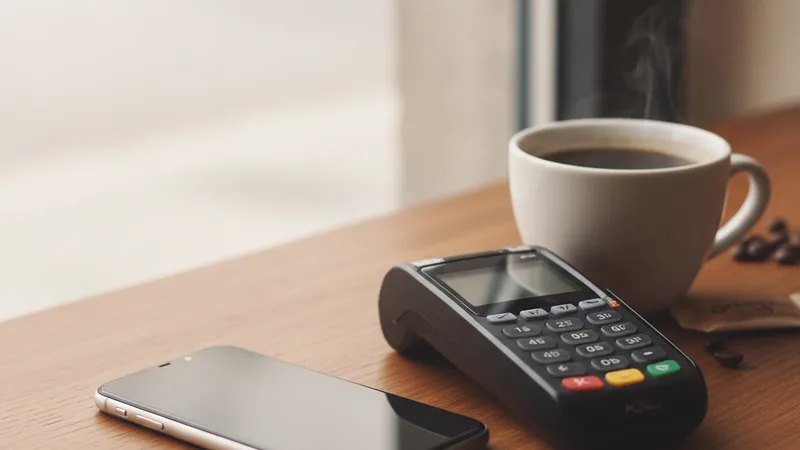
Consumer streaming terms prohibit commercial use outright. This isn't a grey area or an enforcement question. The consumer terms for the major streaming services restrict playback to personal, non-commercial use. Playing them in a business is outside what you agreed to, regardless of whether anyone notices.
Public performance is a separate right. Under copyright law, playing recorded music where the public can hear it is a "public performance," and that right is licensed separately from the recording itself. In the US it's administered by performing rights organizations like ASCAP, BMI, SESAC and GMR. Most other countries have an equivalent body.
You may need more than one license. Because the four US organizations represent different catalogues, a business playing commercial radio hits often ends up needing licenses from several of them to be fully covered. This is the part that surprises people most.
The small business exemption probably doesn't help you. There's a provision in US copyright law that exempts smaller premises under certain size and speaker limits, and business owners hear about it and assume they're covered. The catch is that it applies to broadcast transmissions, meaning radio and TV. Streaming a playlist or playing your own recordings generally falls outside it. Confirm your own situation rather than taking my word for it.
The commercial services solve it but they aren't free. Licensed business music services typically run somewhere in the range of $25 to $40 per month per location. Call it $420 a year at the midpoint. For a single cafe that's tolerable. For someone running three locations it's real money, and it recurs forever.
What generating your own background music actually solves

- The public performance question mostly goes away. If nobody's copyrighted composition is being performed, there's no songwriter's royalty to collect. This is the same logic that makes production libraries work, and it's the core of the argument.
- The music fits your room instead of a category. Streaming services offer you "Coffee Shop." You can generate something specific to your actual space, your actual customers, and the actual time of day.
- It costs the same whether you have one location or five. A subscription generates as much music as you need. The per-location math that makes commercial services expensive doesn't apply.
- You control the energy curve through the day. Quiet at 7am, brighter at the lunch rush, calmer again at 4pm. Most shops run one playlist all day because building three is work. Generating three is not.
- No vocals means no lyrics to worry about. Instrumental generation sidesteps the awkward moment when a track with unexpected lyrics plays during a family lunch.
- It's yours. You can use it in your social videos too, which is a genuine bonus. Our guide to selling and using AI music commercially covers what the Pro licence does and doesn't cover.
Step-by-step: building a full day of shop music
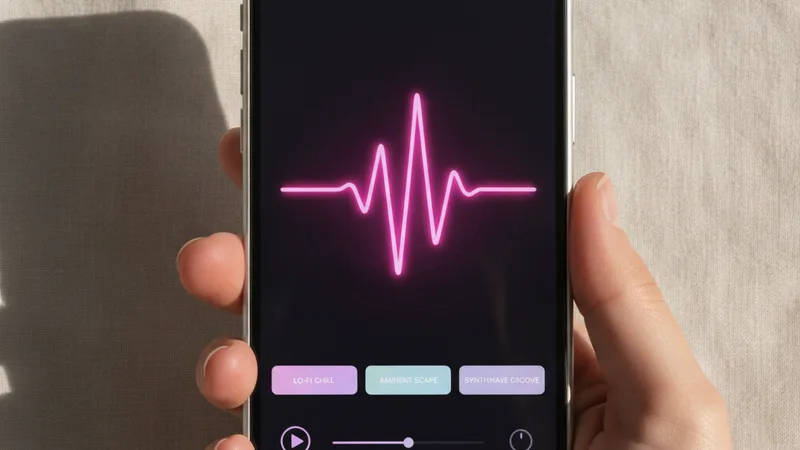
This took me about two hours for roughly six hours of music, spread over three energy zones.
- Decide your three zones first. Morning (quiet, warm), midday (brighter, more rhythmic), evening or late afternoon (calmer, warmer again). Most shops need exactly three.
- Sit in your own room and listen. Espresso machine, extractor fan, door, conversation. That noise floor determines everything about what will work. A shop with a loud grinder needs music with more midrange presence than a quiet bookshop.
- Open Muziko and choose Describe mode. You want instrumentals throughout, so Write Lyrics isn't relevant here.
- Build one prompt per zone, then generate eight to ten variations of each by changing one element at a time. Variations of one prompt sequence far better than unrelated prompts.
- Ask for no vocals explicitly in every prompt. This is the single most important instruction for commercial spaces.
- Keep the dynamic range narrow. Ask for "consistent volume, no dramatic build, no sudden dynamic changes." Background music that swells makes staff reach for the volume knob.
- Generate at least 30 tracks per zone if you want a day without obvious repetition. At 8 to 15 seconds each, this is the fast part.
- Listen back in the actual room, at actual volume, with the machines running. This is the step everyone skips and it's the one that matters.
- Cut anything with a strong melodic hook. Memorable is bad here. A melody your barista can hum by Thursday is a melody they will hate by the following Tuesday.
- Sequence into three playlists in the Files app or your player of choice, and set them on a schedule if your system supports it.
- Ask your staff after a week. They hear it forty hours a week and you don't. They will tell you exactly which three tracks to delete.
Writing prompts for music that nobody notices
Background music has an unusual brief: it needs to be good enough to improve the room and forgettable enough that nobody focuses on it. That's almost the opposite of how you'd prompt for anything else.
Ask for restraint in the arrangement. Sparse, two or three instruments only, uncluttered. Busy arrangements compete with conversation and make a room feel more crowded than it is.
Specify a narrow dynamic range. Consistent volume throughout, no dramatic build, no sudden changes. This is the most practical instruction in the whole list, and the one that most reduces staff complaints.
Avoid strong hooks on purpose. No prominent melody, gentle harmonic movement, understated. You want texture rather than tunes.
Match the tempo to the behaviour you want. Slower music tends to slow people down, which suits a wine bar and hurts a lunch queue. 70 to 90 BPM for lingering, 100 to 120 for turnover.
Name warm acoustic instruments for hospitality. Rhodes, nylon-string guitar, upright bass, brushed drums, vibraphone. These read as inviting in a way synth pads generally don't.
Say "no vocals" every single time. It's worth the repetition. One unexpected lyric at the wrong moment undoes a lot of goodwill.
A prompt that worked well for the morning zone:
Warm instrumental jazz at 78 BPM, brushed drums, upright bass, soft Rhodes electric piano and gentle nylon-string guitar, sparse arrangement with only three instruments, consistent volume with no dramatic build, no prominent melody, relaxed and unobtrusive, no vocals
And the midday counterpart:
Upbeat instrumental bossa-influenced groove at 112 BPM, nylon-string guitar, light percussion, warm upright bass, gentle vibraphone, consistent energy throughout, understated with no strong hook, bright and welcoming, no vocals
Business type to style: what to generate

| Business | Style | Tempo | Goal | Notes |
|---|---|---|---|---|
| Coffee shop, morning | Warm instrumental jazz | 70-85 | Calm, welcoming | Brushed drums, Rhodes, very sparse. |
| Coffee shop, midday | Bossa or soul-jazz | 100-115 | Gentle turnover | Lift energy without raising volume. |
| Brunch restaurant | Instrumental soul | 85-100 | Warm, social | See soul generation. |
| Fine dining | Neoclassical piano | 60-75 | Understated | Ask for felt piano, very quiet. |
| Wine bar, evening | Downtempo jazz | 70-85 | Slow lingering | Slower tempo increases dwell time. |
| Fast casual | Light indie instrumental | 110-125 | Faster turnover | Higher tempo moves queues. |
| Boutique clothing | Chilled house | 110-120 | Modern, upbeat | Bridges to house music. |
| Bookshop | Ambient or neoclassical | Beatless-70 | Quiet focus | See ambient generation. |
| Salon or barbershop | Neo-soul or lo-fi | 80-95 | Relaxed, current | Long sessions need variety. |
| Yoga or wellness studio | Warm ambient drone | Beatless | Calm, spacious | No transients at all. |
| Gym or fitness studio | Driving electronic | 125-140 | Energy | See workout music. |
| Bakery, early morning | Acoustic folk instrumental | 75-90 | Homely, warm | Nylon guitar and light percussion. |
| Co-working space | Minimal ambient | 60-75 | Non-distracting | Overlaps focus music. |
| Retail, general | Mid-tempo instrumental pop | 100-115 | Neutral, pleasant | The safest default. |
| Waiting room or clinic | Soft neoclassical | 60-70 | Calming | Avoid anything melancholy. |
When this works, and when it doesn't
Works well:
- Single independent venues. One owner, one room, full control over what plays. This is the ideal case and the math is clearly favourable.
- Multi-location small chains. The per-location pricing of commercial services is exactly what makes generating your own attractive at three or more sites.
- Businesses that want a specific identity. If "Coffee Shop Vibes" doesn't sound like your room, this is the only affordable way to get something that does.
- Quiet, low-attention environments. Bookshops, clinics, co-working spaces, waiting areas. The output is genuinely well suited to these.
- Owners who also make social content. The same tracks work under your video posts without any claim risk.
Falls short:
- Venues where the music is the draw. A bar known for its record collection is selling curation. Generated instrumentals cannot do that job and you shouldn't ask them to.
- Anywhere customers expect familiar songs. A 90s-themed diner needs actual 90s songs. There's no substitute.
- Businesses that want vocals. Instrumental output is the strong suit here. Vocal background music is much harder to make forgettable in the right way.
- Anyone hoping to avoid all licensing questions everywhere. Rules differ by country, and some jurisdictions have levies that work differently. Check locally rather than assuming.
- Time-poor owners who want zero setup. A commercial service is a card payment and a login. This is two hours of work up front. That trade is worth it for some people and not others.
- Very large spaces with zoned audio. Once you're managing many zones across a big footprint, purpose-built commercial systems earn their fee.
Try this prompt right now
Open Muziko on the App Store, pick Describe mode, and run this:
Warm instrumental jazz at 78 BPM, brushed drums, upright bass, soft Rhodes electric piano and gentle nylon-string guitar, sparse arrangement with only three instruments, consistent volume with no dramatic build, no prominent melody, relaxed and unobtrusive, no vocals
Generate five takes, then do the only test that counts: play them in your actual room, at the volume you'd actually use, while the machines are running and somebody is talking. Background music that sounds lovely on headphones frequently disappears completely under an espresso grinder, and music that seems too plain on headphones is often exactly right in the room.
You're listening for one thing specifically, which is whether you stop noticing it after about thirty seconds. If you keep noticing it, it's too interesting for the job. That sounds like faint praise and it isn't. For more on refining prompts efficiently, our prompt-craft guide goes deeper.
Frequently asked questions
Do I need a licence to play music in my cafe or shop?
In most countries, playing recorded music where the public can hear it is a public performance and requires a licence, separate from any subscription you already pay for. In the US this is handled by organisations such as ASCAP, BMI, SESAC and GMR, and because they represent different catalogues a business may need more than one. Rules vary by country and situation, so confirm with the relevant organisation or a lawyer rather than relying on general guidance including this article.
Can I just use my personal Spotify account in my business?
The consumer terms of the major streaming services restrict playback to personal, non-commercial use, so playing a personal account in a business is outside what you agreed to. That's a contractual issue with the service in addition to any public performance licensing question. Most services offer a separate commercial product, which is the intended route if you want to stream commercial music.
Does using AI-generated music avoid performance licensing fees?
The reasoning is the same as for production music libraries. Performance royalties exist to compensate the writers and publishers of copyrighted compositions, so if no such composition is being performed there's generally no royalty to collect. Tracks generated under a Muziko Pro subscription can be used commercially. Licensing rules differ by country, so confirm your local situation rather than assuming.
How much does background music for a business normally cost?
Licensed commercial background music services typically run around $25 to $40 per month per location, or roughly $420 a year at the midpoint. The per-location structure is what makes it add up for anyone running more than one site, since a three-location business pays three times over for essentially the same service.
How many tracks do I need for a full day of shop music?
Plan on about 30 tracks per energy zone, and most shops need three zones covering morning, midday and late afternoon. That's roughly 90 tracks for a day without obvious repetition. Build each zone from variations of a single prompt, changing one element at a time, so the sequence feels intentional rather than shuffled. Generating that volume takes a couple of hours.
What makes good background music different from regular music?
Good background music is deliberately unmemorable. It wants a sparse arrangement of two or three instruments, a narrow dynamic range with no dramatic build, no prominent melodic hook and no vocals. A strong melody is a liability here, because staff hear the same playlist forty hours a week and anything catchy becomes unbearable fast. Test it in the room with the machines running, not on headphones.
Try everything you just read about. Muziko is free to download.

![AI Lyrics Generator: Write Song Lyrics Free [Tested 2026]](/_next/image?url=%2Fimages%2Fblog%2Fai-lyrics-generator%2Fhero.webp&w=3840&q=75)
![AI Amapiano Generator: Log Drum Tracks [Tested 2026]](/_next/image?url=%2Fimages%2Fblog%2Fai-amapiano-generator-log-drum-tracks%2Fhero.webp&w=3840&q=75)