
![AI Soul Music Generator: Motown Warmth [Tested 2026]](/_next/image?url=%2Fimages%2Fblog%2Fai-soul-music-generator-motown-warmth%2Fhero.webp&w=3840&q=75)
AI Soul Music Generator: Motown Warmth [Tested 2026]
Soul lives on imperfection — the flat note, the late snare, the crack in the voice. I tested 40+ AI takes: Motown, Southern soul, and neo-soul.
The thing about soul music is that almost everything that makes it great is technically a mistake.
The snare lands a hair behind the beat. The horn section isn't quite in tune with itself. The singer pushes past the top of their comfortable range and their voice frays. The bass player is doing something rhythmically that no notation software would agree with. Strip all of that out — quantize the drums, tune the horns, comp the vocal until it's clean — and you get something that is technically better and emotionally dead. Anyone who has spent time in a studio has watched this happen.
Which sets up an obvious problem for AI generation. Models are trained toward the center. They produce the average, and the average is clean. So when I started testing soul seriously, the question wasn't whether the output would be competent — I assumed it would be — but whether it could be anything other than polite.
Two weeks and forty-odd takes later, the answer is more interesting than I expected. The Motown side works better than the Southern soul side. And the single most useful prompt word in the whole genre turned out to be "unquantized."
Why "soul music" prompts come out polite
The word "soul" has drifted. In current usage it tags anything smooth and vaguely R&B-adjacent — a lot of what gets labelled soul now is closer to lounge pop. Prompt the bare word and you'll land in that drift, not in 1967. You have to specify the era or the city.
Grid-perfect timing kills the genre. The Motown rhythm section played with a specific forward lean, and Southern soul played dramatically behind the beat. That push-and-drag relationship is the music. Generation defaults to metronomic, and metronomic soul sounds like a backing track for a car commercial.
Horn sections get sanitized. Real soul horns are three or four players in a room, slightly out of tune with each other, with audible breath and buzz. What you usually get is a smooth synthesized brass patch — the right notes with none of the friction.
Vocals come out too controlled. This is the hardest limitation. Soul singing is defined by strain at the top of the range, by the audible cost of the note. Generated vocals are pitch-centered and comfortable. You can get pleasant. Getting desperate is another matter.
The arrangement is too full. Classic soul leaves enormous space — often just drums, bass, a guitar skank on the two and four, and a voice. Models fill arrangements, which turns a spare Stax record into something busier and less powerful.
What AI soul generation genuinely gets right

Push past the defaults and there's real value here:
- Motown-style uptempo tracks. The Motown sound is arrangement-driven — tambourine on every beat, walking bass, bright piano eighths, call-and-response backing vocals. Those are describable, and the output is genuinely convincing.
- Neo-soul instrumentals. Warm Rhodes, extended chords, loose drums. This is the strongest category in the whole genre — arguably better than anything else I tested here.
- Personal occasion songs with real warmth. A soul ballad for an anniversary hits differently than a pop one. Pairs well with our anniversary song guide.
- Wedding and first-dance material. Soul is the single most requested register for this, and the ballad output holds up. See the first-dance guide for the practical side.
- Sample-style loops for producers. Generate a warm Rhodes-and-drums bed, chop it, build on it. It's the same workflow producers already use with old records, minus the clearance problem.
- Copyright-clear vintage-flavored beds. Period-flavored music for video is a claim minefield. Generated tracks avoid it entirely.
Step-by-step: making a soul track in Muziko
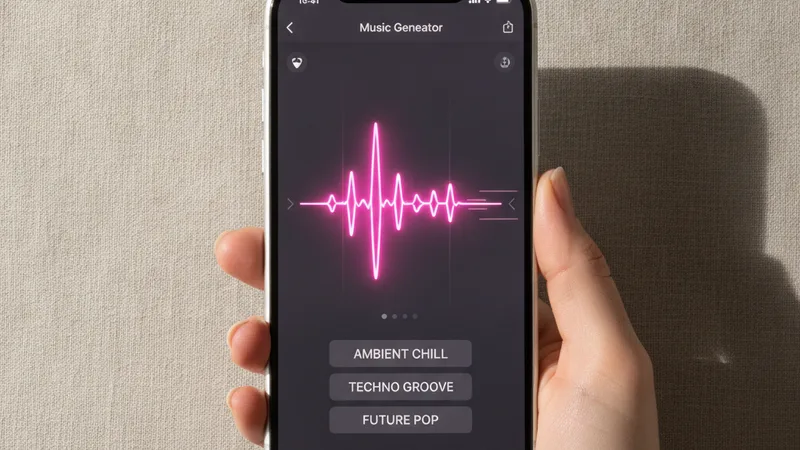
- Pick a city and a decade before anything else. Detroit 1966, Memphis 1968, Philadelphia 1973, or neo-soul 1998. Each is a distinct sound and the model knows all four.
- Open Muziko and choose your mode. Describe for instrumentals; Write Lyrics if you want a vocal soul song with your own words.
- Name the rhythm feel explicitly. Unquantized, played behind the beat, loose and human. This is the highest-leverage word in the genre — "unquantized" alone measurably changes the output.
- Specify real instruments, not categories. Rhodes electric piano, Wurlitzer, Hammond B3 organ, tambourine, upright bass, muted trumpet. Categories get you patches; names get you instruments.
- Ask for analog character. Tape saturation, warm, slightly overdriven, vintage ribbon microphone, mono. Mono is an underrated request for pre-1970 styles.
- Describe the horn section as people. Small three-piece horn section, slightly out of tune, audible breath produces something far better than "horns."
- Ask for space. Sparse arrangement, just drums bass and one guitar in the verse. Fight the model's instinct to fill.
- Set the mood tag — Happy or Energetic for Motown, Romantic for ballads, Chill for neo-soul.
- Generate four takes. The rhythmic feel varies noticeably between takes, and feel is the whole thing here.
- Judge the drums first, vocals second. If the drums are stiff, nothing else will save the take. Restart rather than trying to fix it downstream.
- Export and layer if producing. The GarageBand workflow guide covers the import path.
Writing the prompt that has grit in it
Soul prompting is mostly about asking for imperfection on purpose, which feels wrong until you hear the difference.
Lead with a city and year. Detroit 1966 Motown, Memphis 1968 Southern soul, Philadelphia 1973 orchestral soul, late-90s neo-soul. These four phrases do more work than any adjective.
Say "unquantized" and mean it. Also useful: played behind the beat, loose swinging feel, live band in one room, slight timing drift. This is the single biggest lever.
Name the drum sound. Dry tight snare with tape compression, tambourine on every beat, ghost notes on the snare. Motown's tambourine is arguably its signature and it costs three words to request.
Ask for analog imperfection directly. Tape saturation, warm tape hiss, slightly overdriven console, mono mix, vintage ribbon mic. Clean soul sounds like a tribute band.
Describe the vocal by its effort. Raw gospel-trained voice with grit and strain at the top of the range, hoarse and pleading. You won't fully get there, but you'll get closer than with "soulful."
Use the harmonic vocabulary of the substyle. Motown wants simple diatonic changes with a strong backbeat. Neo-soul wants extended ninth and eleventh chords, jazzy voicings, loose pocket. Getting these backwards produces something that sounds vaguely wrong in a way most listeners can't name.
A Motown-leaning prompt that worked well:
Detroit 1966 Motown soul at 128 BPM, tambourine on every beat, walking upright bass, bright piano eighth notes, small three-piece horn section slightly out of tune with audible breath, dry tight snare with tape compression, unquantized and played with a forward lean, mono mix with tape saturation, joyful and driving
And a neo-soul counterpart:
Late-90s neo-soul at 82 BPM, warm Rhodes electric piano with extended ninth chords, loose unquantized drums played well behind the beat, round muted bass, subtle vinyl crackle, sparse arrangement, intimate and warm, instrumental
Soul substyle chart: matching era to use case
| Use case | Substyle | Tempo | Key prompt words | Notes |
|---|---|---|---|---|
| Upbeat celebration | Detroit Motown | 120-135 | Tambourine, walking bass, bright | Strongest output in the genre. |
| Raw emotional ballad | Memphis / Stax soul | 60-75 | Sparse, dry, behind the beat | Ask for very few instruments. |
| Wedding first dance | Soul ballad | 65-80 | Strings, warm, gospel-tinged | See the first-dance guide. |
| Lush romantic | Philly soul | 90-110 | Sweeping strings, vibraphone | The most orchestral substyle. |
| Modern chill / study | Neo-soul | 75-90 | Rhodes, extended chords, loose | Excellent output. Very reliable. |
| Producer sample loop | Neo-soul instrumental | 80-95 | Vinyl crackle, sparse, warm | Chop it like a record. |
| Gospel-adjacent uplift | Southern gospel soul | 70-95 | Hammond B3, choir, call-response | Overlaps gospel generation. |
| Funky and rhythmic | Soul-funk crossover | 100-115 | Clavinet, syncopated, tight horns | Bridges to funk. |
| Blues-leaning | Soul blues | 60-80 | Guitar, minor, mournful | See blues generation. |
| Retro advert / video bed | Motown instrumental | 120-130 | Bright, clean, upbeat, no vocal | Copyright-clear period flavor. |
| Anniversary / gift song | Soul ballad with lyrics | 65-80 | Warm, intimate, personal | Use Write Lyrics mode. |
| Late-night mood | Quiet storm soul | 70-85 | Smooth, sax, electric piano | The one place polish is correct. |
| Podcast / video intro | Neo-soul short loop | 80-90 | Rhodes, clean loop, sparse | Keep under 20 seconds usable. |
| Modern R&B crossover | Contemporary soul | 85-100 | Polished, layered vocals | Overlaps modern R&B. |
| Film / period scene | 60s soul instrumental | 110-130 | Mono, tape, vintage mic | Ask for mono explicitly. |
When AI soul works, and when it doesn't
Works well:
- Neo-soul instrumentals. The best results in the genre by a clear margin. Warm, loose, genuinely pleasant to listen to.
- Uptempo Motown. Arrangement-driven, so it responds well to detailed description. Tambourine and walking bass do a lot of the identification work.
- Ballads for personal occasions. Weddings, anniversaries, memorials. The emotional register is close enough, and the personal lyrics carry the rest.
- Producer loops and beds. As sample-style raw material this is genuinely useful and clearance-free.
- Period flavor for video. Convincing enough for a scene, without licensing a real record.
Falls short:
- Vocal grit. The core limitation. Soul singing depends on audible strain, and generated vocals stay comfortable and pitch-centered. This is the gap you'll hear first.
- Deep Southern soul. Stax-style rawness depends on sparseness and rhythmic drag that the model resists even when prompted hard.
- Real horn-section character. You'll get brass. You won't often get three people in a room slightly disagreeing.
- Improvisational feel. The best soul performances sound like decisions being made in the moment. Generation sounds decided in advance.
- Vocal ad-libs and runs. The trailing improvisation over an outro is a defining feature and it comes out generic.
- Genuine dynamic build. Soul builds through performance intensity rather than added layers, and models build by adding layers.
Try this prompt right now
Open Muziko on the App Store, choose Describe mode, and run this:
Detroit 1966 Motown soul at 128 BPM, tambourine on every beat, walking upright bass, bright piano eighth notes, small three-piece horn section slightly out of tune with audible breath, dry tight snare with tape compression, unquantized and played with a forward lean, mono mix with tape saturation, joyful and driving
Generate four takes, roughly ten seconds each. Listen to the drums and nothing else on the first pass. You're checking one thing: does the snare sit exactly on the grid, or does it lean slightly forward against the bass? That lean is the entire Motown feel, and it's the difference between a track that sounds like the era and one that sounds like a karaoke backing.
Then remove "unquantized and played with a forward lean" and run it again. The takes will be technically cleaner and noticeably worse, which is the most useful thing you can learn about this genre in twenty seconds. Our prompt-craft guide covers this single-variable method in more depth.
Frequently asked questions
Can AI make convincing soul music?
It handles arrangement-driven soul well — particularly uptempo Motown and neo-soul instrumentals — because those styles are defined by describable elements like tambourine placement, walking bass, Rhodes voicings and loose drums. Where it falls short is vocal grit. Soul singing depends on audible strain at the top of a singer's range, and generated vocals stay comfortable and pitch-centered. For instrumentals the results are genuinely strong; for vocal tracks they're pleasant rather than raw.
What's the single most useful word in a soul music prompt?
"Unquantized." Generation models default to metronomic timing, and grid-perfect timing is what makes soul sound like a backing track. Adding unquantized, played behind the beat, or loose and human measurably changes the rhythmic feel of the output. In testing it was the single highest-leverage change — more impactful than any instrument or adjective choice.
How do I get a Motown sound specifically instead of generic soul?
Name the city and the year rather than the genre. Detroit 1966 Motown pulls a far more specific sound than "soul," which has drifted in modern usage toward anything smooth and R&B-adjacent. Then add the three signature elements: tambourine on every beat, a walking bass line, and bright piano eighth notes. Those three details do most of the identification work on their own.
Which soul substyle works best with AI generation?
Neo-soul instrumentals come out strongest, followed by uptempo Motown. Neo-soul works because its defining qualities are warm Rhodes tone, extended jazz chord voicings and a loose pocket — all easy to specify. Deep Southern soul in the Stax tradition is the hardest, because it depends on sparseness and heavy rhythmic drag that the model resists even under direct instruction.
Can I use AI soul music for a wedding first dance?
Yes, and it's one of the more popular uses. Soul ballads are the most requested register for first dances, and the ballad output holds up well because the personal lyrics carry much of the emotional weight. Use Write Lyrics mode so you can put real details into the words, keep the tempo between 65 and 80 BPM, and ask for a sparse warm arrangement with strings.
Can I sell or release AI-generated soul music?
Tracks generated under a Muziko Pro subscription can be used commercially, including in releases, client work and video content. This matters more in soul than in most genres, because period-flavored music for video is otherwise a copyright minefield and licensing a real vintage record is expensive and slow. Our guide to selling AI-generated music covers the licensing details in full.
Try everything you just read about. Muziko is free to download.
![AI Funk Generator: Heavy Grooves That Hit [Tested]](/_next/image?url=%2Fimages%2Fblog%2Fai-funk-generator-heavy-grooves-that-hit%2Fhero.webp&w=3840&q=75)
![AI Blues Generator: Delta, Chicago & Soul Blues [Tested]](/_next/image?url=%2Fimages%2Fblog%2Fai-blues-generator-delta-chicago-soul-blues%2Fhero.webp&w=3840&q=75)
![AI Amapiano Generator: Log Drum Tracks [Tested 2026]](/_next/image?url=%2Fimages%2Fblog%2Fai-amapiano-generator-log-drum-tracks%2Fhero.webp&w=3840&q=75)