
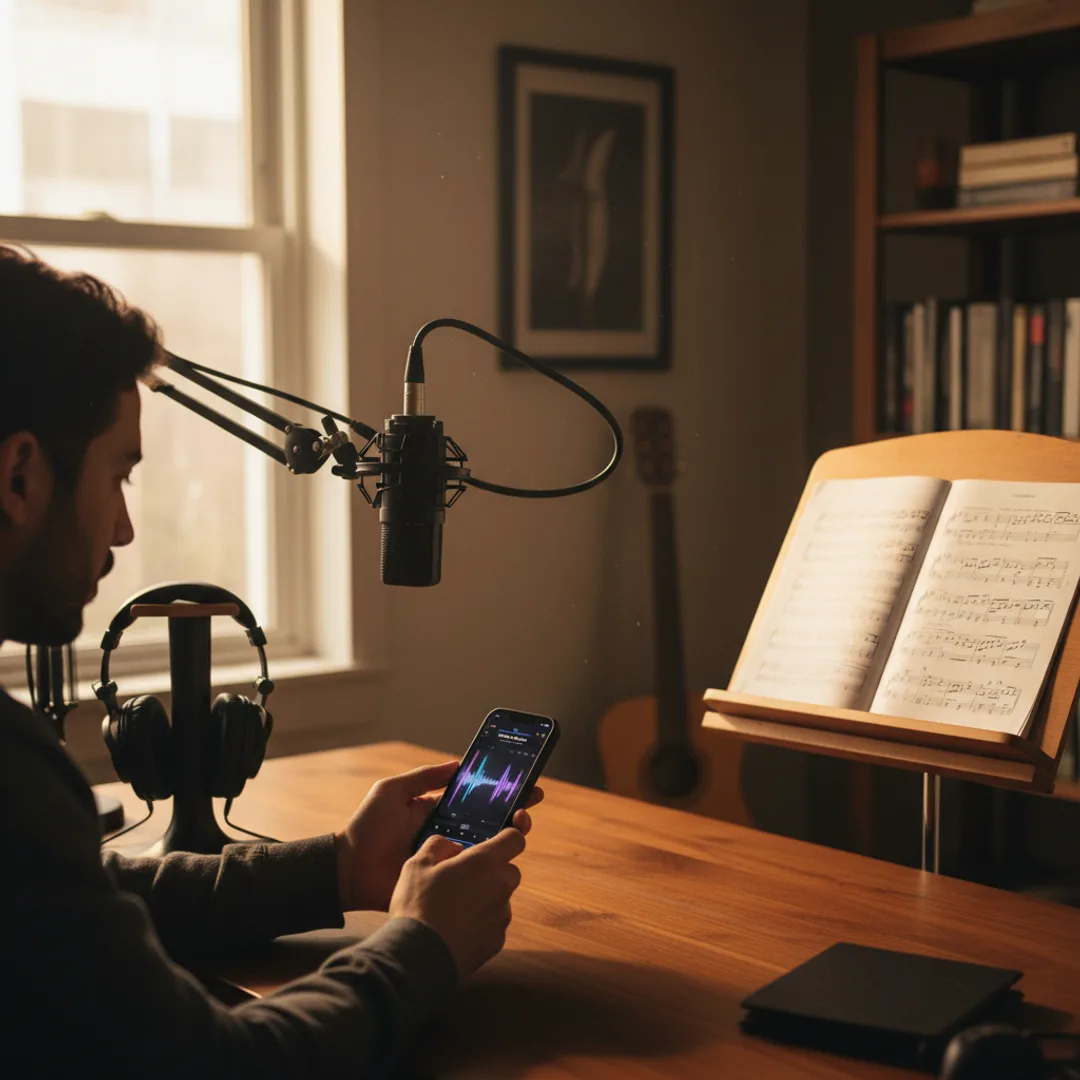
AI Cover Song Generator: How to Make a Legal Cover
How to make AI cover songs legally in 2026 — mechanical licensing, voice cloning limits, distribution rules, and the safe path from generation to publication.
Two things to clarify up front before diving in. First: this article is not legal advice. Music licensing law is complex, jurisdiction-specific, and evolves quickly — especially around AI. If you plan to release a commercial AI cover song, talk to a music attorney before you publish. Second: there is a clear legal path to making AI cover songs, and there is a clear illegal path, and a lot of online content blurs the two together. I want to be careful here so that creators reading this understand the difference and stay on the legal side.
This is the case for clear-eyed AI cover song production that almost no AI music guide handles honestly. The short version: covering a published song with proper mechanical licensing has been legal for over a century — there is a US compulsory license framework that has supported cover albums by every major artist for decades. AI can be part of producing a cover within that framework. What AI cannot legally do is replicate a specific living artist's voice without their consent, or distribute a cover without paying the underlying songwriter the mechanical royalty they are owed.
This guide is the legal-pathway workflow I have refined through several covered tracks of my own and conversations with music attorneys. The mechanical licensing process, the voice-clone limits, the distribution rules, the platform policies, and the step-by-step from idea to legally distributed AI cover song in 2026.
How cover song law actually works (short version)
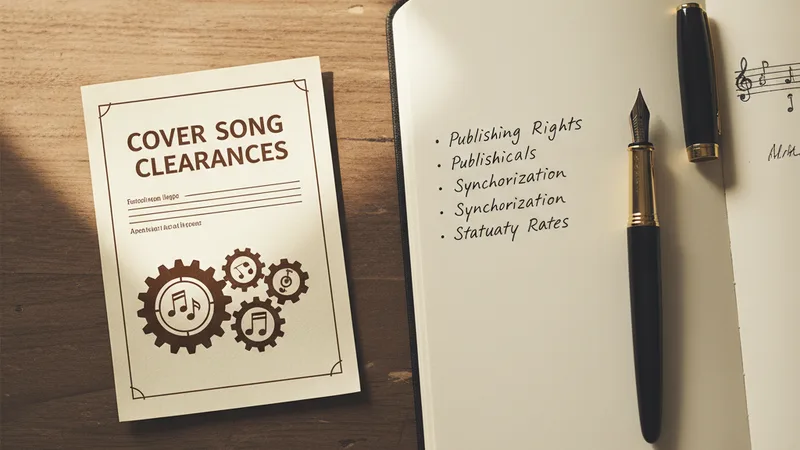
A few specifics about cover song law that almost no creator fully understands when they start.
The US has a compulsory mechanical license framework. Section 115 of the US Copyright Act creates a right that any artist can cover any previously released commercially distributed song without negotiating individually with the original songwriter — provided you pay the statutory mechanical royalty per copy distributed. As of 2026 in the US the standard mechanical rate is roughly 9.1 cents per copy (or 1.75 cents per minute for songs over 5 minutes). The exact numbers update over time; check the US Copyright Royalty Board or your licensing service for current rates.
Mechanical licensing services handle the paperwork. You don't have to negotiate directly with the songwriter or publisher. Services like Easy Song Licensing, Songfile (from the Harry Fox Agency), Loudr-replacement services, and the mechanical license features built into distribution services like DistroKid or TuneCore handle the paperwork. You pay them; they pay the songwriter; you legally distribute the cover.
This covers the song (composition) — not the original recording. The compulsory mechanical license lets you record your own new version of the underlying composition. It does not give you any right to use the original artist's recording, vocal performance, instrumental track, or production. If you want to use elements of the original recording (sample, vocal track, etc.), that's a different and more complex licensing situation requiring separate negotiation with the master recording owner (usually the label).
International cover licensing is more complex. Outside the US, covers are licensed differently in different jurisdictions. The UK uses MCPS (Mechanical-Copyright Protection Society). Germany uses GEMA. Canada uses CMRRA. Most countries have an equivalent system. International commercial distribution may require licenses in multiple jurisdictions — handled through your distribution service for major platforms but worth verifying.
Non-commercial covers (live performance, YouTube videos, etc.) have separate rules. YouTube has direct licensing deals with major publishers for cover videos. SoundCloud has some licensing arrangements. Live performance covers are licensed through performance rights organizations (ASCAP, BMI, SESAC in the US) usually paid by the venue. The rules differ from mechanical licensing for recorded releases.
For the broader licensing context across AI music more generally, the can you sell AI-generated music legal guide covers the foundational rights questions for AI-generated original work.
What AI can legally do for cover songs
Honest accounting of where AI music tools fit into the legal cover song workflow.
What AI can legally do:
- Generate a backing track in any genre style. An acoustic version of a pop hit, a bluegrass version of a hip-hop track, a piano ballad version of a rock anthem, an EDM remix of a country song. The underlying composition is licensed; the new production is your creative interpretation.
- Provide a generic AI vocal that is not imitating any specific artist. Most paid commercial AI music apps offer vocal generation in male/female/various styles that are not modeled on specific living artists. These generic vocals are fine to use with proper mechanical licensing.
- Speed up the production process. Generate the cover instrumental in five minutes instead of booking studio time. Iterate on different genre treatments quickly. Test multiple production approaches before committing.
- Make covers economically viable that would otherwise not be. Indie artists who wanted to release a cover album previously needed to book studios at $100-300/hour. AI brings the production cost down to roughly the cost of the mechanical license itself.
- Enable creative genre crossover covers. The ability to generate a cover in any genre quickly enables more creative reinterpretation than traditional cover production economics allowed.
What AI cannot legally do for covers:
- Imitate a specific artist's voice. AI voice cloning of a specific living artist's voice is prohibited by most reputable AI music apps and is on legally contested ground in 2026. The right of publicity, performers' rights, and emerging AI-specific legislation all restrict voice cloning. Don't do this for commercial release.
- Recreate or sample the original master recording. AI cannot legally recreate the actual vocal performance, instrumental track, or production elements of the original recording. The mechanical license covers the song, not the recording.
- Substitute for the mechanical license. Generating an AI cover does not remove the requirement to pay the mechanical royalty to the underlying songwriter. The license is required regardless of whether the recording is human or AI.
- Cover songs that are not yet commercially released. Covers under the US compulsory license framework apply to songs that have already been distributed commercially. You can't cover an unreleased demo.
- Cover songs from artists who have explicitly opted out of AI use. Some songwriters and publishers have begun adding clauses to their works restricting AI-generated covers specifically. Most major streaming platforms maintain databases of these restrictions. Check before releasing.
- Avoid streaming platform AI content disclosure. When you release an AI cover, Spotify, Apple Music, and other platforms require AI content disclosure in 2026. Provide that disclosure honestly.
For the broader AI music landscape and what AI can and cannot do legally, the can you sell AI-generated music legal guide is the most useful companion read.
Mechanical licensing: the step-by-step
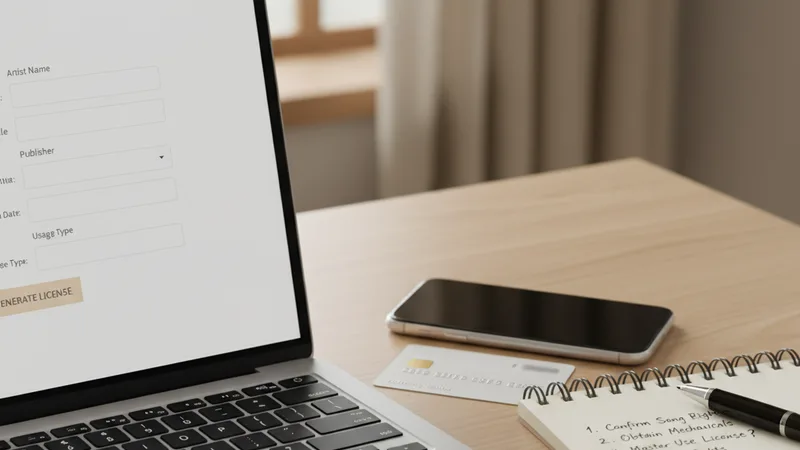
The mechanical licensing process for an AI cover song you plan to distribute commercially.
1. Verify the song is legal to cover. The song must be commercially released and not under any specific opt-out restrictions. Search the publisher database through your licensing service.
2. Pick a mechanical licensing service.
- Easy Song Licensing ($14.99-19.99 per song per year) handles the paperwork and pays royalties to the songwriter on your behalf. Common choice for indie artists.
- Songfile (Harry Fox Agency) offers similar service for songs in their catalog.
- DistroKid, TuneCore, CD Baby — distribution services that include cover licensing as part of their distribution flow. Often easier for users who already use these services.
- Direct licensing through the publisher is possible but more complex; usually not worth it for single covers.
3. File the mechanical license. Fill in the song details (title, songwriters, original release year, your version length, format you'll distribute in). The service handles the rest.
4. Pay the per-unit royalty. Currently 9.1 cents per copy in the US for songs under 5 minutes. For digital streaming, the rate is calculated differently (per-stream, lower per-unit). Some services bundle a minimum number of units in the license fee.
5. Record (or generate) the cover. This is where the AI music app workflow comes in. Once licensed, you can produce the recording in any way you choose — live recording, DAW production, or AI music app generation.
6. Submit to distribution. Through DistroKid, TuneCore, CD Baby, or directly. Most services in 2026 require AI content disclosure on the upload form; provide it.
7. The mechanical license has terms. Typically valid for the lifetime of the distribution. If you exceed the licensed unit count, you may need to file additional licenses or higher-tier coverage. Check your specific license terms.
8. The songwriter gets paid. Through the licensing service, on a schedule determined by the service. You are responsible for confirming the royalty payment happens.
For Etsy custom-song shops considering covers, the selling AI songs on Etsy guide covers the broader business model — covers are typically not the focus of these shops because of the per-cover licensing cost, but the workflow applies.
Step-by-step: a legal AI cover in Muziko
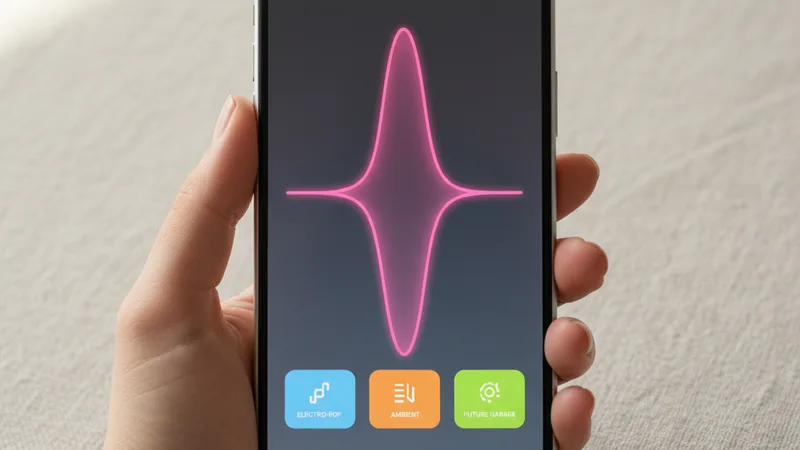
The workflow for making a legal AI cover from idea to distributable file, assuming the mechanical license is in place.
1. File the mechanical license first. Before generating any audio. The license is the legal foundation; generating audio without it is putting the cart before the horse. Use Easy Song Licensing, Songfile, or your distribution service's licensing flow.
2. Open Muziko on iPhone or iPad. Switch to Write Lyrics mode.
3. Paste the lyrics of the song you're covering. The original lyrics, exactly as written (or with minor adjustments if you're doing a parody, which has different legal rules under fair use). Spelling matters for AI pronunciation.
4. Choose your reinterpretation genre. This is where AI covers shine — you can take any song and reimagine it in any genre. Acoustic ballad version of an EDM hit. Lo-fi version of a rock anthem. Soulful R&B version of a country song. Country version of a pop hit. The mechanical license covers the underlying composition; your production is yours.
5. Set the tempo to match (or deliberately not match) the original. Slowing or speeding up the tempo is part of the reinterpretation. A 60-bpm ballad version of a 120-bpm pop song is a creative cover, not an attempt to replicate the original.
6. Vocal direction — explicitly generic. "Solo female vocal, warm and clear, generic modern pop delivery" or similar. Do NOT prompt for "in the style of [specific artist]" — that violates AI music app terms of service and may create voice-cloning legal risk.
7. Generate three to five takes. Listen to each. Pick the take where the lyrics are pronounced clearly and the genre treatment lands cleanly.
8. Save in WAV or highest-quality format. For distribution to streaming platforms, lossless or high-bitrate is the standard.
9. Distribute through DistroKid, TuneCore, or another service. Mark the song as a cover. Provide AI content disclosure. Submit. The platforms route the mechanical royalty to the songwriter.
The whole production workflow takes 10-30 minutes per cover. The licensing process takes 1-3 days depending on the service. The total cost is the mechanical license fee ($14.99-19.99 for indie services, less for bundled distribution licensing) plus the per-unit mechanical royalty.
For more on the underlying AI music app workflow, the AI song generator for iPhone 2026 guide covers each creation mode in depth.
Matching genre reinterpretation to original song: a starter chart
AI covers work best when the reinterpretation is creative — when you take the song somewhere unexpected. Generic same-genre AI covers tend to read as inferior copies of the original. Patterns that consistently produce strong reinterpretations:
| Original genre | Strong reinterpretation options | Why it works |
|---|---|---|
| Pop hit (current) | Acoustic ballad, lo-fi, jazz standard, soul-pop | Slowing the tempo and stripping production exposes the composition |
| EDM / dance | Acoustic, indie folk, soulful R&B, neo-classical piano | Removing the electronic production reveals the underlying melody |
| Rock anthem | Acoustic, country ballad, soul-pop, indie folk | Genre shift creates fresh interpretation |
| Hip-hop / rap | Acoustic singer-songwriter, jazz, soul, indie folk | Melodic reinterpretation of rhythmic original |
| Country | Indie pop, soul, R&B, gospel | Cross-genre treatment exposes the song's universal qualities |
| R&B | Acoustic, soul-pop, gospel ballad, indie folk | Stripping back to the emotional core |
| Reggaeton | Acoustic, soul ballad, indie pop, R&B | Removing the dembow shifts the song's emotional weight |
| Classical (well-known piece) | Indie pop, neo-classical with electronics, ambient | Modernizing the harmonic context |
| Jazz standard | Indie folk, neo-classical, soulful R&B | New genre context for familiar melody |
| Folk traditional | Indie pop, R&B, electronic, soul | Modernizing folk material |
| Christmas / holiday | Any genre — these covers traditionally span all genres | Holiday songs are heavily covered across genres |
| Children's song | Adult contemporary, jazz, acoustic ballad | Adult treatment of familiar children's material |
Pick a reinterpretation that puts genuine creative distance between your cover and the original. The closer your cover is to the original's production, the more it competes directly with the original (and the harder time you have getting algorithmic placement on streaming platforms).
For per-genre AI capability across covers, see the AI country guide, AI jazz guide, AI lo-fi guide, and AI classical guide.
When NOT to make an AI cover — important boundaries
Honest accounting of situations where AI cover song production carries legal or ethical risk that you should not take.
Do not make an AI cover if:
- You plan to imitate a specific living artist's voice. This is voice cloning, prohibited by most AI music apps, and on legally contested ground in 2026. The right of publicity and performers' rights restrict using a specific identifiable voice without consent. Don't do this for commercial release. Many artists have publicly opposed AI use of their voices, and the legal trajectory is becoming more restrictive, not less.
- You don't plan to pay the mechanical royalty. Releasing a cover without proper licensing is copyright infringement. The fact that AI generated the recording does not change that you owe the songwriter the mechanical royalty.
- The song you want to cover has explicit AI restrictions. A growing number of songwriters and publishers have added clauses restricting AI-generated covers specifically. Major distribution platforms maintain databases. Check before recording.
- You plan to claim the cover as your own composition. AI generated the recording, not the song. The original songwriter retains the composition rights. Crediting only yourself is fraud.
- You're trying to deceive listeners about who is performing. Releasing a cover that is intentionally designed to be mistaken for the original artist's voice or recording, without disclosure, can rise to consumer fraud. Be clear in marketing materials and platform disclosures that the recording is AI-generated and the song is a cover.
- You want to cover an unreleased song. The compulsory mechanical license applies to songs already commercially released. Unreleased material is not available for compulsory licensing.
- You're in a jurisdiction where AI music distribution is restricted. Some countries have begun restricting AI music more aggressively than others. Check your local rules.
- The cover is for a religious or cultural context where AI use is contested. Some sacred music, indigenous music, and culturally significant works have specific community sensitivities around AI use. Defer to community standards even if technically legal.
The general rule: If the cover requires you to imitate a specific artist's voice, claim authorship you don't have, or skip the mechanical license, don't do it. The legal AI cover path requires generic vocals, proper licensing, and honest disclosure. Stay on that path.
For the broader licensing and rights questions, the can you sell AI-generated music legal guide covers what is and is not allowed across paid and free tiers.
Try the legal AI cover workflow
The right way to do this is to walk through the full workflow on a specific song. Pick a song you genuinely want to cover — one you have personal connection to, one you think would work in an unexpected genre.
Step 1: Verify the song is available for compulsory licensing. Search the Harry Fox Agency or Easy Song Licensing for the title.
Step 2: File the mechanical license through your chosen service.
Step 3: Open Muziko on iPhone or iPad. Switch to Write Lyrics mode. Paste the lyrics.
Step 4: Prompt for your creative reinterpretation. Example for an acoustic cover of an EDM hit:
"Acoustic singer-songwriter cover, 75 bpm, sentimental and dreamy, solo male vocal warm and intimate with light female harmony in the chorus, fingerpicked acoustic guitar and soft piano figure, no electronic instruments, no synth, no programmed drums — strip back to acoustic only, three minutes total, soft outro fading over the last fifteen seconds."
Step 5: Generate three to five takes. Pick the strongest.
Step 6: Save in WAV. Mark as a cover during distribution submission. Provide AI content disclosure. Distribute.
The first time through this workflow takes the longest — maybe 45-90 minutes including the licensing setup. After that, additional covers take 15-30 minutes each.
For more on prompt craft that produces strong genre reinterpretations, the perfect prompts breakdown covers patterns useful for cover reinterpretations.
Frequently asked questions
Is it legal to use AI to make a cover song in 2026?
Yes, when you do three things: pay the mechanical royalty to the original songwriter through a mechanical licensing service (Easy Song Licensing, Songfile, or your distribution service), use a generic AI vocal that does not imitate any specific living artist's voice, and disclose AI use during distribution to platforms that require it. The compulsory mechanical license framework under US Section 115 (and equivalent international systems) allows anyone to cover any commercially released song after paying the statutory royalty. AI can generate the recording within that framework as long as the voice is generic and the original artist isn't being imitated. Voice cloning of specific living artists is prohibited by most AI music apps and is on legally contested ground.
How much does a mechanical license for a cover cost in 2026?
The statutory mechanical royalty in the US in 2026 is roughly 9.1 cents per copy distributed for songs under 5 minutes, or 1.75 cents per minute for songs over 5 minutes. For digital streaming, the rate is calculated differently. Mechanical licensing services charge a setup fee on top of the royalty payment — Easy Song Licensing charges $14.99-19.99 per song setup, then routes the per-copy royalty to the songwriter. Songfile (from the Harry Fox Agency) has similar pricing. Distribution services like DistroKid and TuneCore include cover licensing flow in their distribution fees, often the easiest option for indie artists releasing through those services. International licensing through MCPS (UK), GEMA (Germany), and other societies has its own fee structures, usually handled through your distribution service for major platform releases.
Can I use AI to clone a specific singer's voice for a cover?
No, for commercial release this is prohibited by most reputable AI music apps and creates significant legal risk. Voice cloning of a specific living artist without consent implicates right of publicity laws, performers' rights, and emerging AI-specific legislation. Many artists have publicly opposed AI use of their voices. Major streaming platforms in 2026 have policies against AI voice impersonation. Some jurisdictions have enacted or are enacting specific legislation prohibiting AI voice cloning without consent. The legal AI cover path requires using generic AI vocals (modern pop voice, R&B voice, country voice, etc.) that are not modeled on specific identifiable artists. For non-commercial personal use of voice cloning (e.g., your own voice on your own song), different rules may apply, but for any commercial release, stay with generic AI vocals.
What happens if I release an AI cover without proper licensing?
Copyright infringement liability. The original songwriter retains the right to compensation for any commercial use of their composition, regardless of whether the recording is human or AI-generated. Consequences range from a takedown request from the publisher (most common for indie releases) to actual statutory damages claims (rare for personal use, possible for higher-volume commercial release). Streaming platforms can also remove unlicensed covers from their catalogs. Distribution services like DistroKid have policies allowing them to suspend accounts for unlicensed releases. The mechanical licensing fee is small relative to the risk — paying it is the only sensible path for commercial release. For personal-use covers (not distributed publicly), the rules are different and generally more permissive, but check your specific use case.
Do I have to disclose that my cover is AI-generated on streaming platforms?
Yes, on all major streaming platforms in 2026. Spotify, Apple Music, YouTube Music, Amazon Music, Tidal, and Deezer all have AI content disclosure requirements on uploads. Distribution services like DistroKid, TuneCore, and CD Baby include AI disclosure fields in their submission flows. Honest disclosure is required and is a condition of distribution platform terms of service. Hiding AI use risks account suspension and takedown of the release. The disclosure does not prevent commercial release or monetization — AI music is widely accepted on streaming platforms when properly disclosed — but it must be honest. Some platforms also display AI disclosure to listeners in the track metadata.
Should I make AI covers as part of an indie artist release strategy?
AI covers can fit into an indie artist release strategy as one element among many, but they typically shouldn't be the centerpiece. The strongest cover strategies focus on creative reinterpretation — taking a familiar song into an unexpected genre or treatment — rather than competing with the original artist's recording directly. AI covers work especially well for: stripped-back acoustic versions of pop hits, jazz-standard reinterpretations of modern songs, lo-fi versions of rock anthems, and genre-crossing reinterpretations generally. They work less well for direct imitation of the original. Mix AI covers with original songs in your release schedule. For most indie artists, original material drives audience growth more than covers, even when the covers are competently produced.
Try everything you just read about. Muziko is free to download.

![AI Lyrics Generator: Write Song Lyrics Free [Tested 2026]](/_next/image?url=%2Fimages%2Fblog%2Fai-lyrics-generator%2Fhero.webp&w=3840&q=75)
![AI Amapiano Generator: Log Drum Tracks [Tested 2026]](/_next/image?url=%2Fimages%2Fblog%2Fai-amapiano-generator-log-drum-tracks%2Fhero.webp&w=3840&q=75)