
AI Quinceañera Songs: Vals + Reception Custom Tracks
Custom AI Quinceañera songs — a formal Vals choreography track plus modern reggaeton or cumbia for the reception. Generated on iPhone in 5 minutes with her name in the chorus.
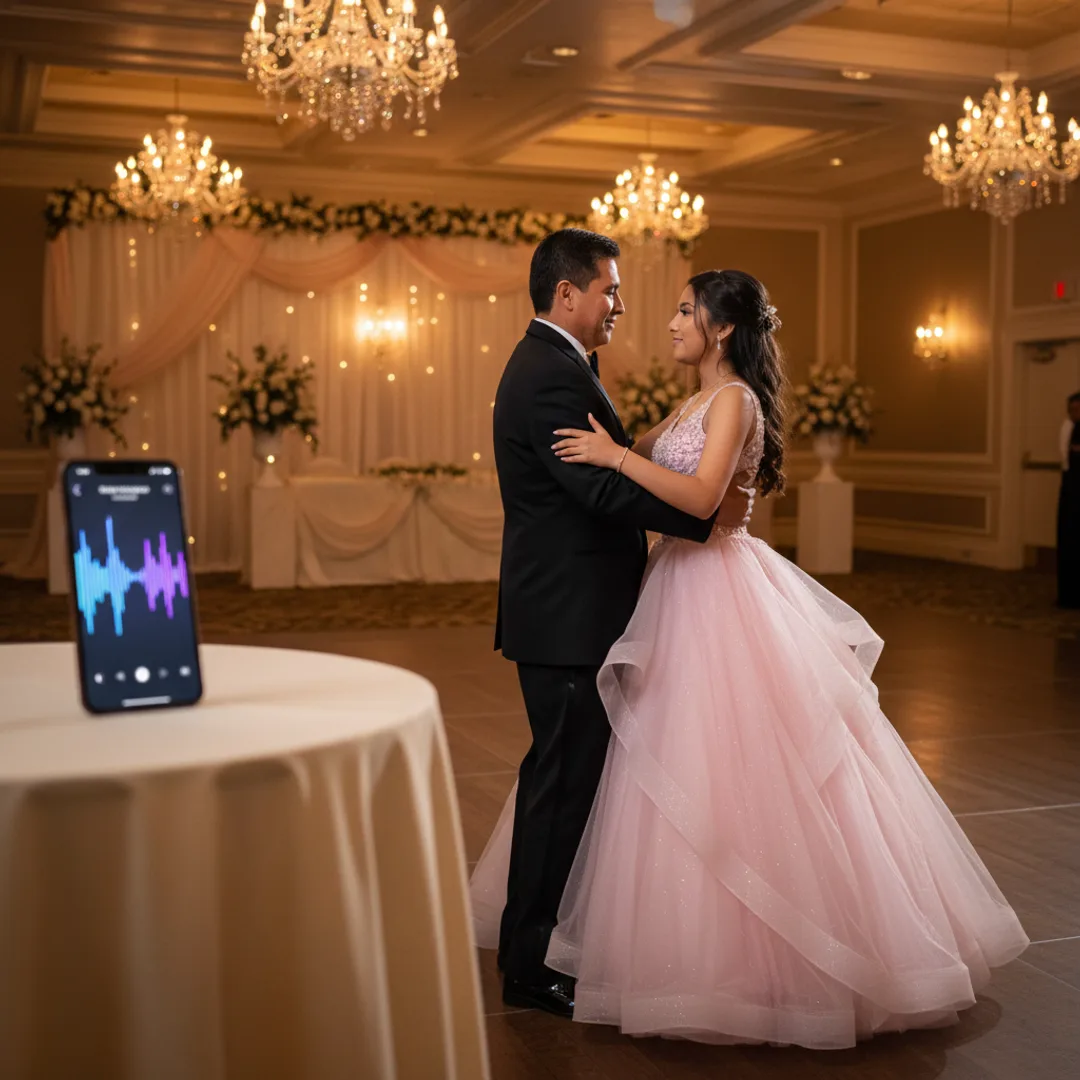
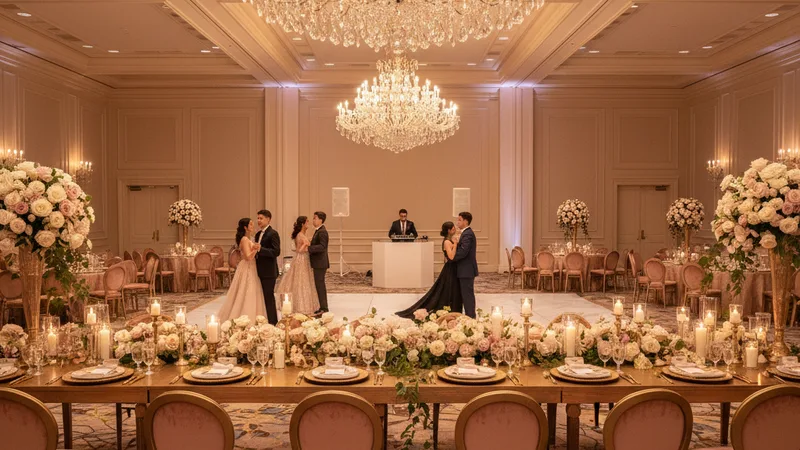
A close family friend of mine planned her daughter's quinceañera for last October. The vals — the formal waltz between the quinceañera and her father — was the part she had been agonizing over for months. Tiempo de Vals by Chayanne is the default choice for tens of thousands of quinceañeras every year. It's beautiful. It's also the song her daughter had heard at every quinceañera she'd attended since she was ten. The week before the event, the mother generated a custom AI vals on her iPhone — a 3/4 time waltz at 92 BPM with strings and acoustic guitar, her daughter's name softly in the chorus, one line about the abuela who couldn't be there in person. They danced to it. The father cried during the third measure of the chorus. Three other mothers asked for the file before the cake was cut.
This is the case for custom AI quinceañera songs that the bilingual event-planning content has not fully built around. The quinceañera tradition has tight musical conventions — the formal vals, the entrance, the surprise dance, the modern reception music — and most quinceañeras work through the same finite catalog of standards every year. Custom AI tracks fill the gap for the moments that benefit most from personalization: the vals itself and the family-specific dedication songs. The reception still wants commercial reggaeton, bachata, and cumbia for the dance floor; AI Quinceañera tracks aren't trying to replace the party music.
This guide is the workflow for generating both formal Quinceañera vals tracks and reception-quality personalized tracks on iPhone. The 3/4 vals tempo and instrumentation, the lyric structure for a quinceañera's specific moment, the family dedication tracks for grandparents and parents, and where the standards still win versus where AI fills the gap.
Why the standard Quinceañera vals catalog runs out
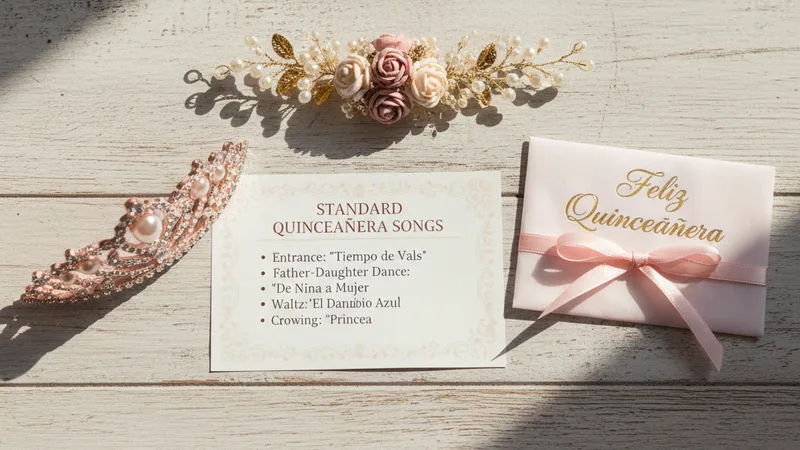
A few specifics about quinceañera music that get clearer after attending five or six events.
The standard vals catalog is small. Tiempo de Vals by Chayanne. De Niña a Mujer by Julio Iglesias. Hoy Tengo Ganas de Ti in various arrangements. Mi Niña Bonita. These work — they're beautiful classics — and any teenager who has been to five quinceañeras has heard them all twice each. The familiarity is part of the form, but the saturation eventually flattens the emotional charge.
The vals carries the biggest emotional weight of the event. The father-daughter waltz at the start of the formal portion is the moment family videographers focus on. The song carrying that dance shapes how the night is remembered. A custom track means the quinceañera and her family are dancing to a song that exists nowhere else.
Reception music doesn't need replacement. The reggaeton, bachata, cumbia, and dembow that fill the dance floor at quinceañera receptions are commercial tracks that the audience comes to hear. Custom AI reggaeton or bachata for the reception is generally not what the moment needs — the crowd wants the songs they know. AI quinceañera tracks should focus on the formal moments and dedication songs, not the dance floor.
Family dedication songs are underserved. The dedication to abuela, the song for the absent parent, the tribute to a recently deceased grandparent — these moments often go without dedicated music because the standard quinceañera catalog doesn't include personalized dedications. Custom AI tracks fill that gap directly.
Custom songs about a quinceañera were historically out of reach. Hiring a singer-songwriter to write a custom vals ran $400-2,000 and took 2-6 weeks. Most families reasonably stayed with the standards. AI music tools collapse that to $0.40 of subscription and 10-15 minutes per track.
For the broader cultural-occasion AI music pattern, see the AI wedding songs guide, AI graduation song guide, and AI Latin pop generator guide.
What custom AI Quinceañera songs add
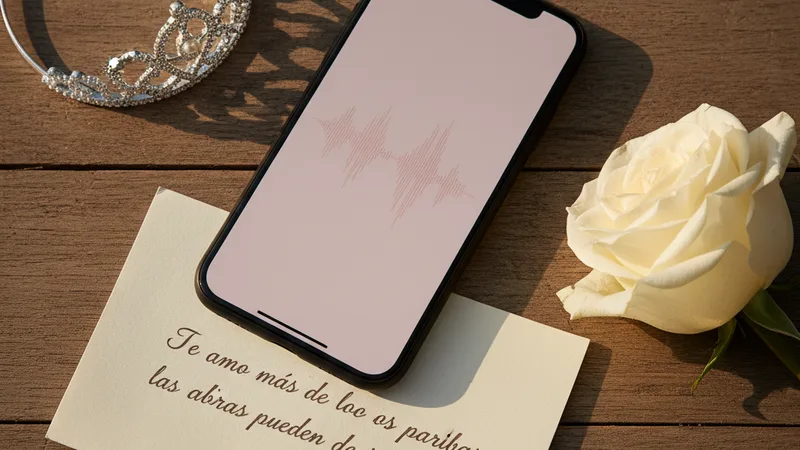
Five things custom AI Quinceañera tracks do that standard catalog songs cannot match.
- Her name in the soft chorus of the vals. Sung gently three or four times in the 3/4 waltz time. Her father hears their daughter's name during the dance the entire family is watching.
- The family configuration named in the lyrics. "Maya and her father and the abuela who isn't here in person." "Sofía and her mother and the three brothers who used to push her on the swing." The configuration grounds the song in this specific family.
- Spanish, English, or bilingual lyrics matched to the family's actual language pattern. Spanish-first families benefit from Spanish lyrics. Bilingual second- and third-generation families benefit from code-switched lyrics. English-first families benefit from English with Spanish phrases. Match the actual family language.
- A length matched to the choreographed vals. Most choreographed quinceañera valses run 2:30 to 3:30. AI tracks can be prompted to the exact length your choreographer requires.
- A file the family keeps for life. The vals track lives on her phone for years, gets replayed on quinceañera anniversaries, gets shared with the grandchildren her daughter eventually has.
For prompt-craft, how to write AI song prompts that actually produce great music is the most useful companion read.
Step-by-step: a Quinceañera vals in Muziko
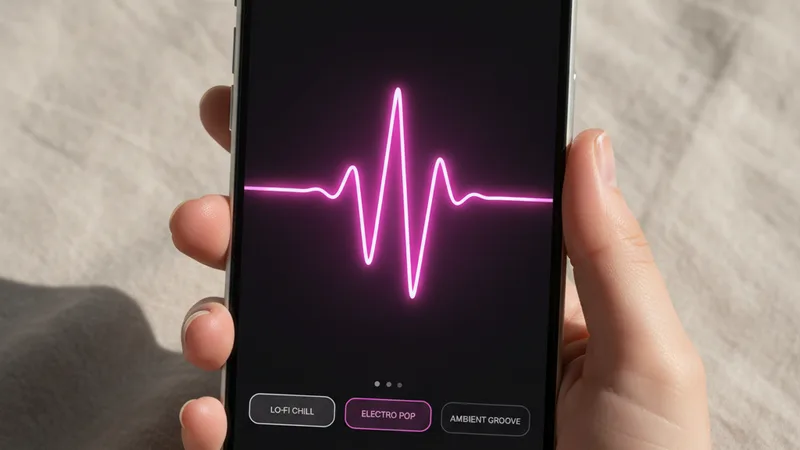
The workflow for a formal vals track. Total time averages 10-15 minutes.
1. Write down three things first. The quinceañera's name (phonetic if needed), one specific family detail you want in the lyric (the absent abuela, the late grandfather, the specific home, the family business, the trip everyone took), and the family's actual language pattern (Spanish-first, bilingual, English-first).
2. Open Muziko on iPhone or iPad. Switch to Write Lyrics mode.
3. Pick the genre. Classical (specifically waltz/vals) or Latin Pop with vals direction is the genre to target. The genre tag plus the prompt specificity drives the AI toward 3/4 time waltz format.
4. Pick a mood. Sentimental and dreamy for the formal vals. Sentimental + hopeful for the entrance song. Confident + euphoric for the surprise dance and party moments.
5. Write six to ten lines of lyrics in the family's language. Structure: two lines naming the moment (the dance, the family, the night), two lines as a soft chorus with the quinceañera's name, two to four lines about a specific family detail.
6. Set the tempo to vals time. 80-100 BPM in 3/4 time. 92 BPM is a safe default for the formal vals. Choreographed valses sometimes run slightly faster (96-104 BPM) — ask the choreographer for the exact BPM if there is choreography.
7. Add vals instrumentation. "Classical waltz in 3/4 time, soft acoustic guitar, light piano figure on the verses, full string section entering on the chorus, brushed soft percussion only on the choruses, traditional vals feel."
8. Vocal direction. "Solo female vocal warm and intimate with light melodic ornamentation" for soft acoustic-classical vals. "Solo male vocal warm conversational" for traditional male-led valses. Match the vocal to the family's preferred style.
9. Length. 2:30-3:30 for the choreographed vals. Match the exact length to the choreography if there is one. The vals doesn't need to fade; it can end on a clean final chord.
10. Generate five to seven takes. This is the formal moment — generate more takes than usual. Listen for name pronunciation, 3/4 time stability throughout, and the strings landing cleanly in the chorus.
For the full mobile workflow, the AI song generator for iPhone 2026 guide covers each creation mode in depth.
Writing the lyrics for the vals
A working Quinceañera vals lyric has six ingredients.
The quinceañera's name, phonetic if needed. Spanish names usually pronounce cleanly. Less common names benefit from phonetic spelling.
A line about the moment itself. "Tonight you are fifteen, tonight you are fifteen." "This dance, this night, the chairs around the floor." The moment-naming grounds the song.
A line naming a specific family member or relationship. "Your father holding your hand for the last little-girl dance." "Your abuela who isn't here in person, who is still here." "Your mother who made the dress at her kitchen table." Family relationships carry the song's weight.
A bilingual code-switch if the family is bilingual. "Maya, my niña, my fifteen-year-old." "Sofía, mi vida, the night is yours." Bilingual code-switching reflects how the family actually talks.
One line about who she's becoming. "You are bigger than the chair you came home in from the hospital." "You walked across this floor for the first time at ten months and now you walk it as a woman." "You are still my niña and you are now also yourself."
A closing line that honors the transition without rushing it. "The floor is yours." "Tonight you are fifteen." "Mi niña, mi mujer."
An example bilingual lyric set:
"Maya, mi niña, fifteen years tonight, your father holding your hand for the last little-girl dance, Maya, Maya, your abuela in Guadalajara who is still here with us, Maya, Maya, you walked across this floor at ten months and you walk it now as a woman, mi niña, mi mujer."
That set has the name (Maya), the moment (fifteen years tonight), the relationship (father, abuela), the bilingual code-switch (mi niña), the becoming-line (ten months / walks as a woman), and the closing transition line (mi niña, mi mujer).
For more on lyric craft, the perfect prompts breakdown covers the underlying patterns.
Matching Quinceañera moment to song type: a starter chart
Different quinceañera moments benefit from different track approaches.
| Quinceañera moment | Genre | Tempo | Mood | Notes |
|---|---|---|---|---|
| Formal vals (father-daughter waltz) | Classical vals 3/4 time | 88-100 BPM | Sentimental + dreamy | Strings, acoustic guitar, soft piano |
| Entrance song (court of honor) | Classical or anthemic | 90-105 BPM | Confident | Builds energy as the court enters |
| Quinceañera entrance | Anthemic Latin pop | 100-115 BPM | Confident + euphoric | Her solo walk-in moment |
| Toast / blessing song | Soft acoustic or piano | 75-90 BPM | Sentimental | During the parents' speech |
| Dedication to abuela | Acoustic or mariachi | 80-95 BPM | Sentimental | Honoring grandmother |
| Dedication to absent parent | Acoustic ballad | 75-90 BPM | Sentimental | When a parent is deceased or distant |
| Father-daughter formal vals | Classical vals | 88-100 BPM | Sentimental + dreamy | The primary vals |
| Mother-daughter dance | Acoustic or Latin pop | 90-105 BPM | Sentimental | Often after the father-daughter vals |
| Last toy / doll ceremony | Acoustic | 75-90 BPM | Sentimental | The girlhood-to-womanhood moment |
| Surprise dance choreography | Modern Latin pop | 110-125 BPM | Confident + euphoric | The big production number |
| Religious / blessing moment | Sacred or Gospel-Latin | 75-90 BPM | Sentimental | If the family includes religious ceremony |
| Reception cumbia track | Modern cumbia | 95-110 BPM | Playful + euphoric | Use commercial tracks; AI not the focus |
| Reception reggaeton track | Modern reggaeton | 95-105 BPM | Confident + euphoric | Use commercial tracks; AI not the focus |
| Reception bachata track | Modern bachata | 115-125 BPM | Playful + sentimental | Use commercial tracks; AI not the focus |
| End-of-night farewell song | Soft acoustic Latin pop | 85-100 BPM | Sentimental + hopeful | The night winds down |
Pick the row that matches the moment. The formal moments (vals, entrance, dedications) benefit most from custom AI tracks. The reception dance music (reggaeton, bachata, cumbia, dembow) is where the crowd wants commercial recognizable tracks — don't try to replace those with AI. For Latin pop production craft, see the AI Latin Pop generator guide, the AI reggaeton generator guide, and the AI classical music generator guide for the vals/classical side.
Delivery: how to use the custom track at the event
The vals is the highest-impact delivery moment. Two delivery strategies that work consistently.
1. Replace the standard vals with the custom AI track. Send the WAV file to the DJ at least two weeks before the quinceañera. Have the DJ soundcheck the track on the actual venue PA system. Use the custom track for the formal father-daughter vals. Most DJs are happy to play custom tracks for formal moments; they're used to working with non-standard music for the vals specifically.
2. Use both — standard during one moment, custom during another. Some families want Tiempo de Vals for the actual father-daughter waltz (tradition matters) and use the custom AI track for a different moment — the mother-daughter dance, the dedication to abuela, the toast. This honors tradition while still including the custom personalization.
Skip the custom song for:
- Reception dance music. The crowd wants commercial recognizable reggaeton, bachata, cumbia, and dembow. Don't try to swap commercial tracks for AI tracks during the open dance floor.
- Religious portions if the family follows specific liturgical music. Catholic quinceañera masses and other religious ceremonies have specific music expectations. Custom AI tracks aren't appropriate for the religious portion.
- Moments without consent from the quinceañera. This is her event. If she has strong feelings about the vals song, defer to her. The custom track can be used for a different moment.
For the DJ integration, send the file at least two weeks before the event with explicit instructions on which moment the custom track should play during. Confirm the DJ has loaded it and tested it on the day-of system.
Try the workflow
If a Quinceañera is coming up in the family — your daughter, your niece, a friend of the family's daughter — the workflow takes 10-15 minutes.
Step 1: Write down the quinceañera's name, one specific family detail to include in the lyric, and the family's actual language pattern (Spanish, bilingual, English).
Step 2: Open Muziko on iPhone or iPad. Switch to Write Lyrics mode.
Step 3: Pick Classical genre (for vals format) and Sentimental mood.
Step 4: Paste the lyrics (adjusted to your family):
"Maya, mi niña, fifteen years tonight, your father holding your hand for the last little-girl dance, Maya, Maya, your abuela in Guadalajara who is still here with us, Maya, Maya, you walked across this floor at ten months and you walk it now as a woman, mi niña, mi mujer."
Step 5: Add the prompt note:
"Classical Quinceañera vals in 3/4 time, 92 BPM, sentimental and dreamy, solo female vocal warm and intimate with light melodic ornamentation, acoustic guitar with soft piano figure on the verses, full string section entering on the chorus, brushed soft percussion only on the choruses, traditional vals feel, two minutes forty-five seconds, clean ending on a final held chord, no fade."
Step 6: Generate five to seven takes. Pick the take where the name lands cleanly, the 3/4 time feels stable throughout, and the strings land on the chorus.
Step 7: Send the WAV file to the DJ at least two weeks before the event. Confirm the playback on the venue PA on the day-of.
For related Latin music guides, see the AI Latin Pop generator guide, the AI reggaeton generator guide, and the AI classical music generator guide. For related personal-occasion guides, see the AI birthday songs guide, AI wedding songs guide, and AI graduation song guide.
Frequently asked questions
Can AI generate a real 3/4 time vals for a Quinceañera?
Yes, with explicit prompt direction. AI music apps in 2026 handle 3/4 waltz time when you prompt for "classical waltz in 3/4 time" specifically. Add instrumentation direction ("soft acoustic guitar, light piano figure, full string section on the chorus, brushed soft percussion only") and set the tempo to 88-100 BPM (92 BPM is a safe default). Generate five to seven takes — more than usual for personal-occasion songs because the 3/4 time stability across a longer track is the technically demanding part. Listen specifically for stable 3/4 throughout the track; some takes drift toward a stronger four-feel that doesn't work for the choreographed vals. Pick the take with the cleanest 3/4 throughout. The result is a vals-grade track that fits the formal father-daughter waltz moment.
Should I write the Quinceañera lyrics in Spanish, English, or bilingual?
Match the family's actual language pattern. Spanish-first families benefit from Spanish lyrics throughout. Bilingual second- and third-generation families benefit from code-switched lyrics — "Maya, mi niña, fifteen years tonight" is more authentic than pure Spanish or pure English for many bilingual families. English-first families with Latin heritage benefit from English with Spanish phrases at key moments ("mi vida" in the chorus, "mi niña, mi mujer" as the closing). Don't let the AI generate Spanish lyrics from English prompts; the result reads as translated rather than as native. Write the Spanish or bilingual lyrics yourself if you speak the language, or collaborate with a Spanish-fluent family member. The wrong language pattern is the most common reason custom quinceañera lyrics fall flat.
Should I use the custom AI track for the formal vals or stick with Tiempo de Vals?
Either works; the right choice depends on the family. Stay with Tiempo de Vals or another standard if the tradition itself is important to the family — the standards carry generational continuity that custom songs can't replicate. Switch to a custom AI vals if the quinceañera and her parents want personalization over tradition, or if there's a specific family situation that benefits from naming directly (an absent or deceased family member, a recent immigration, a particular family story). Many families compromise: use Tiempo de Vals for the actual father-daughter waltz and use a custom AI track for a different moment — the mother-daughter dance, the dedication to abuela, the toast. This honors tradition while including the custom personalization.
How long should a Quinceañera vals track be?
2:30 to 3:30 for the choreographed vals. If there is choreography, ask the choreographer for the exact length and BPM they're working to and prompt the AI to match. If there is no choreography, 2:45 is a safe default. Most AI music apps in 2026 cap individual tracks at 4 minutes, so the standard vals length fits cleanly within that. The vals doesn't need a fade — it can end on a clean final chord, which works for the choreography's final pose. Don't prompt for an outro fade for the vals; prompt for "clean ending on a final held chord, no fade." The clean ending matters for the choreographed final moment of the dance.
Can AI also generate the reception dance music — reggaeton, bachata, cumbia?
Yes technically, but don't replace commercial reception music with AI tracks. The reception dance floor at a quinceañera is the moment when the crowd wants recognizable hits — mainstream reggaeton and bachata. Custom AI tracks at the reception don't get the same dance-floor energy because the audience doesn't know the songs. Reserve AI tracks for the formal moments where personalization matters: the vals, the entrance, dedications, toasts, and family-specific moments. The reception is where DJ-selected commercial tracks belong. The AI Latin Pop guide and AI reggaeton guide cover the production craft for those genres if you want to understand them; they're more useful for songwriters and producers than for quinceañera reception music.
What if the quinceañera is for someone who lost a parent or grandparent?
Custom AI dedication tracks work especially well here. The standard quinceañera catalog doesn't have specific songs for absent or deceased family members; a custom AI track can name that specific loss honestly. The lyric pattern that works: one line acknowledging the absence ("your abuela who isn't here in person"), one line about how that person is still present ("who taught you to make the rice this way"), then the song carries the celebration around the absence. Lean toward soft acoustic or classical with strings rather than upbeat tracks. Use the dedication moment (often between formal speeches or before the cake) rather than replacing the main vals. For deeply emotional cases, see the AI memorial song guide for the careful tone-handling needed; the framework there transfers to quinceañera dedication tracks.
Try everything you just read about. Muziko is free to download.

![AI Lyrics Generator: Write Song Lyrics Free [Tested 2026]](/_next/image?url=%2Fimages%2Fblog%2Fai-lyrics-generator%2Fhero.webp&w=3840&q=75)