
AI Songs for New Parents: Welcome Your Baby with Music
Welcome your newborn with a custom AI song — their name in the soft chorus, your story in the lyrics, gentle 70-85 BPM. Generated on iPhone in 5 minutes.
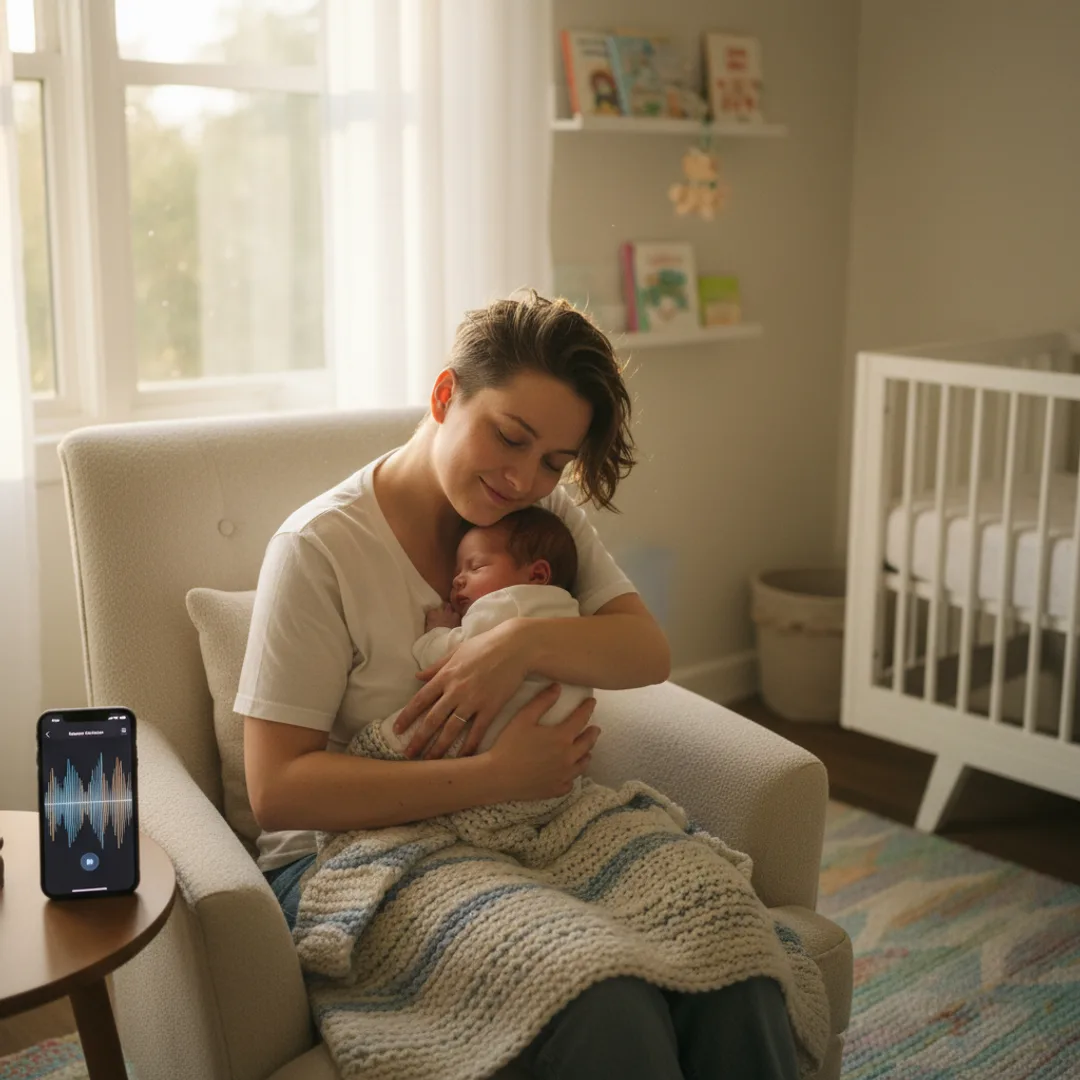
My sister had a baby in March. The standard congratulations rolled in for a week — printed cards with stork imagery, gift baskets from coworkers, group-chat heart emojis from people who hadn't seen her in years. All thoughtful, all forgettable. I generated her a two-minute thirty-second AI track instead — soft acoustic at 78 BPM, her daughter's name three times in a gentle chorus, one line about the night she went into labor in the middle of finishing the nursery wallpaper, sent via iMessage on the morning the baby came home from the hospital. She played it on the couch with the baby asleep on her chest and texted back twenty minutes later — "I'm crying. Send this to mom too." It became the song that played quietly at the small welcome gathering two weeks later.
This is the case for custom AI welcome-baby songs that the baby-shower industry hasn't built around. New-parent gifts in 2026 sit in a narrow band — onesies, stuffed animals, gift cards, blankets, cards with stork imagery. They are useful and they are forgettable. A custom AI welcome song is different: it names the baby specifically, references the parents' specific story leading to the arrival, and exists nowhere else. The marginal cost is roughly nothing. The marginal emotional traction beats the third package of newborn socks.
Important upfront note: this guide is about welcome songs — tracks for celebrating the baby's arrival, for sharing with family and friends as a birth announcement, for playing softly at the welcome gathering. It is not about lullabies for sleep. Lullabies for actual baby sleep have specific requirements covered in the AI lullaby generator guide. Welcome songs are gentler, slightly more melodic, designed for adult listening rather than infant sleep transitions.
Why generic new-parent gifts mostly miss
A few specifics about new-parent gifts that the baby-registry industry doesn't dwell on.
New parents have everything functional. The registry covered the diapers, the bottles, the swaddles, the bassinet, the stroller. By the time well-wishers are gifting beyond the registry, the marginal joy from yet another package of socks or another stuffed animal is roughly zero. New-parent gifts that matter are the ones that name the specific baby and the specific parents.
Standard birth-announcement cards are pre-written. The stork imagery. The pastel borders. The "Welcome to the world" template language. Hallmark's writers wrote them; the gift-giver signed at the bottom. Sincere customizations help, but the underlying form is generic by construction.
Most personalized baby gifts are objects, not experiences. Embroidered blankets, engraved silver spoons, custom prints with the baby's birth stats. These are nice; they sit on a shelf. They don't replay on quiet evenings in the way audio does.
Custom welcome songs were historically out of reach. Hiring a singer-songwriter to write a welcome song for new parents ran $400-2,000 and took 2-6 weeks — past the moment when the song would have landed at its most emotionally charged. Most families reasonably picked the engraved spoon instead.
AI music tools collapse the cost stack. A custom welcome song generated on iPhone costs the marginal $0.40 of app subscription divided across the use. Takes 10-15 minutes. Lands on the new parents' phone within the first week of the baby's life — when the song's specific timing carries its own emotional weight.
For the broader gift-occasion AI music pattern, see the AI birthday song guide, AI Father's Day song guide, and AI anniversary song guide.
What custom AI welcome songs do that cards can't
Five things custom AI welcome-baby songs do that pre-printed cards cannot.
- The baby's name in the soft chorus. Sung gently, repeated three times, in a calm vocal style. The name in song becomes part of the baby's earliest soundscape if the parents replay it during the first weeks.
- One specific detail from the parents' journey to this moment. "The night you went into labor finishing the nursery wallpaper." "The three years of waiting and one phone call on a Tuesday." "The cross-country move five months before the due date." Specificity carries the song.
- The genre the parents actually listen to. Acoustic folk for the singer-songwriter parents. R&B for the soul-music parents. Indie pop for the contemporary couple. The song should feel like their music, not like generic "baby" music.
- A length appropriate to adult listening with a baby in arms. Two to three minutes. Long enough to be a song, short enough that holding still with a newborn is possible.
- A file the family keeps for the baby's life. The track lives on phones, gets replayed on first birthdays, fifth birthdays, eighteenth birthdays. The baby grows up with their own song already waiting for them.
For prompt-craft, how to write AI song prompts that actually produce great music is the most useful companion read.
Step-by-step: a welcome song in Muziko
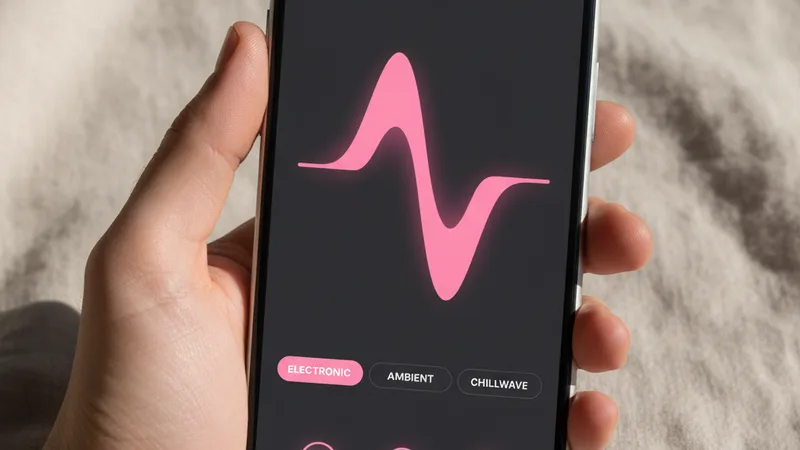
The workflow. Total time on a typical welcome track averages 10-15 minutes.
1. Write down three things first. Before opening the app: (a) the baby's name (phonetic if unusual), (b) one specific detail from the parents' journey to this moment, (c) the music the parents actually listen to.
2. Open Muziko on iPhone or iPad. Switch to Write Lyrics mode.
3. Pick the genre. Match the parents' actual taste. Acoustic ballad for cozy intimate parents. Indie folk for thoughtful parents. R&B for soulful parents. Country for country-leaning parents. Jazz standard for elegant parents. The song should feel like their music welcoming the baby into their world.
4. Pick a mood. Sentimental and dreamy for most welcome tracks. Sentimental + playful combinations work for parents whose relationship has more humor than tenderness. Sentimental + hopeful for parents who waited a long time for this baby.
5. Write six to eight lines of lyrics. Structure: two lines naming the parents' journey to the baby, two lines as a soft chorus with the baby's name, two to four lines about welcoming the baby into the specific family they're joining.
6. Set the tempo low and gentle. 70-85 BPM is the welcome-song sweet spot — slow enough to feel tender, melodic enough to be a real song rather than a lullaby. 78 BPM is a safe default.
7. Vocal direction. "Solo female vocal warm and intimate with light melodic ornamentation" for soft acoustic. "Solo male vocal warm and conversational" for folk. Match to the genre and to whose voice the song speaks in (one of the parents, a narrator, a family voice).
8. Add gentle dynamic direction. "Narrow dynamic range, gentle throughout, no sudden volume changes, mastered at a low overall level for soft household playback." Welcome songs play in households with a sleeping or just-fed baby; the mastering should match.
9. Generate four to six takes. Listen for: name pronunciation, the specific journey line landing, the soft vocal carrying tenderness without overplaying.
10. Decide on delivery. Options below.
For the full mobile workflow, the AI song generator for iPhone 2026 guide covers each creation mode in depth.
Writing welcome-song lyrics that hold the moment

A working welcome-song lyric has six ingredients.
The baby's name, phonetic if unusual. Saoirse becomes Sersha. The AI reads lyrics phonetically. For welcome songs the name carries even more weight than for other personal-occasion tracks because the baby will hear the song repeated during the first months and the name's pronunciation should be clean.
One specific detail about the parents' path to this baby. "Three years of waiting and one phone call on a Tuesday." "The cross-country move five months before the due date." "The night labor started while finishing the nursery wallpaper." The specificity grounds the song in this baby, not babies in general.
A line naming the family the baby is joining. "Maya and Jake and the third floor apartment." "The big family with three cousins already running around." "The two of us learning out loud how to be a family." This locates the baby in a specific family configuration.
A line that holds space for the parents' emotional state. "We are tired and we are full of you." "We don't know what we're doing and we are home." "You came faster than we expected and you are exactly on time." Honest about the new-parent state.
A line about a hope or wish for the baby. "May you grow into all of this slowly." "May the world be kinder than we found it." "May you sleep through more nights than not." Concrete hopes, not abstract wishes.
A soft closing line. "Welcome home." "The light is on for you." "You are already loved." Don't try to summarize the whole journey; leave the song open.
An example lyric set:
"Three years of waiting and one phone call on a Tuesday, the nursery wallpaper finished an hour before contractions, Maya, Maya, Maya, we are tired and we are full of you, Maya, Maya, Maya, the light is on for you, welcome home."
That set has the specific waiting story (three years, phone call Tuesday), the labor detail (wallpaper before contractions), the baby's name in a gentle repeated chorus, the honest parent state (tired and full), the welcoming line (light is on), and the open closing (welcome home).
For more on lyric craft, the perfect prompts breakdown covers the underlying patterns.
Matching family situation to song type: a starter chart
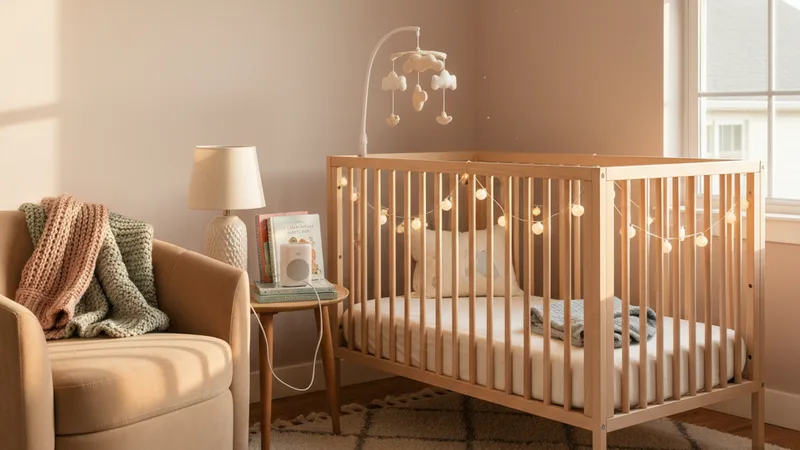
Match the welcome song to the family's actual situation, not to a generic "new baby" template.
| Family situation | Genre | Tempo | Mood | Notes |
|---|---|---|---|---|
| First baby, first-time parents | Soft acoustic | 75-85 BPM | Sentimental + dreamy | The big arrival, awe and exhaustion |
| First baby after fertility journey | Acoustic ballad | 75-85 BPM | Sentimental + hopeful | Acknowledge the waiting in the lyric |
| First baby through adoption | Acoustic with affirmation | 75-85 BPM | Sentimental + hopeful | Lyric naming the chosen-family path |
| Second or third baby | Match parents' taste | 75-90 BPM | Sentimental + playful | Siblings already running around |
| Twins or multiples | Soft acoustic | 75-85 BPM | Sentimental | Both names in the chorus |
| NICU or medical-complication arrival | Soft acoustic ballad | 70-80 BPM | Sentimental | Acknowledge the difficult start gently |
| Surrogacy or chosen-family arrival | Acoustic with affirmation | 75-85 BPM | Sentimental + hopeful | Lyric naming the chosen-family structure |
| Single-parent welcome song | Soft acoustic | 75-85 BPM | Sentimental | Lyric naming the specific single-parent reality |
| Same-sex parents welcome song | Match parents' taste | 75-85 BPM | Sentimental | Lyric affirming the family |
| Grandparent gift welcome song | Acoustic or jazz | 75-90 BPM | Sentimental | From grandparent's perspective |
| Sibling welcome song (from older child) | Playful acoustic | 80-95 BPM | Playful + sentimental | From older sibling's perspective |
| Across-distance welcome (long-distance family) | Acoustic with geography | 75-90 BPM | Sentimental | Cities in lyric, the wait to meet |
| Welcome song from late-in-life parents | Soft acoustic | 75-85 BPM | Sentimental | Honor the long path |
| Welcome song for first birthday | Soft acoustic | 80-95 BPM | Sentimental + playful | One year retrospective |
Pick the row matching the actual situation. For related guides, see the AI lullaby generator guide for actual baby sleep music, and the AI birthday song guide for the future birthday tracks.
Delivery: when and how to share the welcome song

Honest accounting of where welcome songs land best.
Strong delivery moments:
- As a private gift to the new parents from a family member or close friend. Send the audio file in iMessage with one line — "For when you have a quiet moment." The new parents listen when they're ready, often during one of the many quiet feedings of the first weeks.
- From the parents themselves to the wider family as a birth announcement. Generate the song the morning the baby comes home, send to family and friends with the birth-announcement text. The custom song replaces the standard "here is the baby, here are the stats" card.
- At the welcome gathering, softly in the background. Play the track during the small welcome-home gathering — baby shower, sip-and-see, family dinner — at low volume. The family hears the name in the chorus and recognizes the song is specifically about this baby.
- As a recording the baby grows up with. Play the welcome song annually on the baby's birthday. Within five years, the child knows their own song from infancy. Several families I've worked with say this becomes one of the most meaningful family traditions.
Use carefully:
- In the first 48 hours when the parents are exhausted. New parents in the first 48 hours often can't process emotional input well. Send the song with the understanding they may not listen until day three or four.
- Before the parents have settled on the baby's name. Some parents change a planned name in the first days. Verify the name is final before generating the track.
- At a public baby shower as a performance. Don't announce "Listen to the song I made for the baby" at a baby shower with the new parents on display. The audience pressure is too much; new parents are already overwhelmed.
- As a substitute for actually visiting and helping. A song is lovely; new parents also need meals delivered, dishes done, errands run. Send the song and help with the practical.
For related delivery patterns, see the AI Father's Day song delivery section and the AI birthday song delivery section.
Try the workflow
If a baby has arrived recently — yours, your sibling's, your closest friend's — the workflow takes 10-15 minutes from start to finished file.
Step 1: Write down the baby's name (phonetic if unusual), one specific detail about the parents' path to this baby, and the music the parents actually listen to.
Step 2: Open Muziko on iPhone or iPad. Switch to Write Lyrics mode.
Step 3: Pick the genre matching the parents' taste (acoustic ballad is the safe default for most families). Pick Sentimental mood.
Step 4: Paste the lyrics (adjusted to the family):
"Three years of waiting and one phone call on a Tuesday, the nursery wallpaper finished an hour before contractions, Maya, Maya, Maya, we are tired and we are full of you, Maya, Maya, Maya, the light is on for you, welcome home."
Step 5: Add the prompt note:
"Acoustic welcome ballad, 78 BPM, sentimental and dreamy, solo female vocal warm and intimate with light melodic ornamentation, fingerpicked acoustic guitar with soft piano figure on the second verse, light strings entering on the bridge, narrow dynamic range with no sudden volume changes, mastered at a low overall level for soft household playback, two minutes thirty seconds, soft outro fading over the last fifteen seconds."
Step 6: Generate four to six takes. Listen for the name landing cleanly and the gentle dynamics holding throughout.
Step 7: Deliver. iMessage with one line of context to the new parents on a quiet morning. Don't expect a same-day reply; the new parents listen when they have time.
For related gift-occasion workflows, see the AI birthday song guide, AI lullaby generator guide (for actual baby sleep music), AI Father's Day song guide, and AI Christmas songs guide.
Frequently asked questions
What's the difference between a welcome-baby song and a lullaby?
Welcome songs are for adult listening — the new parents, the family, friends sharing the birth announcement. Tempo runs 70-85 BPM, slightly more melodic content than a lullaby, designed to be a real song you'd play and listen to. Lullabies are for actual baby sleep — much narrower dynamic range, no sudden volume changes, very minimal melodic content, tempo 55-75 BPM, designed to support sleep transitions rather than active listening. The two serve different purposes and have different production requirements. Generate the welcome song for the parents' celebration of the baby's arrival; generate a separate lullaby (using the workflow in the AI lullaby generator guide) for the actual sleep routine. The welcome song often becomes the song the baby grows up with as their own; the lullaby supports the daily sleep work.
How long does it take to make a custom welcome-baby song?
Realistically, 10 to 15 minutes from start to finished file. The workflow is: write down the baby's name (phonetic if unusual), one specific detail about the parents' path to this baby, and the music the parents actually listen to. Open Muziko on iPhone or iPad. Switch to Write Lyrics mode. Pick the genre matching the parents' taste. Pick Sentimental mood. Write six to eight lines of lyrics with the name and the specific detail. Set the tempo to 75-85 BPM. Prompt for narrow dynamic range. Generate four to six takes. Pick the strongest. The whole workflow runs under 15 minutes once you've drafted the lyrics. For new parents themselves generating the song while sleep-deprived, plan for closer to 30 minutes — the lyric writing slows down when you're running on three hours of sleep.
Can I make the welcome song before the baby is born?
Wait until the name is final and ideally until the baby has arrived safely. Generating the song with a planned name that the parents later change requires regeneration. Generating before the birth carries some emotional risk if the birth has complications — songs about anticipated arrivals don't always land the way intended after an unexpected outcome. The standard timing is: generate the song within the first week of the baby's arrival when the name is final, the family is celebrating, and the song's specific timing carries its own emotional weight. For long-distance family members who can't visit immediately, the song becomes a way to be present from a distance during the first weeks.
Can the AI sing the baby's name correctly?
Common English names get pronounced correctly on the first take about 95 percent of the time. Less common or non-English names sometimes need phonetic spelling — Saoirse becomes Sersha, Aoife becomes Eefa, Caoimhe becomes Keeva. For baby names specifically, this matters a lot because the baby will hear the song repeatedly during the first months and the name pronunciation will become part of how they hear their own name. Generate five to seven takes for unusual names and listen specifically for the cleanest pronunciation. If after seven takes the pronunciation is still off, try a slightly different phonetic spelling or switch the vocal style direction. For the most-loved welcome songs in my survey, the parents reported testing five or more takes before picking the one with the right name pronunciation.
What if there were complications with the birth or pregnancy?
Acknowledge it gently in the lyric without dwelling. A song that ignores a difficult arrival can feel false; a song that fixates on the difficulty can feel heavy. The lyric pattern that works: one line that honors what was hard ("you came faster than we expected," "the long week in the hospital," "the three years of waiting"), then the song proceeds with the celebratory welcome rather than dwelling further. For NICU stays specifically, lyrics like "the first weeks were not what we planned" or "we are bringing you home now" hold the difficulty honestly. For families navigating complicated pregnancy outcomes including loss, songs for previous losses or for siblings who didn't make it are their own category — see the AI memorial song guide for the careful tone-handling needed in those cases.
Can grandparents or extended family make the welcome song for their grandchild?
Yes, and this is one of the most meaningful use cases. Long-distance grandparents who can't visit immediately benefit especially from the workflow — generating a custom welcome song for the new grandchild lets them be part of the welcome moment from across the country or the world. The lyric perspective can be either the grandparent's voice ("we waited for you across the country") or a more general welcoming voice. Aunts, uncles, godparents, and close family friends also produce meaningful welcome songs. Several families I've worked with end up with multiple welcome songs from different family members, each capturing the welcoming voice of that specific relative. The new parents often save all of them as the baby's growing-up musical history.
Try everything you just read about. Muziko is free to download.

![AI Lyrics Generator: Write Song Lyrics Free [Tested 2026]](/_next/image?url=%2Fimages%2Fblog%2Fai-lyrics-generator%2Fhero.webp&w=3840&q=75)
![AI Amapiano Generator: Log Drum Tracks [Tested 2026]](/_next/image?url=%2Fimages%2Fblog%2Fai-amapiano-generator-log-drum-tracks%2Fhero.webp&w=3840&q=75)