
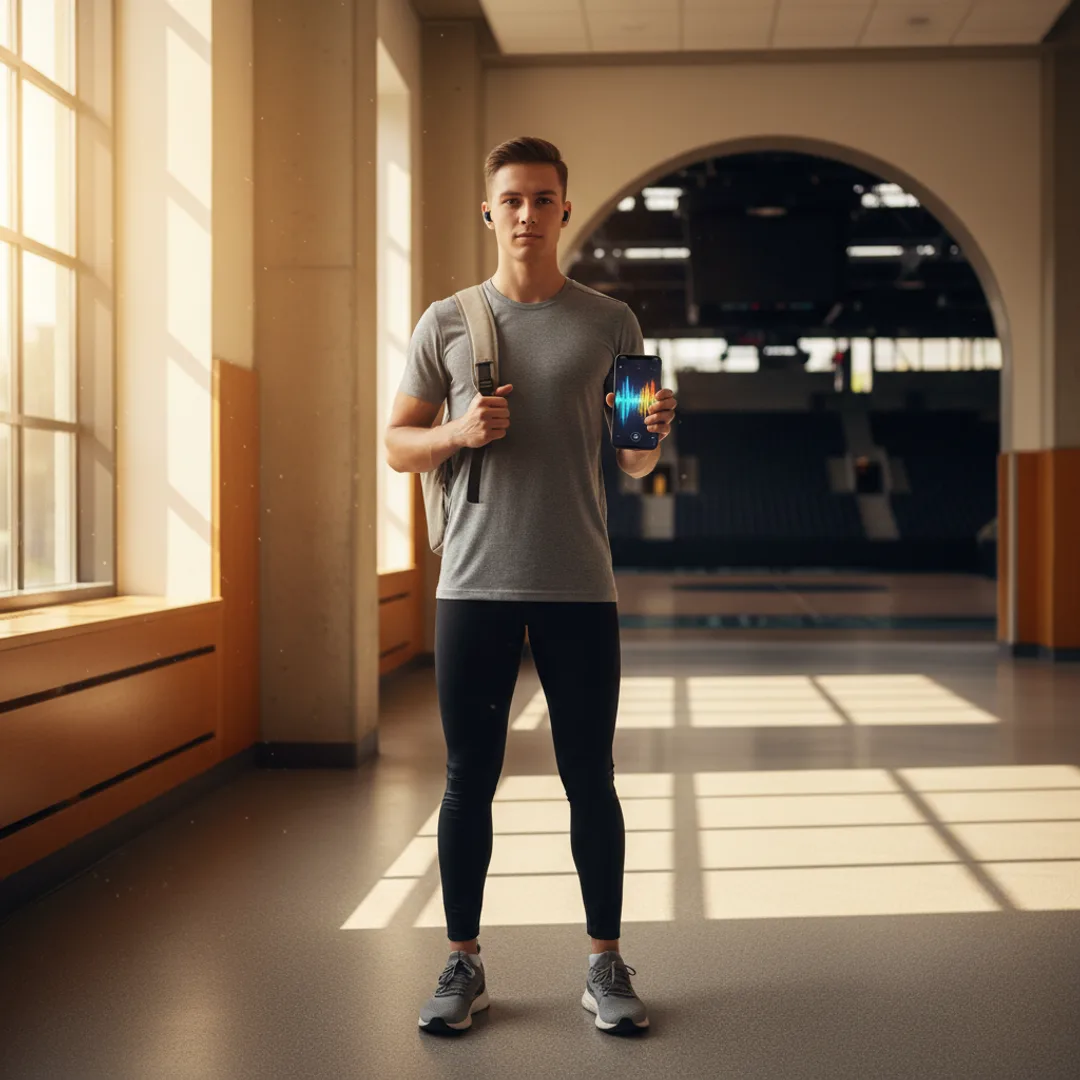
AI Hype Song Generator: Motivation Tracks That Hit Hard
Custom AI hype songs at 128 BPM with your name in the chorus. Generate motivation tracks for big games, performances, presentations, and personal records in 5 minutes.
A college athlete I know walks out for every basketball game with the same Eminem track he's played for four years. It works for him, but he asked me last fall whether AI could generate a version of his pre-game hype playlist that was specifically about him — his name in the chorus, his team, his specific routine — instead of about Eminem's struggles in 8 Mile. The track I generated for him in five minutes that week became the new pre-game ritual. He still loves the Eminem song, but the custom AI hype track was specifically for him, and the specificity hit different on the bench before tip-off.
This is the case for custom AI hype songs that the existing pre-game-playlist industry hasn't built around. The standard hype playlist is collective — the same tracks get reused across thousands of athletes, performers, public speakers, and people prepping for any big moment. Each track is great in its own right, but none of them are about your specific moment, your specific name, your specific big day. Custom AI hype music fills that gap quickly, cheaply, and at the same energy level as the commercial reference tracks.
This guide is the workflow for generating motivation tracks on iPhone. The tempo and genre choices that produce real pump-up energy, the prompt patterns that make hype tracks land, the personalization techniques that turn a generic motivation track into something specifically for your moment, and the honest cases where AI hype music helps versus where the familiar commercial track still wins.
Why generic hype playlists eventually stop hitting
A few specifics about hype music that anyone who has prepped for repeated big moments eventually figures out.
The standard pre-game playlist is finite and overused. Eye of the Tiger. Lose Yourself. We Will Rock You. Can't Stop. The big motivation tracks have been used by millions of athletes, performers, and public speakers for decades. Each remains great in isolation. But the cumulative effect of hearing the same songs in every locker room, every warm-up, every big-moment playlist starts to dull their charge.
Most hype songs are about other people's hype moments. Eminem's specific underdog story. Rocky's training montage. Queen's stadium energy. These songs work partly through projection — you map your moment onto theirs. The projection is incomplete in the same way breakup-song projection is.
Tempo and energy curve matter more than most users think. Real hype music sits in the 120-145 BPM range. Lower than that starts to feel mid-tempo rather than pump-up. Higher than that feels frantic rather than focused. The energy curve through the track matters too — a song that builds toward a drop or a chorus that lands at exactly your walk-out moment is meaningfully more useful than a flat-energy track.
Name-in-chorus hype is different from generic hype. A track where the chorus screams your actual name, your school, your team, your goal lands in a way that generic motivation tracks can't replicate. Most people have never had a song specifically about them; the novelty of that, even when the song is just OK, is its own kind of fuel.
Pre-game hype routines benefit from variation. Listening to the same hype song before every game eventually loses its activation effect. Custom AI tracks let you build a small rotation of hype songs — same energy, same specific personalization, different specific tracks — that sustain the activation effect longer than a single song can.
For the broader personalization-driven AI music pattern, see the AI graduation song guide which covers anthem-style personalization, and the AI workout music guide which covers the related gym/training music workflow.
What custom AI hype songs do that streaming playlists cannot
Five things custom AI hype songs do that commercial pre-game tracks cannot.
- Your name in the chorus, your team in the lyrics, your specific goal as the song's central image. Not a generic "let's go" but "Maya at the free-throw line, Maya for State."
- The exact tempo your activation system responds to. 128 BPM for one athlete; 134 BPM for another. AI lets you target the precise BPM that gets you locked in.
- A length that matches your warm-up routine. Two minutes thirty for the walk from the locker room to the floor. Three minutes for a longer warm-up. Custom AI tracks can be prompted to specific lengths.
- A drop or chorus that lands at your specific moment. "Drop at 1:15" in the prompt times the energy peak to the moment you step onto the court, stage, or starting line.
- A library that doesn't saturate. Generate a fresh hype track each week of the season; the variety sustains the activation effect that a single repeated track loses.
For the prompt-craft side, how to write AI song prompts that actually produce great music is the most useful companion read.
Step-by-step: a hype track in Muziko
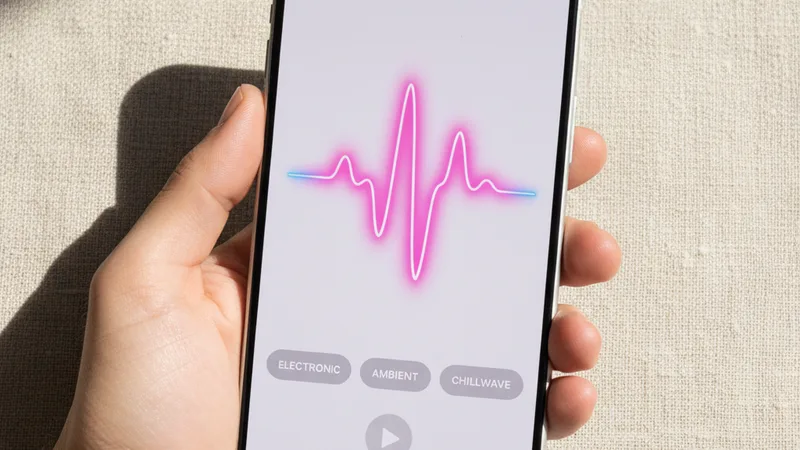
The workflow for a custom hype song. Total time on a typical track averages 4 minutes.
1. Open Muziko on iPhone or iPad. Switch to Write Lyrics mode if you want your name and specific details in the lyrics, or Describe mode for instrumental hype.
2. Pick the genre. Hip-hop, trap, EDM, hard rock, and aggressive anthemic pop are the five that consistently produce hype-grade energy. Pick the genre your activation system responds to — some people hype to trap, some to rock, some to EDM.
3. Pick a mood. Confident and euphoric are the two for most hype tracks. Confident for focused locked-in energy. Euphoric for explosive moment energy.
4. Write five to seven lines of lyrics if using Write Lyrics mode. Structure: one or two lines naming the specific moment ("Maya at the free throw line"), a chorus with your name and goal ("Maya for State, Maya for State"), one or two lines about preparation or what you've been through to get here. Concrete and specific.
5. Set the tempo. 120-135 BPM for trap-style hype. 128-140 BPM for EDM hype. 95-115 BPM for hip-hop hype. 110-130 BPM for hard rock or pop hype. Match the BPM to your activation preference.
6. Specify the drop or energy peak. "Build through the first minute, drop at 1:15 with full energy, sustained drop through 2:00, brief breakdown at 2:15, second drop at 2:30 with maximum energy." The energy curve carries the activation effect.
7. Vocal direction matters. "Solo male vocal aggressive hype delivery, ad libs throughout, vocal chops in the chorus" for trap. "Solo female vocal confident clear delivery with stacked harmonies in the chorus" for anthemic pop. Match the vocal to the genre.
8. Generate four to six takes. Listen on the actual earbuds or headphones you'll wear during your warm-up. Pick the take where the energy lands cleanest and the drop hits at the right moment.
9. Save and queue. Build a small playlist of three to five custom hype tracks for season-long use. Rotate to sustain the activation effect.
For the full mobile workflow, the AI song generator for iPhone 2026 guide covers each creation mode in depth.
Writing a hype song prompt that lands

A working hype song prompt has seven ingredients.
The genre, narrow and specific. "Hard trap with 808 bass and hi-hat rolls" or "festival EDM with big synth lead and four-on-the-floor kick" or "anthemic hard rock with electric guitar and live drums" or "aggressive boom-bap hip-hop with vinyl crackle and hard kick."
The tempo, as a specific BPM number. 128 BPM for trap; 132 BPM for festival EDM; 100 BPM for boom-bap hip-hop; 115 BPM for hard rock. Match to your activation preference.
Your name in the lyrics if using Write Lyrics mode. Phonetic spelling if your name is unusual. The AI vocal model handles names better when the spelling matches the pronunciation rather than the official spelling.
The specific moment named. "Walking out for the State game," "about to take the stage at TED," "defending my dissertation in twenty minutes." The specificity is what gives the track its activation power.
The energy curve and drop timing. "Build through the first sixty seconds, drop at 1:15 with full energy and 808 bass, sustained drop through 2:00, brief breakdown at 2:15 with just hi-hats and vocal chops, second drop at 2:30 with maximum energy and ad libs."
The length matched to your routine. Two minutes thirty for shorter walks; three minutes for longer warm-ups; ninety seconds for quick moments.
Hype-specific mastering. "Heavy compression, prominent low end, vocals slightly forward, mastered for loud playback through over-ear headphones or earbuds in a high-energy environment."
A combined working prompt for a basketball pre-game track:
"Hard trap hype song for basketball pre-game, 128 BPM, confident and euphoric mood, deep 808 bass with hard hi-hat rolls on the chorus, snare claps on the offbeat, solo male vocal aggressive hype delivery with ad libs throughout and vocal chops in the chorus, light autotune for color, lyrics naming Maya stepping up to the free throw line and Maya for State as the central image, build through the first sixty seconds, full drop at 1:15 with maximum energy, sustained drop through 2:00, brief breakdown at 2:15 with just hi-hats and vocal chops, second drop at 2:30 with maximum energy, two minutes forty-five seconds total, mastered for loud playback with heavy compression, prominent low end, and vocals slightly forward."
In testing, that prompt produces a hype-grade track on roughly three to four generations about 80% of the time. For more on iterating prompts, the perfect prompts breakdown covers the underlying patterns.
Matching big moment to hype song type: a starter chart
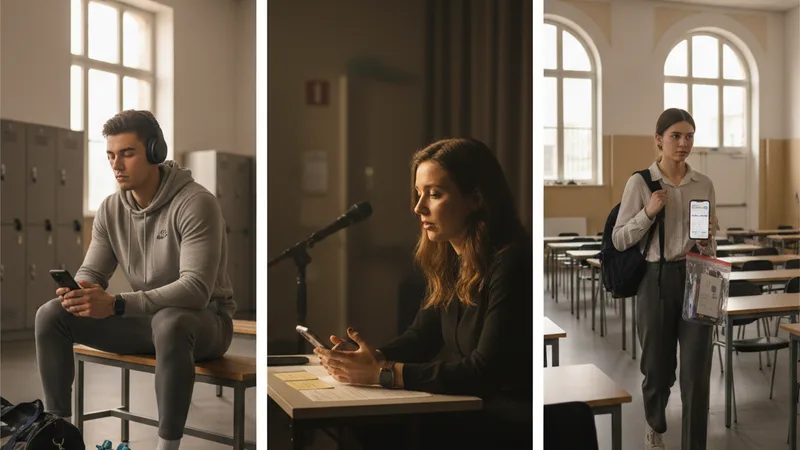
Different big moments benefit from different hype profiles. Patterns that hold consistently.
| Big moment | Genre | BPM | Length | Notes |
|---|---|---|---|---|
| Basketball / football pre-game | Trap or hard rock | 120-135 BPM | 2:30-3:00 | Drop timed to court/field walk-on |
| Running race (5k, 10k) | EDM or hip-hop | 128-145 BPM | 3:00-4:00 | Sustained energy through the race |
| Lifting a personal record (gym) | Hard trap or aggressive metal | 80-100 BPM | 2:00-2:30 | Slower tempo for heavy lift cadence |
| Stage performance / TED talk | Anthemic pop or epic cinematic | 110-125 BPM | 2:00-3:00 | Confident-builder energy |
| Job interview / big presentation | Confident hip-hop or anthemic pop | 100-115 BPM | 2:00-2:30 | Focused locked-in energy |
| Wedding party walk-in | Anthemic pop with celebratory energy | 115-128 BPM | 3:00-4:00 | Crowd-energy momentum |
| Concert / DJ set warm-up | Match genre you'll play | 120-135 BPM | 3:00-5:00 | Crowd-prep energy |
| PhD defense / academic milestone | Anthemic pop with key change | 105-120 BPM | 2:30-3:00 | Confident pre-defense centering |
| Exam day morning | Confident hip-hop or anthemic pop | 95-115 BPM | 2:30-3:00 | Calm-confident, not frantic |
| Wedding ceremony aisle walk | Anthemic pop or cinematic strings | 110-125 BPM | 2:30-3:30 | Celebration-energy |
| Marathon final 6 miles | Sustained EDM or hip-hop | 130-145 BPM | 5:00+ | Looped or playlist for sustained energy |
| Career-defining sales call | Confident hip-hop | 100-115 BPM | 2:00-2:30 | Locked-in but not frantic |
| First day of new job | Anthemic pop | 105-125 BPM | 2:30-3:00 | Confident hopeful energy |
| Pre-surgery / pre-medical-procedure | Calm-confident anthemic | 80-100 BPM | 2:30-3:00 | Centering rather than activating |
Pick the row that matches your big moment. Lock the BPM. Generate the track. For the related personal-occasion AI music workflows, see the AI graduation song guide and the AI workout music generator guide.
When AI hype music works — and when familiar tracks still win

Honest accounting of where AI hype music lifts the moment and where the familiar commercial track is still the right call.
Works well:
- For recurring big moments where the saturated playlist has dulled. Athletes who have heard Lose Yourself a thousand times benefit from custom alternatives that restore activation energy.
- For personal-occasion moments with a specific narrative. PhD defenses, job interviews, wedding walk-ins, milestone birthdays — moments where the specificity of "this is about me specifically" is part of the activation.
- For team-shared rituals where each player wants a personal track. Team locker rooms where each athlete plays their own personal hype track work well with AI-generated individualized tracks.
- For sustained big-moment seasons. A college athlete's season has thirty-plus games; a rotation of five to ten custom hype tracks sustains activation better than the same one or two tracks repeated.
- For non-athletic big moments. Public speakers, performers, presenters, surgeons, anyone preparing for a high-stakes moment benefits from personalization that the standard "psych-up" playlists lack.
Familiar tracks still win:
- When the moment is the song. Some athletes have walked out to the same song for so long that the song is the ritual. Replacing it would break the routine. Keep the familiar track.
- For shared crowd moments where the audience needs to recognize the song. Stadium walk-outs, wedding entrances, victory celebrations — moments where the audience's recognition is part of the energy. Familiar songs win here.
- For artists who have a personal-history relationship with a specific song. Eye of the Tiger worked for Rocky because of the movie; it works for athletes who grew up with it because of the cultural weight. Custom AI tracks can't replicate that history.
- For one-off big moments where you don't have time to optimize. A surprise opportunity, a last-minute presentation, an unexpected performance — reach for the familiar track that you know activates you, not for a custom track you haven't tested.
- For users sensitive to AI-generated vocals on emotionally important moments. Some users find the AI vocal quality less activating than a human performer's voice. Personal preference; test before relying on AI for the most important moments.
For the broader workout-and-physical-activity context, the AI workout music generator guide covers gym-specific workflows.
Try the workflow for your next big day
The fastest way to evaluate AI hype music is to generate one track for an upcoming big moment.
Step 1: Identify the moment. Game day, presentation, walk-out, milestone — whatever's on your calendar.
Step 2: Open Muziko on iPhone or iPad. Switch to Write Lyrics mode.
Step 3: Pick Trap (or your preferred hype genre) and Confident mood.
Step 4: Write the lyrics with your name and the specific moment:
"Maya at the free throw line, Maya for State, Maya for State, every six a.m. run, every late practice, Maya for State, Maya for State, the gym is yours now, the floor is yours now."
Step 5: Add the prompt note:
"Hard trap hype song, 128 BPM, confident and euphoric mood, deep 808 bass with hard hi-hat rolls on the chorus, snare claps on the offbeat, solo female vocal aggressive hype delivery with ad libs throughout, light autotune for color, build through the first sixty seconds, full drop at 1:15 with maximum energy sustained through 2:00, brief breakdown at 2:15, second drop at 2:30 with maximum energy, two minutes forty-five seconds total, mastered for loud earbud playback with heavy compression, prominent low end, and vocals slightly forward."
Step 6: Generate four to six takes. Listen on the actual earbuds you'll wear for warm-up. Pick the take where the energy lands and the drop hits at the right moment.
Step 7: Test it before the big moment. Listen during a practice run or a similar low-stakes warm-up. Does it activate you? Does the drop hit when you want it to? Iterate if needed.
For other related personal-occasion guides, the AI graduation song guide covers anthem-style tracks, the AI workout music generator guide covers training music, and the AI birthday song guide covers celebration tracks with name-in-chorus personalization.
Frequently asked questions
Do custom AI hype songs actually pump you up better than commercial tracks?
For most users with recurring big moments, yes — the specificity of having your name in the chorus, your moment named in the lyrics, and the tempo tuned to your activation preference produces activation energy that saturated commercial tracks have lost. Athletes who have heard Lose Yourself or Eye of the Tiger a thousand times benefit from custom alternatives. PhD defenders, public speakers, performers, and anyone with personal big-moment patterns get the same benefit. The exceptions are users whose pre-game ritual is tied to a specific familiar song with personal history — for them, replacing the familiar track breaks the ritual rather than enhancing it. Test both and pick what activates you better.
What BPM is best for hype music?
120-135 BPM is the broad hype music range. Hard trap at 120-135 BPM. Festival EDM at 128-140 BPM. Hip-hop hype at 95-115 BPM. Hard rock at 110-130 BPM. Match the BPM to the specific physical activity if applicable — heavy lifting fits 80-100 BPM, basketball walk-out fits 120-135 BPM, running races fit 128-145 BPM. Prompt the BPM as an exact number rather than vague directions. Experiment with three to five BPMs in your first generations to find your personal hype tempo — most users land at 128 BPM for trap-style hype or 110-115 BPM for hip-hop hype.
Can the AI sing my name correctly in the hype track?
Common English names get pronounced correctly on the first take about 95 percent of the time. Less common or non-English names sometimes get mispronounced on early generations. The fix is to spell the name phonetically in the lyrics field — Saoirse becomes Sersha, Aoife becomes Eefa, Caoimhe becomes Keeva. The AI reads lyrics phonetically; it doesn't need the official spelling, only how the name is pronounced. For hype tracks, generate four to six takes and listen specifically for clean name pronunciation — a mispronounced name on a hype track disrupts the activation effect. If after six takes the pronunciation is still off, try a slightly different phonetic spelling on the next attempt.
How long should a hype song be?
Match the length to your warm-up routine. For basketball or football walk-outs, 2:30-3:00 covers the locker-room-to-court walk. For running races, 3:00-4:00 covers the start sequence. For longer warm-ups like marathons or sustained competitions, build a playlist of multiple hype tracks rather than relying on a single long one. Most AI music apps in 2026 cap individual tracks at 4 minutes. For presentations and public speaking, 2:00-2:30 covers the backstage psych-up. The track should be slightly longer than the actual moment so you have buffer time without the music running out mid-walk-out.
Should I time the drop in the song to a specific moment?
Yes, this is one of the most powerful hype-song techniques. Prompt the AI for an explicit drop time matched to your moment — "full drop at 1:15 with maximum energy" if your walk-out from the tunnel to the court takes 1:15 from when the music starts. The drop landing exactly when you step onto the floor creates a coordinated activation moment that flat-energy tracks can't match. Practice the timing once before the actual big moment so you know when to press play relative to when you need the drop to hit. Most AI music apps handle drop-timing prompts reliably when the prompt is specific about both the timing and the energy character at the drop.
Can I use AI hype songs in commercial sports or performance contexts?
Yes, when generated on the paid tier of a reputable AI music app like Muziko Pro at $34.99 per year, Suno Pro, or Udio Pro. The paid tier grants commercial usage rights including stadium and arena playback, team and league use, public performance, and social media posting. Free-tier generations are usually restricted to personal non-commercial use. For professional sports teams, college athletic programs, performance venues, or any commercial use of the hype track for marketing or broadcast purposes, generate on the paid tier. Disclose AI use to the relevant program or venue if asked — most professional venues in 2026 have begun asking about AI content in walk-out music as part of broadcast clearance.
Try everything you just read about. Muziko is free to download.

![AI Lyrics Generator: Write Song Lyrics Free [Tested 2026]](/_next/image?url=%2Fimages%2Fblog%2Fai-lyrics-generator%2Fhero.webp&w=3840&q=75)
![AI Amapiano Generator: Log Drum Tracks [Tested 2026]](/_next/image?url=%2Fimages%2Fblog%2Fai-amapiano-generator-log-drum-tracks%2Fhero.webp&w=3840&q=75)