

Can You Put AI Music on Spotify? 7 Platform Rules 2026
Yes, you can upload AI music to Spotify in 2026. But Deezer demonetizes it and Tidal pays no royalties on fully AI tracks. Every platform's rules, compared.
Eighteen months ago the honest answer to "can I put my AI song on Spotify" was a shrug. Nobody had written the rules yet.
That changed fast. Between March and August of this year, essentially every major platform published an AI policy, and they did not all land in the same place. Spotify built a disclosure system and said explicitly that it will not down-rank you for using AI. Tidal decided that wholly AI-generated music will not earn royalties at all. Deezer has been detecting and demonetizing since well before any of this, and reported that at peak in June, more than half of everything being uploaded to it was fully AI-generated.
So the answer is no longer a shrug. It is "yes, and it depends enormously on which platform and how you fill in one metadata field."
Most people reading this do not need any of it. If you are making a song for your mum's birthday or scoring your own YouTube videos, none of these rules touch you. This piece is for the smaller group who want to actually distribute, and for whom getting the disclosure wrong is the difference between earning and getting quietly filtered.
Dates and policies below are current as of September 2026 and are moving quickly. Check the platform's own documentation before you release.
Why "is AI music allowed" is the wrong question
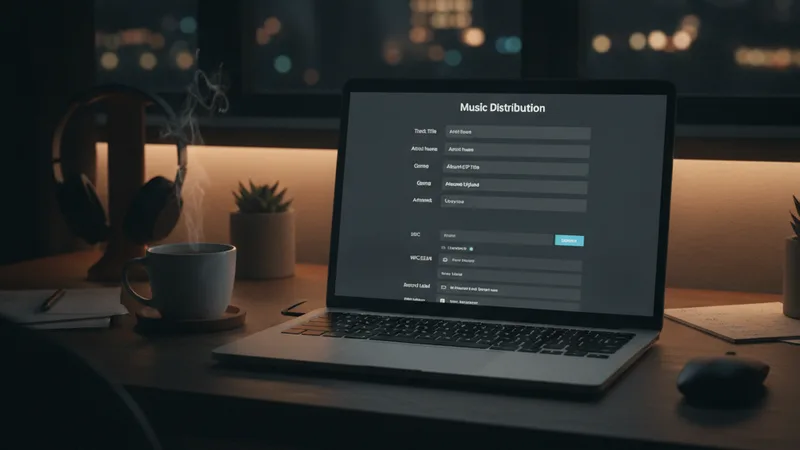
Allowed, monetized, and playlisted are three different things. Almost every platform allows AI-assisted music. Far fewer treat it identically to human-made music once it comes to royalty attribution and algorithmic recommendation. A track can be live on a service, findable by name, and still be excluded from the playlists that actually generate streams.
The volume problem is what is driving all of this. Deezer reported receiving roughly 90,000 fully AI-generated tracks per day, exceeding half of all new uploads at peak in June 2026. Notably, those tracks accounted for only 1 to 3 percent of actual streams. Platforms are not reacting to demand. They are reacting to flooding.
Fraud is the real target, not you. Deezer has said it demonetized up to 85 percent of streams on fully AI-generated music tied to fraud. The policies being written are aimed at bot-farmed uploads designed to skim royalties, not at someone releasing a handful of tracks they made themselves. That distinction matters, and it is why disclosure generally helps you rather than hurting you.
The disclosure is metadata, and metadata gets dropped. This is the failure mode almost nobody anticipates. If the AI field is left blank, whether from oversight or because your distributor does not support it, no tag travels downstream and there is no automated fallback at ingest. Silence is not neutral. It just means the information is missing.
Nothing here is about copyright. These are platform policies, which is a separate question from whether you own the track and can sell it. Our guide to selling AI-generated music covers the ownership side.
What actually changed in 2026

- A shared vocabulary arrived. In July, a coalition including the RIAA and IFPI plus independent label, songwriter and performer groups proposed a common labeling system with two tags: AI Generated for tracks built entirely by AI, and AI Assisted for human-led work with some AI involvement. That distinction is now the spine of most platform policy.
- Disclosure moved into the metadata standard. The DDEX specification, which is how release information travels from your distributor to every store, now carries dedicated AI-disclosure fields. This is what makes a tag portable rather than platform-specific.
- Spotify shipped AI Credits on 16 April 2026. It lets you state how AI was used, down to the granularity of a single guitar part versus the whole production, and it surfaces in song credits. Spotify has stated it does not penalize or down-rank music for being AI-assisted.
- Spotify added AI persona badges on 11 August 2026, a separate mechanism covering artist identities that are AI-generated rather than individual tracks. A broader "Made With AI" label is expected to roll out by the end of the year.
- Apple Music launched Transparency Tags in March 2026, split across four categories: artwork, track audio, composition, and music video. It is the most granular of the systems.
- Tidal drew a harder line. From 15 July 2026, music it identifies as wholly AI-generated is not eligible for royalty attribution.
- Deezer has been doing this longest, with proprietary detection since June 2025, and keeps flagged tracks out of algorithmic recommendations and editorial playlists.
Step-by-step: releasing an AI-assisted track correctly
- Decide honestly which tag you are. If you wrote the lyrics and directed the production but the audio was generated, you are AI Assisted. If you typed one prompt and uploaded the result untouched, you are AI Generated. Guessing generously in your own favour is the thing detection systems are built to catch.
- Pick a distributor that supports AI disclosure fields. This is now the single most important selection criterion and most artists do not check it. Ask before you pay.
- Fill in the AI field. Do not leave it blank. A blank field does not read as "no AI." It reads as missing data, and on platforms running their own detection, a mismatch between your silence and their classifier is a worse position than honest disclosure.
- Be specific if the field allows it. Spotify's system accommodates detail about which elements involved AI. Specificity reads as good faith and costs you nothing.
- Add real human contribution and document it. Your own lyrics, your own arrangement decisions, your own mixing. This is what moves you from Generated to Assisted, and the difference has real royalty consequences on Tidal.
- Do not create a fake artist identity. Photorealistic AI-generated artist personas are specifically what Spotify's August badge system was built to identify. Use your own name.
- Do not upload in volume. A hundred tracks in a week is the exact signature of the fraud pattern these systems target. Release like an artist, not like a content farm.
- Never buy streams. Combined with an AI flag, artificial streaming is the fastest route to demonetization. This is where Deezer's 85 percent figure comes from.
- Check your credits after release. Confirm the disclosure actually appeared. Distributors do drop fields.
- Set a calendar reminder to re-check policy every quarter. Four major changes happened in six months this year.
What disclosure actually costs you
The fear that keeps people from disclosing is that the label will bury them. Based on what platforms have published, that fear is mostly misplaced, but not entirely.
On Spotify, the stated cost is zero. The company has said directly that it does not penalize or down-rank music for being AI-assisted. Disclosure surfaces as information in credits, not as a demotion signal.
On Deezer, the cost is real. Flagged tracks are excluded from algorithmic recommendations and editorial playlists, which is where discovery happens. Being live on the service is not the same as being findable.
On Tidal, the cost is total for fully AI tracks. No royalty attribution. If your track is classified as wholly AI-generated, it does not earn there.
The asymmetry is what should decide it for you. Disclosing gets you an accurate label. Not disclosing gets you either the same label anyway through detection, or a credibility problem if you are caught. The upside of silence is small and the downside is not.
The genuine cost is human, not algorithmic. Some listeners will skip a track labeled AI. That is a real effect and worth being clear-eyed about. It is also the reason the Assisted tag exists, and why doing actual creative work on top of generated audio is worth the effort rather than just being ethically tidier.
Platform-by-platform: the 2026 rules

| Platform | Uploads allowed | Disclosure | Labels shown | Royalty impact | Discovery impact |
|---|---|---|---|---|---|
| Spotify | Yes | AI Credits, since 16 Apr 2026 | Credits; persona badges since 11 Aug | None stated for AI-assisted | Explicitly no down-ranking |
| Apple Music | Yes | Transparency Tags, since Mar 2026 | Four categories, granular | None stated | Not stated |
| Deezer | Yes | Own detection since Jun 2025 | Tagged automatically | Demonetized where fraud-linked | Excluded from algo and editorial |
| Tidal | Yes | Own identification | Not detailed publicly | None for wholly AI, from 15 Jul 2026 | Not stated |
| Amazon Music | Yes | Follows DDEX fields | Not detailed publicly | Not stated | Not stated |
| YouTube Music | Yes | Altered-content disclosure | Description-level | Standard monetization rules | See our YouTube guide |
| SoundCloud | Yes | Terms address AI use | Not detailed publicly | Standard | Not stated |
Treat the "not stated" cells as genuinely unknown rather than as permission. Several platforms have policy but have not published the operational detail, and that is a meaningful difference from having no policy at all.
When distributing AI music makes sense, and when it doesn't
Makes sense:
- AI-assisted work with real human input. Your lyrics, your arrangement, your edits, generated audio as one component. This sits comfortably inside every current policy.
- Instrumental and production libraries. Sync, background beds, and licensing work where discovery playlists were never the channel anyway. Our sync licensing guide covers that route.
- Direct-to-audience selling. Bandcamp, your own site, Etsy, Fiverr commissions. No platform classifier sits between you and the buyer.
- Building a catalogue slowly. A few tracks a month, disclosed, under your own name, looks like an artist and is treated like one.
Doesn't make sense:
- Volume uploading for passive royalties. This is the exact pattern the last eighteen months of policy was written to stop. The economics no longer work and the detection is now good.
- Undisclosed fully-generated tracks. You are betting against classifiers that are improving faster than prompting is.
- Anything routed through a fake artist persona. Specifically targeted, and reputationally unrecoverable if caught.
- Chasing Deezer playlist placement with generated music. Structurally excluded. Pick a different platform or a different goal.
- Expecting streaming royalties to be meaningful at small scale. This is true for all independent music, not just AI. Our guide to making money with AI music is blunt that commissions and licensing pay far better than streams.
Try this before you distribute anything
Open Muziko on the App Store and make one track you would actually be willing to put your name on. Write the lyrics yourself in Write Lyrics mode rather than generating them. Pick the genre and mood deliberately. Generate several takes and choose between them on purpose.
Then ask yourself the question that every platform policy is really asking: if you had to describe your contribution in one sentence in a credits field, what would it say? If the honest answer is "I wrote the words and chose the arrangement," you are AI Assisted and you are on solid ground everywhere. If the honest answer is "I typed one line and uploaded it," that is worth knowing before a classifier tells you.
That sentence is the whole test, and it is a better guide than any policy table. For getting more out of the generation itself, our prompt-craft guide is the place to start.
Frequently asked questions
Can you upload AI-generated music to Spotify in 2026?
Yes. Spotify allows AI-assisted and AI-generated music and launched its AI Credits disclosure system on 16 April 2026, which lets artists state how AI was used in a track. Spotify has said it does not penalize or down-rank music for being AI-assisted. You're expected to disclose AI use through your distributor's metadata fields, and separate persona badges arrived in August 2026 for artist identities that are themselves AI-generated.
What's the difference between "AI Generated" and "AI Assisted"?
In July 2026 a coalition including the RIAA and IFPI proposed a shared two-tag system. AI Generated means a track built entirely by AI with no meaningful human authorship. AI Assisted means human-led work where AI played a part, such as generated audio under lyrics you wrote and an arrangement you directed. The distinction has real consequences, most notably on Tidal, where wholly AI-generated music is not eligible for royalty attribution.
Do streaming platforms pay royalties on AI music?
It varies. Spotify has not stated any royalty penalty for AI-assisted music. Tidal announced that from 15 July 2026, music it identifies as wholly AI-generated is not eligible for royalty attribution. Deezer has demonetized up to 85 percent of streams on fully AI-generated music tied to fraud, and keeps flagged tracks out of algorithmic recommendations and editorial playlists, which reduces earnings indirectly by limiting discovery.
What happens if I don't disclose that my music used AI?
A blank disclosure field doesn't read as "no AI," it reads as missing data, and no tag travels downstream to the platforms. Several services run their own detection regardless, so a track can still be flagged. The practical risk is a mismatch between your silence and a platform classifier, which is a worse position than honest disclosure, particularly since Spotify has said disclosure carries no ranking penalty.
Does my distributor support AI disclosure fields?
Not all of them do, and this is now one of the most important things to check before choosing one. Disclosure travels through the DDEX metadata standard used to send release information from distributors to stores, and if your distributor doesn't populate those fields, nothing reaches the platform. Ask directly before paying, and verify after release that the disclosure actually appeared in your credits.
Is it worth distributing AI music to streaming at all?
It depends on the goal. AI-assisted tracks with genuine human input, released steadily under your own name, sit comfortably within every current policy. Uploading in volume to farm passive royalties no longer works and is the exact pattern current detection targets. For most people making AI music, commissions, sync licensing and direct sales pay considerably better than streaming royalties, which are small for all independent artists regardless of how the music was made.
Try everything you just read about. Muziko is free to download.

![AI Lyrics Generator: Write Song Lyrics Free [Tested 2026]](/_next/image?url=%2Fimages%2Fblog%2Fai-lyrics-generator%2Fhero.webp&w=3840&q=75)
![AI Amapiano Generator: Log Drum Tracks [Tested 2026]](/_next/image?url=%2Fimages%2Fblog%2Fai-amapiano-generator-log-drum-tracks%2Fhero.webp&w=3840&q=75)