AI Retirement Songs: Honor a 40-Year Career in 2 Minutes
Custom AI retirement songs that honor a real career — their name in the chorus, their job in the lyrics, generated on iPhone in 5 minutes. Better than another engraved plaque.
My uncle retired from teaching last June after forty-two years at the same high school. The retirement party at the cafeteria had a sheet cake, a slideshow, three speeches that ran long, and an engraved plaque that he thanked everyone for and then put in a box that I'm pretty sure has not been opened since. The plaque was kind. It was also exactly the same shape as every other engraved retirement plaque any teacher has received in that district for fifty years. The morning of the party, his daughter generated a custom AI song on her iPhone — acoustic folk, his name in the chorus three times, one line about the specific classroom on the third floor where he taught American Government for thirty-eight of those years. She played it during the slideshow. Three of his former students cried. He kept that one out of the box.
This is the case for custom AI retirement songs that the retirement-gift industry hasn't built around. Retirement gifts in 2026 are remarkably consistent — engraved plaques, gold watches, framed certificates, retirement cards signed by people who couldn't make the party. They are conventional and they are forgettable specifically because they are conventional. A custom AI track names the actual retiree, references their actual career, and exists nowhere else. The marginal cost is roughly nothing. The marginal emotional traction beats the second engraved plaque most retirees receive in a single ceremony.
This guide is the workflow for generating custom retirement tracks on iPhone — for retiring colleagues, parents, mentors, family members. The prompt patterns that produce songs that honor a real career rather than generic appreciation, the lyric structures that name specific work, and the delivery moments that work in actual retirement parties.
Why generic retirement gifts mostly miss
A few specifics about retirement gifts that the corporate-recognition industry doesn't dwell on.
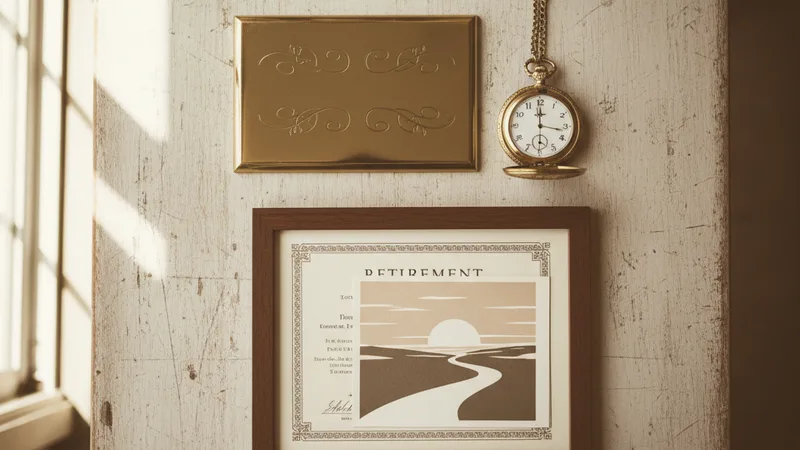
The retirement gift catalog has barely changed in eighty years. Engraved plaques. Pocket watches (rarely worn). Framed certificates. Crystal apples for teachers. Gold pens. Cards signed by the entire department. These gifts mean what they mean because of the recognition, not because of the objects themselves — and the objects are mostly indistinguishable from gifts the same person received at their tenth, twentieth, and thirtieth anniversaries at the same job.
Standard retirement cards are pre-printed. Hallmark's writers produced the actual content. The signing colleagues add their names at the bottom. The card's emotional weight depends on the relationship the retiree brings to it; the language itself is generic by construction.
Most retirees have everything functional. By the time someone is retiring, the marginal joy from yet another desk accessory is zero. Custom retirement gifts that matter name the specific career and the specific person.
Custom songs about a career were historically out of reach. Hiring a singer-songwriter to write a tribute to a retiring colleague ran $400-2,000 and took 2-6 weeks. Department budgets and family budgets reasonably didn't stretch to that. The plaque was the realistic option.
AI music tools collapse the cost stack. A custom retirement song generated on iPhone costs the marginal $0.40 of subscription divided across the use. Takes 10-15 minutes. Lands at the retirement party as the single gift that names the specific work — the classroom, the lab, the route, the office, whatever the retiree actually did for those forty years.
For the broader gift-occasion AI music pattern, see the AI birthday song guide, AI Father's Day song guide, and AI anniversary song guide.
What custom AI retirement songs do that plaques can't
Five things custom AI retirement songs do that engraved plaques cannot.
- Their name in the chorus. Sung clearly, repeated three or four times, in the genre they actually listen to. Not a generic "thank you for your service" — their name and their role.
- One specific detail from the career. "The classroom on the third floor where you taught American Government for thirty-eight years." "The forty-three years of seven a.m. shifts at the warehouse on Industrial Road." "The lab at the back of the building where you ran the Tuesday cell-bio class for thirty years." The specificity carries the song.
- The genre that matches their actual taste. Country for a country dad. Folk for the singer-songwriter teacher. Jazz for the jazz-listening surgeon. Classic rock for the rock-listening engineer. Match the genre to the actual person, not to a generic "retirement music" template.
- A length appropriate to a retirement-party listening moment. Two to three minutes. Long enough to be a real song; short enough to fit between speeches and slideshow segments without dragging.
- A track they keep forever. Plaques go in boxes. Watches go in drawers. The custom song stays on their phone and gets replayed on their birthday, on the anniversary of their retirement, on quiet afternoons when they remember the job.
For prompt-craft, how to write AI song prompts that actually produce great music is the most useful companion read.
Step-by-step: a retirement song in Muziko
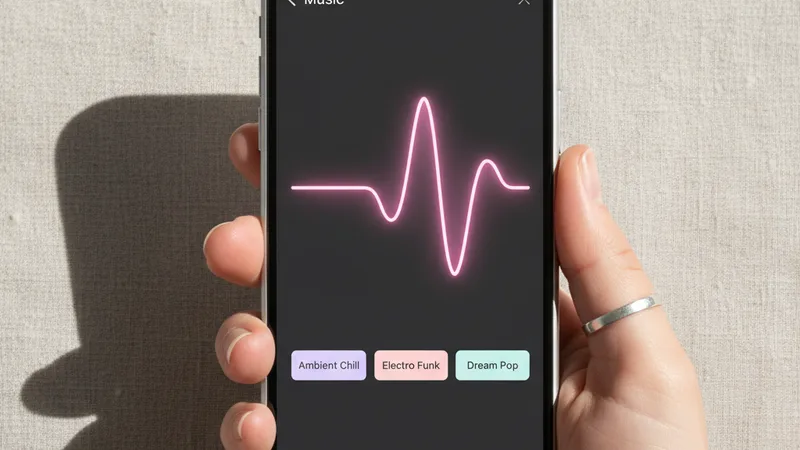
The workflow. Total time on a typical retirement track averages 10-15 minutes.
1. Write down three things first. Before opening the app: (a) the retiree's name, (b) one specific detail from their career — the actual classroom, lab, office, route, shift, role, (c) the music they actually listen to.
2. Open Muziko on iPhone or iPad. Switch to Write Lyrics mode.
3. Pick the genre matching their taste. Acoustic ballad for cozy reflective retirees. Country ballad for country fans. Folk for thoughtful retirees. Jazz standard for elegant retirees. Classic rock for rock fans. Soul ballad for soul fans. Gospel for faith-based retirees.
4. Pick a mood. Sentimental for most retirement tracks — appreciation, recognition, the weight of years. Sentimental + playful for retirees whose relationships at work involved humor. Sentimental + hopeful for retirees who are excited about what comes next.
5. Write six to ten lines of lyrics. Structure: two lines naming the specific career detail, two lines as a chorus with the retiree's name, two to four lines about something specific they did or built or taught.
6. Set the tempo. 75-90 BPM for slow ballads. 85-100 BPM for mid-tempo reflective tracks. 95-110 BPM for upbeat-celebratory tracks. Match the tempo to the genre and the celebration register.
7. Vocal direction. "Solo female vocal warm and intimate" for acoustic. "Solo male vocal conversational with slight country twang" for country. Match the vocal to the genre and the relationship.
8. Generate four to six takes. Listen for name pronunciation, the specific career detail landing cleanly, and the vocal carrying appreciation without overplaying.
9. Decide on delivery. Options below.
For the full mobile workflow, the AI song generator for iPhone 2026 guide covers each creation mode in depth.
Writing retirement-song lyrics that honor real work
A working retirement-song lyric has six ingredients. Generic gratitude produces generic tracks; specific naming of actual work produces tracks that honor a real career.
The retiree's name. First name in most cases. "Dr. Mitchell" reads as formal-corporate; "Tom" reads as personal. For most retirement songs, first name fits better than title-plus-surname.
One specific career detail named precisely. "The classroom on the third floor of the high school" (not "the school"). "The Industrial Road warehouse seven a.m. shift" (not "the warehouse"). "The Tuesday cell-bio lab at the back of the building" (not "the university"). The more specific the detail, the more the song names this person's actual career rather than abstract appreciation.
A reference to how long they did it. "Forty-two years on the same hallway." "Thirty-eight cohorts of American Government." "Six thousand mornings of the same coffee at six a.m." The duration honors the commitment.
One thing they built or taught or moved that's still here. "The students you taught are now teaching other students." "The system you built still runs every Tuesday." "The kids who came up through your program have their own kids in your program now." Continuity carries weight.
A line about what they did when nobody was watching. "The Saturday hours nobody put on a timesheet." "The phone calls home to make sure the student was okay." "The repairs you fixed that weren't in your job description." This is often the line that makes the retiree cry.
A closing line that doesn't try to summarize the whole career. Real careers don't fit in summary lines. "The lights are off in the third-floor classroom now." "You earned every minute of this." "See you on the porch in July."
An example lyric set:
"The classroom on the third floor of the high school, American Government to thirty-eight cohorts, Tom, Tom, Tom, the Saturday hours nobody put on a timesheet, Tom, Tom, Tom, the students you taught are now teaching other students, you earned every minute of this."
That set has the specific career detail (third-floor classroom, American Government), the duration (thirty-eight cohorts), the unrecognized work (Saturday hours), the continuity (students teaching), and the closing acknowledgment (earned every minute).
For more on lyric craft, the perfect prompts breakdown covers the underlying patterns.
Matching career type to song style: a starter chart

Match the song to the actual career and the retiree's taste.
| Career type | Genre | Tempo | Mood | Notes |
|---|---|---|---|---|
| Teacher (K-12) | Acoustic folk | 80-95 BPM | Sentimental | Classroom-specific detail, student references |
| University professor | Acoustic or jazz | 75-90 BPM | Sentimental | Department, specific course, generations of students |
| Trade / construction | Country ballad | 85-100 BPM | Sentimental | Site, route, the thing they built |
| Nurse / healthcare | Acoustic or soul | 80-95 BPM | Sentimental | Unit, shift, the small kindnesses |
| Doctor / surgeon | Acoustic or classical | 75-90 BPM | Sentimental | Practice, specific work, patient continuity |
| First responder | Country or rock ballad | 85-100 BPM | Sentimental | Department, the calls, the years of service |
| Military | Country or acoustic | 80-95 BPM | Sentimental | Unit, deployments, service-specific references |
| Office / corporate | Acoustic or pop | 85-100 BPM | Sentimental + playful | Department, projects, the long meetings |
| Executive | Acoustic ballad or jazz | 80-95 BPM | Sentimental | Company-building, specific milestones |
| Manufacturing / factory | Country or rock | 85-100 BPM | Sentimental | Line, shift, the years of seven a.m. |
| Government / civil service | Acoustic | 80-95 BPM | Sentimental | Agency, specific role, public service |
| Religious / clergy | Gospel or hymn | 75-90 BPM | Sentimental | Congregation, specific ministry |
| Self-employed / small business | Country or folk | 85-100 BPM | Sentimental + playful | Shop, customers, decades of regulars |
| Music industry / performer | The genre they performed | Variable | Sentimental | Honor the work in its own genre |
| Retiring early (40s-50s) | Match their taste | 90-105 BPM | Sentimental + hopeful | More about what comes next |
Pick the row matching the actual career and taste. For related guides, see the AI Father's Day song guide, AI birthday song guide, and AI anniversary song guide.
Delivery: when to play it at the party
The retirement party delivery moment matters. Two methods work consistently.
1. During the slideshow. Play the custom track during the photo slideshow of the retiree's career. The track replaces or supplements whatever music the slideshow would have used. The retiree hears their name in the chorus while their younger self crosses the screen behind them. This is the highest-impact delivery moment.
2. After the formal speeches, before the cake. Play the track during the small lull between the prepared speeches and the cake-cutting. The room is ready, the formal recognition has happened, the energy is settled. Custom songs land here when the formal speeches have created the recognition framework.
3. As a private gift on the morning of the last day. Send the audio file to the retiree's phone on their last morning of work with one line — "For when you have a quiet moment." The retiree listens alone before the party, has whatever reaction they have privately, and arrives at the party already softened. Best for retirees who don't perform emotional reactions easily.
Avoid:
- Mid-speech surprises. Don't interrupt a speech to play a custom track. Let the prepared remarks finish first.
- Public performance pressure. Don't ask the retiree to "stand here and listen" with the room watching. The audience pressure undermines the song.
- Forcing reaction. Don't watch the retiree's face during the playback. Look elsewhere; the listening is theirs.
- The first take if name pronunciation isn't clean. A retirement song with a mispronounced name is the kind of small mistake that disrupts the entire honor. Generate enough takes to land it cleanly.
For related delivery patterns, see the AI Father's Day song delivery section and the AI birthday song delivery section.
Try the workflow now
If someone you know is retiring soon — a colleague, parent, mentor, family member — the workflow takes 10-15 minutes.
Step 1: Write down the retiree's name, one specific career detail (the actual classroom, lab, office, route, shift, role — be specific), and the music they actually listen to.
Step 2: Open Muziko on iPhone or iPad. Switch to Write Lyrics mode.
Step 3: Pick the genre matching their taste (acoustic folk is the safe default for most retirement tracks). Pick Sentimental mood.
Step 4: Paste the lyrics (adjusted to the actual career):
"The classroom on the third floor of the high school, American Government to thirty-eight cohorts, Tom, Tom, Tom, the Saturday hours nobody put on a timesheet, Tom, Tom, Tom, the students you taught are now teaching other students, you earned every minute of this."
Step 5: Add the prompt note:
"Acoustic folk retirement song, 85 BPM, sentimental and warm, solo male vocal warm and conversational with slight twang, fingerpicked acoustic guitar with soft piano figure on the second verse, light strings entering on the bridge, two minutes thirty seconds, soft outro fading over the last fifteen seconds."
Step 6: Generate four to six takes. Pick the take where the name lands cleanly and the specific career detail carries appreciation rather than performing it.
Step 7: Deliver during the slideshow at the retirement party, or as a private morning-of-the-last-day iMessage if the retiree prefers privacy. Don't watch them listen.
For related gift-occasion guides, see the AI birthday song guide, AI Father's Day song guide, AI anniversary song guide, and AI Christmas songs guide.
Frequently asked questions
How long does it take to make a custom AI retirement song?
Realistically, 10 to 15 minutes from start to finished file. The workflow is: write down the retiree's name, one specific career detail (the actual classroom, lab, office, route, shift, or role — be specific), and the music they actually listen to. Open Muziko on iPhone or iPad. Switch to Write Lyrics mode. Pick the genre matching their taste. Pick Sentimental mood. Write six to ten lines of lyrics with the name and the specific career detail. Set the tempo (75-100 BPM for most retirement tracks). Generate four to six takes. Pick the strongest. First-time users may need closer to 20 minutes; after one or two tracks, the workflow consistently runs under 12 minutes.
What genre should I pick for a retirement song?
Match the genre to the retiree's actual music taste, not to what you think retirement songs should sound like. Acoustic folk for cozy reflective retirees. Country ballad for country fans. Jazz standard for elegant retirees. Classic rock for rock-listening engineers and tradespeople. Soul or Motown-adjacent for soul fans. Gospel for faith-based retirees. The genre choice is the single biggest decision — the wrong genre is the most common reason custom retirement tracks fall flat. If you don't know their current taste, ask a coworker or family member who knows their music; the right genre matters more than any other lyric choice.
How specific should the career detail be in the lyrics?
As specific as you can get without losing universal recognition. "The third-floor classroom" is more specific than "the school" and still works for a retirement-party audience. "The Industrial Road warehouse" is more specific than "the warehouse" and still works. "The Tuesday cell-bio lab at the back of the building" is more specific than "the university" and still works. The more specific the detail, the more the song names this specific person's specific career rather than abstract appreciation. Inside jokes that only a few people get can work in the bridge but should not be the chorus material — the audience at the retirement party needs to recognize the references.
When should I play the song at the retirement party?
During the slideshow is the highest-impact delivery moment — the custom track replaces or supplements whatever music the slideshow uses, and the retiree hears their name in the chorus while photos from their career play behind them. Second-best moment: after the prepared speeches but before the cake-cutting, in the lull when the formal recognition has happened and the room is ready. Third option: as a private morning-of-the-last-day iMessage with one line of context, for retirees who don't perform emotional reactions well in public. Avoid: mid-speech surprises, public performance pressure where the retiree is asked to stand and listen with the room watching, and watching the retiree's face during playback.
Can I make a retirement song for a colleague even if I'm not super close to them?
Yes, and these often land surprisingly well because the appreciation from a colleague who shows up specifically reads as meaningful. The lyric structure adjusts slightly: lean on observable career details (their actual role, specific projects, the way they did the work) rather than on personal anecdotes you might not have. Ask 1-2 closer colleagues for one specific detail you can include — the project they led, the way they ran meetings, the small kindness they were known for. The song doesn't need to read like it was written by a thirty-year close friend; it needs to honor the work specifically. For retirements where you're collecting contributions for a group gift, the custom AI song works well as the group's contribution, with everyone listed in the delivery message.
Should the song be uptempo and celebratory or slow and reflective?
Lean toward slow and reflective for most retirement songs. The emotional register of a forty-year career honored at a party tends to be appreciation and recognition rather than celebration. Tempos in the 75-95 BPM range work for most retirement tracks. Uptempo celebratory tracks (100-115 BPM) fit retirements where the retiree is genuinely excited about what comes next — early retirement, sabbatical years, planned new projects. For retirements where the retiree has mixed feelings or is leaving with some difficulty, lean slower and more sentimental. The retiree's actual emotional state about retiring should guide the tempo more than the celebratory framing the party imposes.
Try everything you just read about. Muziko is free to download.